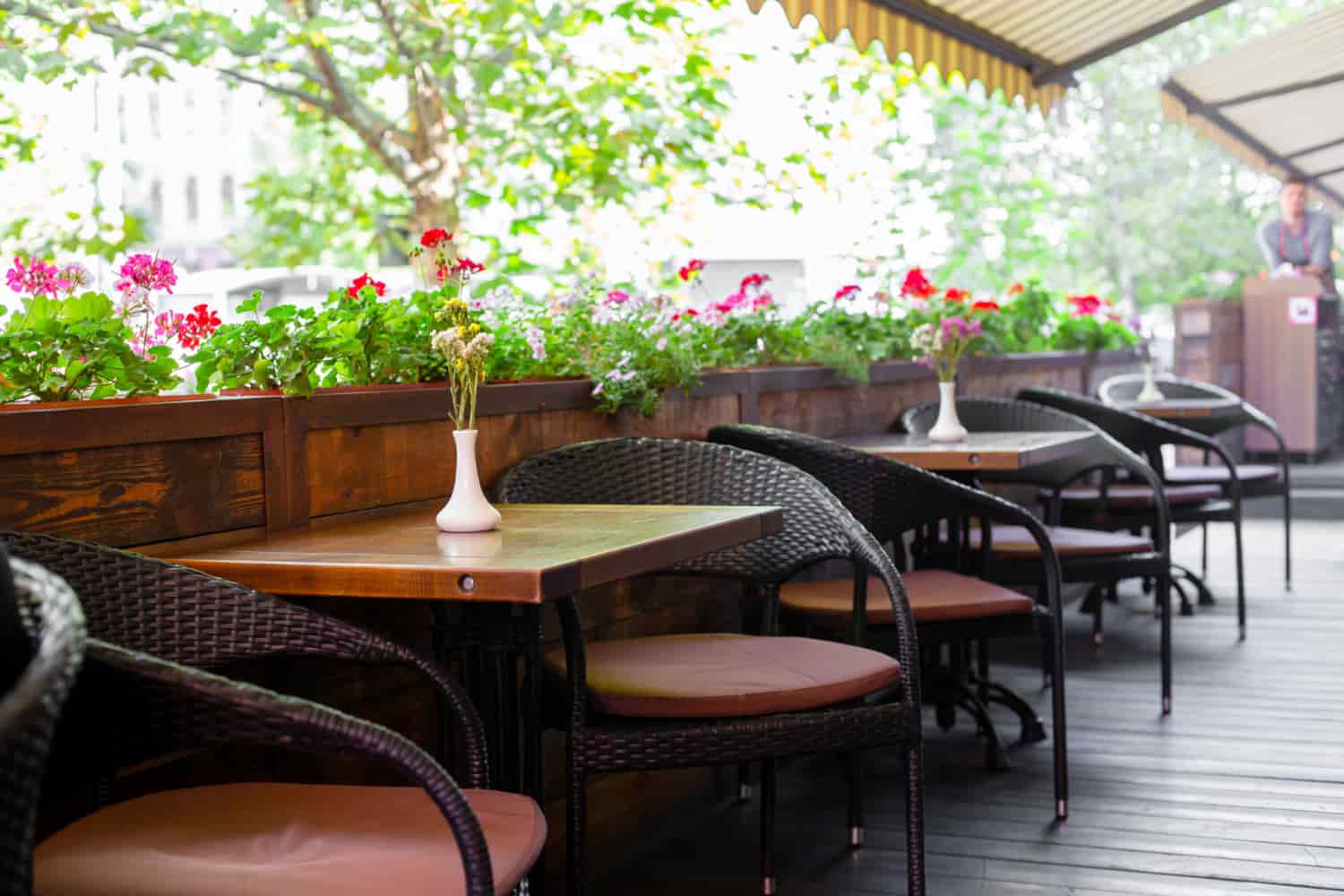
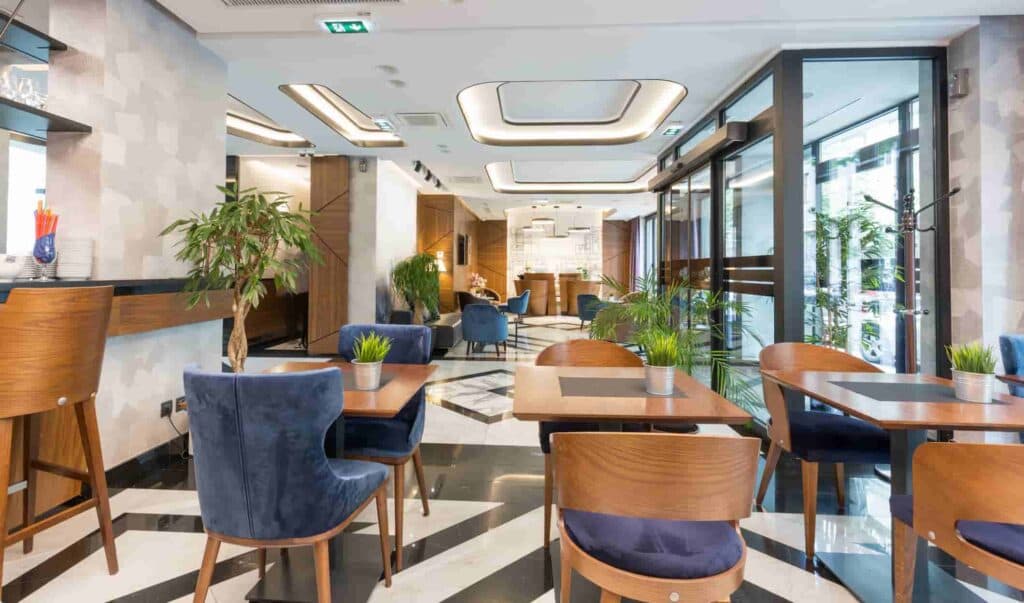
Outdoor layouts should balance comfort and efficiency.
Key Considerations:
- Wider spacing than indoor areas
- Shade elements (umbrellas, pergolas)
- Airflow and ventilation
- Easy staff circulation
For optimal performance, outdoor layouts should always be aligned with overall restaurant seating layout Ghana
Cost vs Durability: Long-Term Perspective
One of the biggest mistakes in Ghana projects is choosing cheaper furniture for outdoor areas.
Short-term savings often lead to:
- Frequent replacements
- Higher maintenance costs
- Poor guest experience
To avoid costly mistakes, many professionals follow a structured restaurant furniture checklist Ghana
In many projects, choosing low-quality outdoor furniture can double replacement costs within 2–3 years, making durability a key investment factor.
Outdoor Restaurant Furniture Maintenance Planning for Ghana Hotel Operations
Outdoor restaurant furniture in Ghana hotel projects fails prematurely in two ways: through material failure caused by incorrect specification, and through accelerated deterioration caused by incorrect maintenance. The second failure mode is less discussed but equally costly — correctly specified furniture that receives inadequate or incorrect maintenance degrades faster than its material rating predicts, producing a replacement cycle that was not in the project’s lifecycle cost calculation.
Aluminium frames require minimal maintenance but are not maintenance-free. Powder coating on aluminium protects against corrosion at the coating level — but scratches, chips, and impact damage that expose bare aluminium create corrosion initiation points that spread under the coating if left untreated. Quarterly inspection of aluminium frames — checking for coating damage, particularly at joints, fixings, and floor contact points — and touch-up application of compatible coating paint on damaged areas extends frame life significantly in Accra’s coastal salt-air conditions. This is a five-minute quarterly task per piece, not a specialist maintenance requirement.
Synthetic rattan requires cleaning protocol management. HDPE-based synthetic rattan is moisture-resistant but not self-cleaning — organic material accumulates in the weave pattern under humid conditions, creating a substrate for mould growth if not removed regularly. Cleaning with a mild detergent solution and a soft brush, followed by a fresh water rinse and adequate drying time, removes organic accumulation before it creates a mould problem. Restaurants that clean synthetic rattan with concentrated bleach solutions — common in hotel housekeeping protocols — degrade the UV stabilisers in the HDPE material, accelerating colour fading and surface brittleness. The cleaning protocol must be specified as part of the furniture handover documentation.
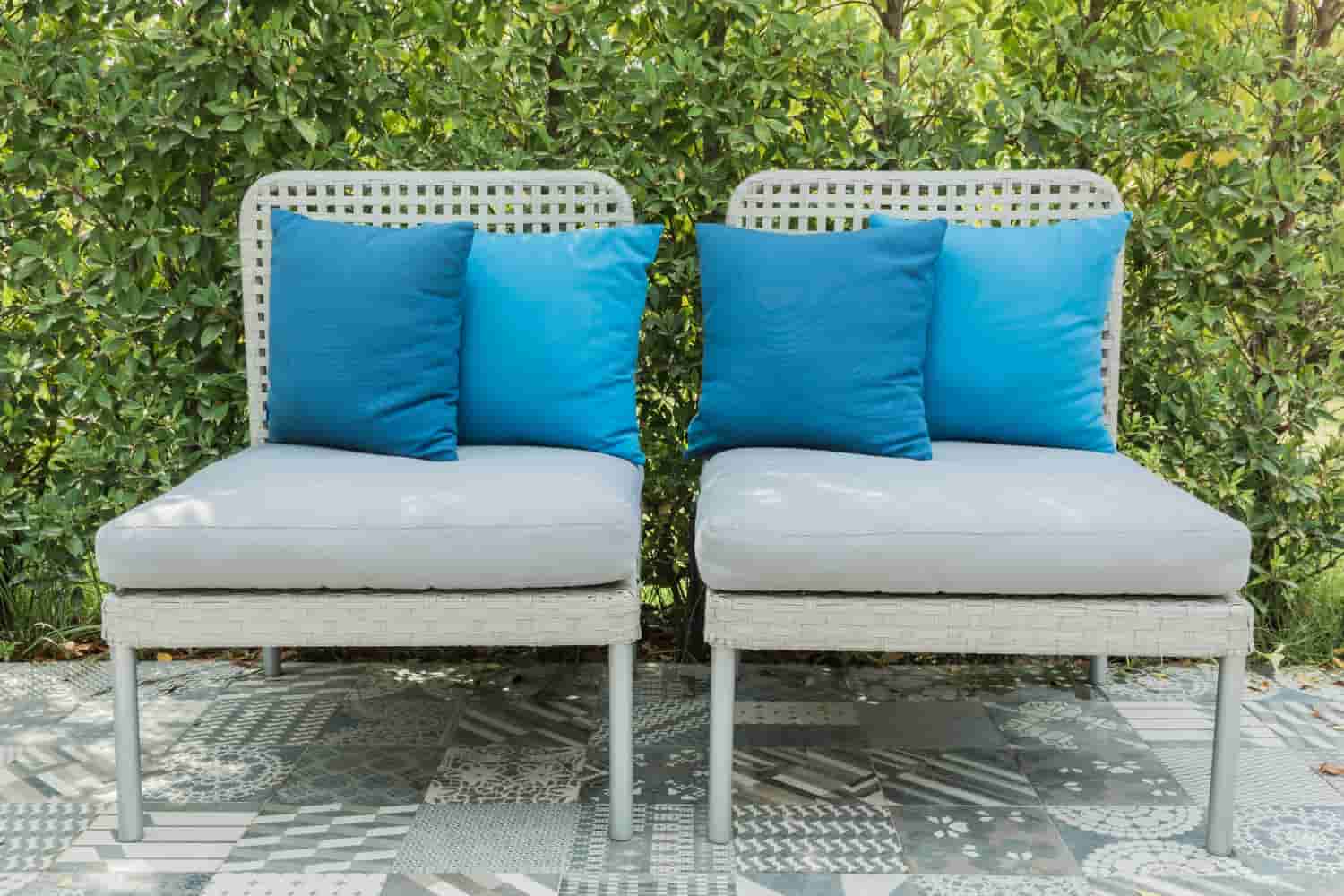
Cushion maintenance is the highest-cost maintenance category for outdoor restaurant furniture. Quick-dry foam with UV-resistant covers performs correctly only if the cushions are allowed to dry between uses — storing wet cushions in a stack prevents drying and creates mould conditions inside the foam even when the outer fabric appears dry. The operations protocol must include cushion storage in a ventilated position between service periods, and a quarterly inspection for foam compression and mould presence. Replacing foam inserts at five to six years — before visible degradation — is less expensive than replacing entire cushion assemblies after full failure. For the full outdoor furniture product range including cushion specifications for tropical climate use, see the
outdoor and poolside furniture manufacturer page.
How to Plan Outdoor Restaurant Furniture for Maximum Performance
Planning outdoor restaurant furniture requires balancing durability, layout efficiency, and guest comfort. Projects that treat outdoor areas as secondary spaces often fail to achieve long-term performance.
The most successful hotel projects in Ghana integrate outdoor dining into the overall restaurant strategy, ensuring higher capacity, better guest experience, and stronger revenue generation.
Why Professional Sourcing Matters
Working with experienced contract furniture manufacturers ensures:
- Consistent quality
- Custom solutions
- Export expertise
- Reduced project risk
This is especially important for international investors managing Ghana projects remotely.
Outdoor Seating Capacity and Layout Efficiency for Ghana Hotel Terraces
Outdoor restaurant seating capacity planning in Ghana hotel projects follows different dimensional standards from indoor dining — and applying indoor seating density benchmarks to outdoor spaces consistently produces layouts that either underutilise available space or create circulation problems that slow service and reduce table turnover. The spatial standards for outdoor dining account for wider circulation aisles (guests move less predictably outdoors), shade element placement (umbrella bases reduce usable floor area), and the larger table footprint that outdoor furniture typically requires compared to its indoor equivalent.
Standard outdoor terrace seating benchmarks for hotel restaurant projects run 1.5 to 2.0 m² per seat — significantly more than the 1.0 to 1.3 m² standard for indoor casual dining. The additional space accounts for chair pull-out clearance on hard surfaces (outdoor chairs move further than indoor chairs when a guest rises), umbrella radius overlap at adjacent tables, and the wider aisle widths (minimum 1.2m for main service corridors outdoors versus 0.9m indoors) required for service staff carrying trays in wind conditions.
Umbrella placement is a layout planning variable that most outdoor restaurant furniture specifications omit entirely — and its omission creates installation problems that affect both capacity and aesthetics. A 3-metre parasol umbrella requires a base with a minimum 60cm diameter, which occupies floor area that tables and chairs must work around. If umbrella positions are not marked on the layout plan before furniture is ordered, tables are ordered to dimensions that conflict with umbrella bases when installation begins. The correct sequence is: fix umbrella positions first, then plan table arrangements around them, then write the furniture BOQ. For seating capacity benchmarks and layout planning standards that apply to both indoor and outdoor restaurant zones, see the
restaurant seating layout Ghana guide. For how outdoor table dimensions affect seating density and service flow, see the
restaurant table size standard guide.
Logistics and Packaging for Outdoor Restaurant Furniture Shipped to Ghana
Outdoor restaurant furniture presents specific logistics challenges that indoor furniture does not. The material characteristics that make it suitable for Ghana’s outdoor conditions — aluminium frames, synthetic rattan weave, powder-coated steel — also create packaging and container loading requirements that differ from standard casegood shipments. Mismanaging these requirements produces damage that is particularly frustrating because the furniture was correctly specified for its operating environment but failed to arrive in usable condition.
Aluminium frame furniture requires corner and edge protection during sea freight because aluminium deforms under point loading — a corner impact that would leave a mark on steel creates a permanent dent on aluminium. Export packaging for aluminium outdoor furniture must include corner protectors at all frame ends, foam sleeve protection on tubular frame sections, and carton construction rated for the stack load it will carry in the container. Aluminium loungers and chairs are typically stacked for container efficiency — the packaging must support this stacking without transmitting load to the frame.
Synthetic rattan pieces require moisture protection during sea freight despite the material’s inherent moisture resistance. The issue is not the rattan itself but the foam cushions typically packed with the furniture — foam that absorbs moisture during a humid transit and cannot dry before installation arrives on site in a condition that creates immediate mould problems. Cushions must be individually wrapped in polyethylene film before packing, and desiccant bags placed in the same carton prevent moisture accumulation during the Turkey-to-Tema transit. For how container loading sequence, bracing systems, and moisture protection work together for furniture shipments on the Turkey-to-Ghana route, see the
hotel furniture container loading guide.
For international container loading and sea freight standards that apply to furniture shipments, the International Institute of Container Lessors (IICL) publishes equipment inspection and cargo handling guidelines that define best practices for protecting cargo during sea transit.
What Defines a Successful Outdoor Restaurant Furniture Strategy
Successful outdoor furniture planning is not about selecting individual products, but about creating a system that performs under real conditions. Climate, usage intensity, and layout efficiency must all be considered together.
Projects that align material selection, supplier expertise, and operational planning achieve better durability, lower maintenance costs, and higher long-term profitability.