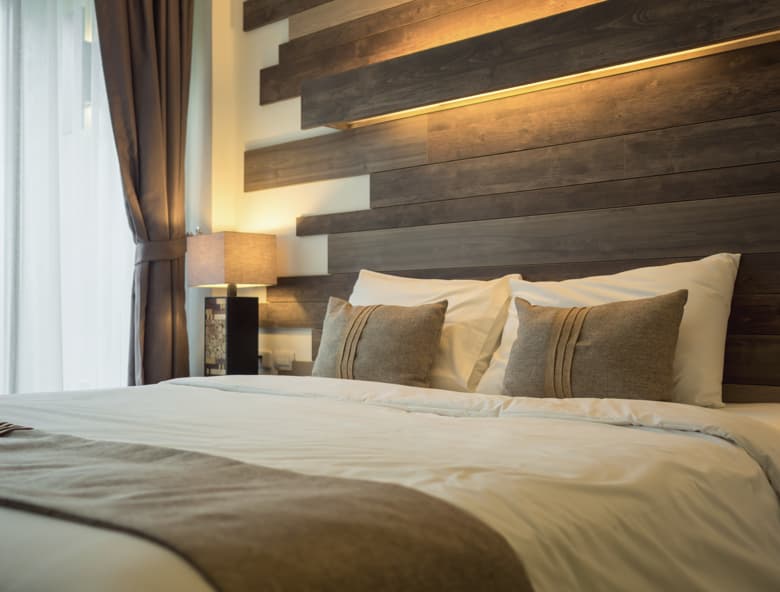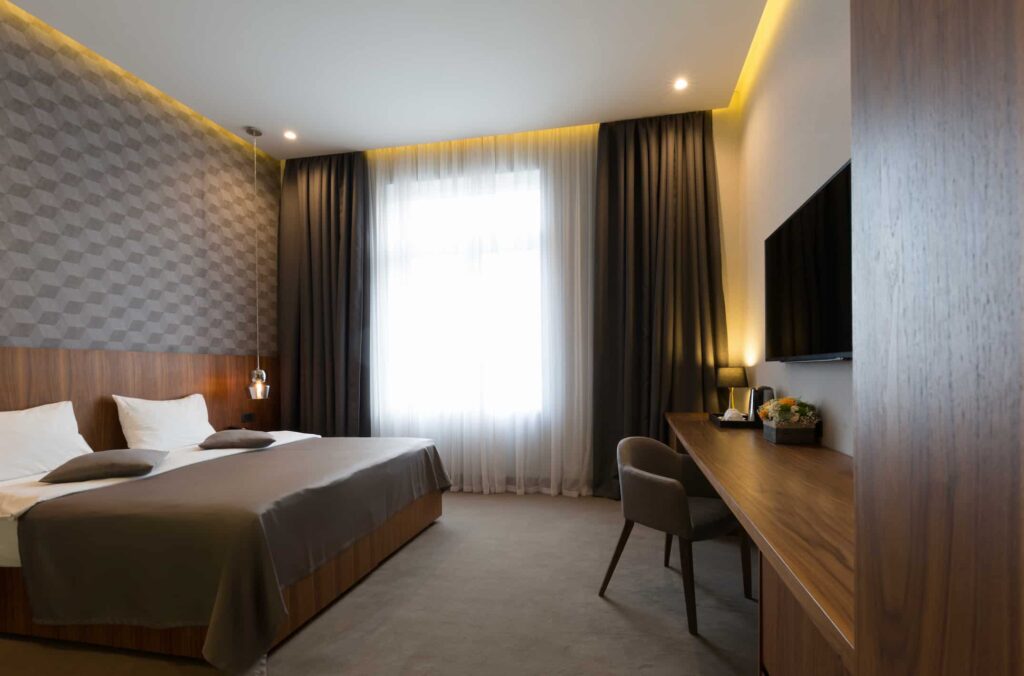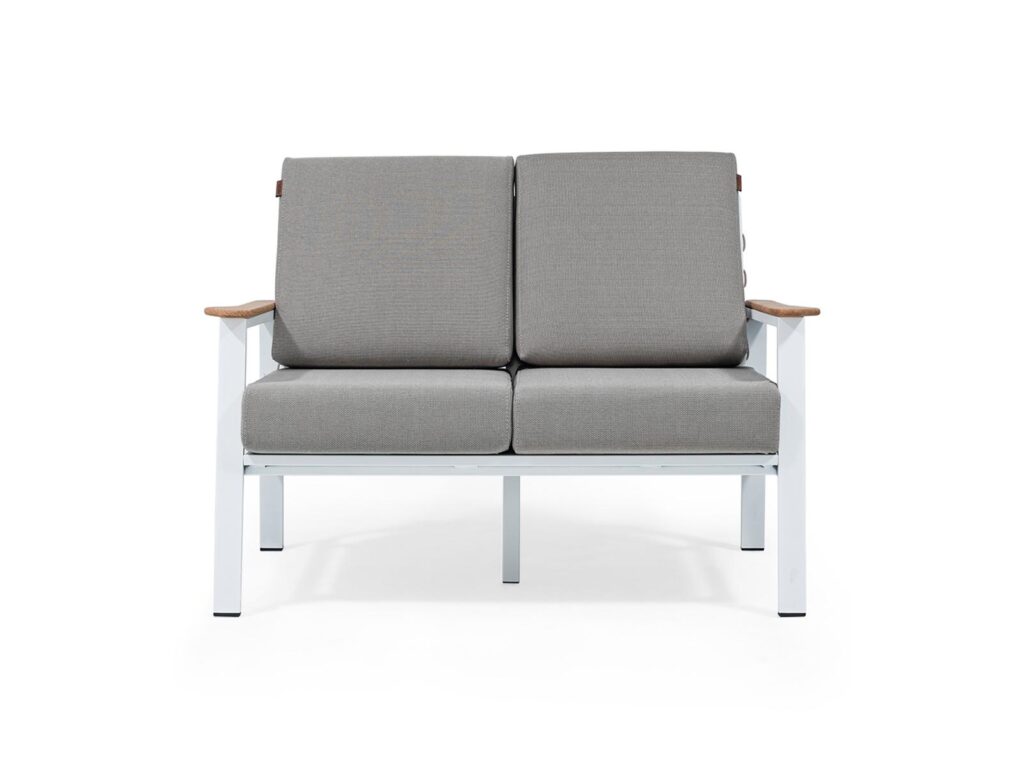
Hotel furniture container loading for Ghana projects requires selecting the right container size, sequencing furniture by installation phase, loading heavy items low and fragile items protected, bracing to prevent movement during sea freight, and applying moisture protection for the Turkey-to-Tema route. A 40-foot high-cube container typically carries 20 to 30 hotel room packages. Poor loading causes damage that cannot be corrected until replacement production completes — 12 to 14 weeks later.
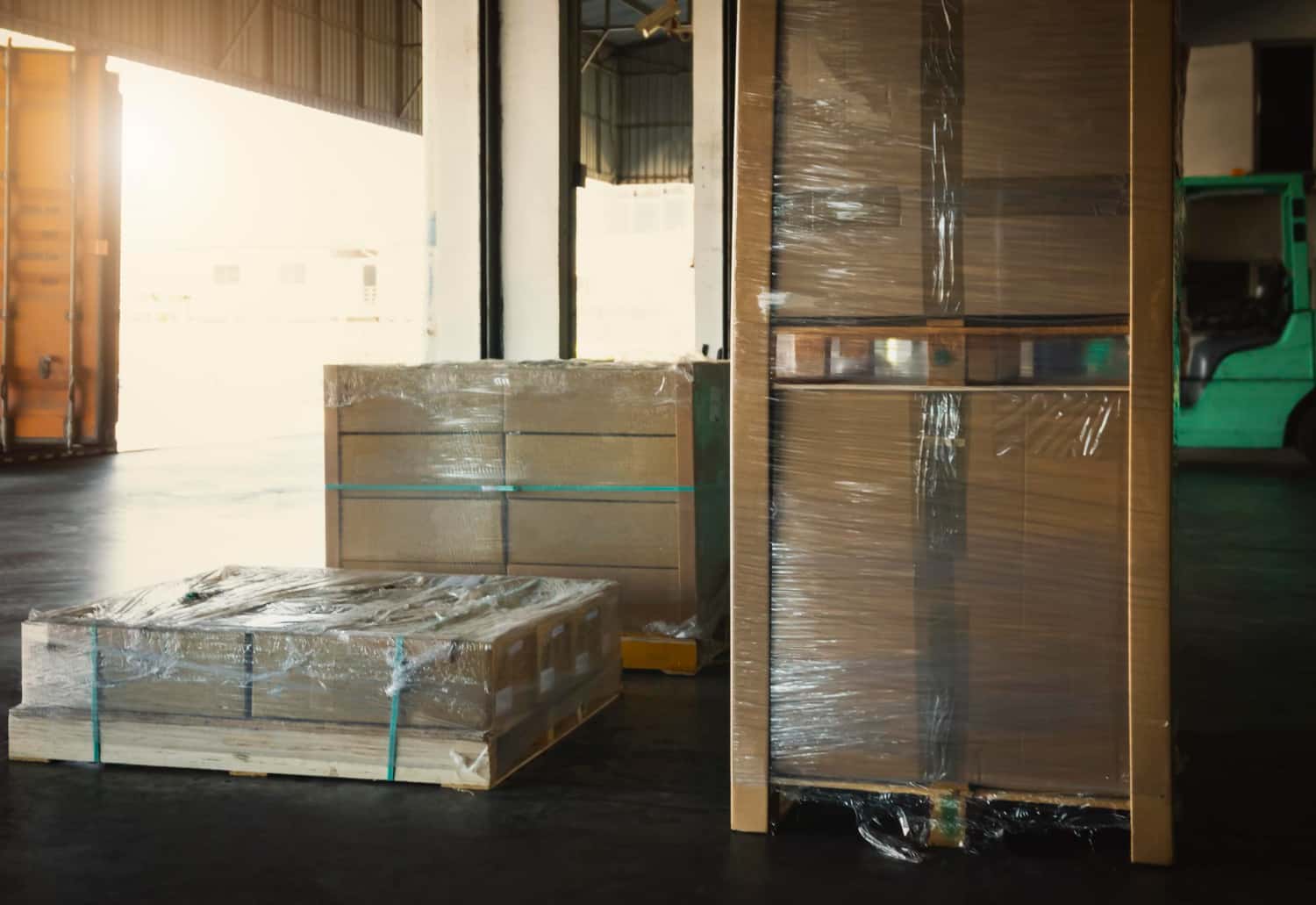
The first decision in hotel furniture container loading is container type. For most hotel furniture shipments from Turkey to Ghana, three options are available — and the choice affects cost per cubic metre, loading flexibility, and damage risk in ways that are not always obvious from the headline freight rate.
20-foot standard container (20ft GP): Internal dimensions approximately 5.9m long × 2.35m wide × 2.39m high, with a usable volume of approximately 33 cubic metres. A 20ft container is appropriate for smaller hotel projects — boutique hotels under 20 rooms, replacement orders, or partial deliveries for phased construction completions. The limitation is not just volume but loading flexibility: the shorter internal length constrains how furniture can be sequenced and braced, and tall items like wardrobes and headboards that exceed 2.39m assembled height cannot be loaded upright.
40-foot standard container (40ft GP): Internal dimensions approximately 12.0m long × 2.35m wide × 2.39m high, with a usable volume of approximately 67 cubic metres. The standard 40ft is the most common container type globally and is available on most Turkey-to-Ghana vessel routes. For hotel furniture, the 2.39m internal height is a limiting factor — tall wardrobes and full-height headboards typically run 2.1 to 2.4m in assembled height, leaving minimal clearance and requiring careful loading orientation to avoid damage during transit.
40-foot high-cube container (40ft HC): Internal dimensions approximately 12.0m long × 2.35m wide × 2.70m high, with a usable volume of approximately 76 cubic metres. The additional 31cm of internal height is the critical difference for hotel furniture loading. It allows tall casegoods to be loaded upright — their natural, most stable orientation — rather than tilted or laid flat, which creates stress on joints and surfaces. For hotel projects with standard full-height wardrobes, the 40ft HC is almost always the correct container type. The freight rate premium over a standard 40ft is typically modest and is consistently recovered in reduced damage risk and better load utilisation.
The decision between 20ft and 40ft is primarily a volume and project scale question. The decision between 40ft GP and 40ft HC is a furniture-specific question — and for hotel casegoods, the answer is almost always high-cube.
| Container type | Usable volume | 3-star rooms | 4–5 star rooms | Best for |
|---|---|---|---|---|
| 20ft GP | ~33 m³ | 6–9 rooms | 4–6 rooms | Small projects, replacement orders |
| 40ft GP | ~67 m³ | 13–18 rooms | 8–12 rooms | Mid-size projects where HC not available |
| 40ft HC | ~76 m³ | 15–20 rooms | 9–14 rooms | Hotel projects with full-height casegoods |
The most consequential hotel furniture container loading decision after container selection is sequencing — which items go in first, which go in last, and how the load maps to the installation sequence on site. This decision is frequently left to the factory’s loading team without input from the developer or project manager, and the result is furniture that arrives at Tema Port in a sequence that creates installation complexity, additional handling, and damage risk on site.
The principle is simple: the last items loaded into the container are the first items unloaded at site. If installation begins with floor 1 and works upward, the container should be loaded so that floor 1 furniture is at the container door — loaded last. Floor 10 furniture goes in first, at the container’s far end. A developer who communicates this sequencing requirement to the factory before loading begins receives a container that can be unloaded directly into the installation sequence. A developer who does not communicate it receives a container that may need to be fully unloaded, sorted by floor, and reloaded into site vehicles — adding a full day of handling that creates damage risk for every piece moved twice.
For phased construction completions — where floors or wings are handed over at different times — the sequencing requirement is even more specific. Phase 1 furniture should be in a separate container from phase 2 and phase 3, or positioned at the door of the container with a clear demarcation line. Mixing phases in a single container without clear separation creates a situation where site workers must remove phase 2 furniture to access phase 1 items — handling pieces that are not yet scheduled for installation, in site conditions that are not appropriate for finished furniture storage.
The practical way to communicate sequencing requirements is through a load plan document prepared before production completes — a simple table listing room numbers or floor numbers against container position (front/middle/rear), with special items flagged separately. Share this document with the factory’s production coordinator and the freight forwarder before loading day. For how sequencing integrates with the broader export documentation process, the furniture export packaging guide covers how packaging and labelling systems support installation-sequence loading.
The most common hotel furniture container loading error is not volume miscalculation — it is leaving voids unfilled and failing to brace the load. A container that looks well-loaded when the doors close can produce significant movement over 18 to 24 days of sea freight. Dunnage bags cost less than $5 each. The furniture damage they prevent costs orders of magnitude more — and in a Ghana hotel project, the replacement timeline adds 12 to 14 weeks to the schedule.
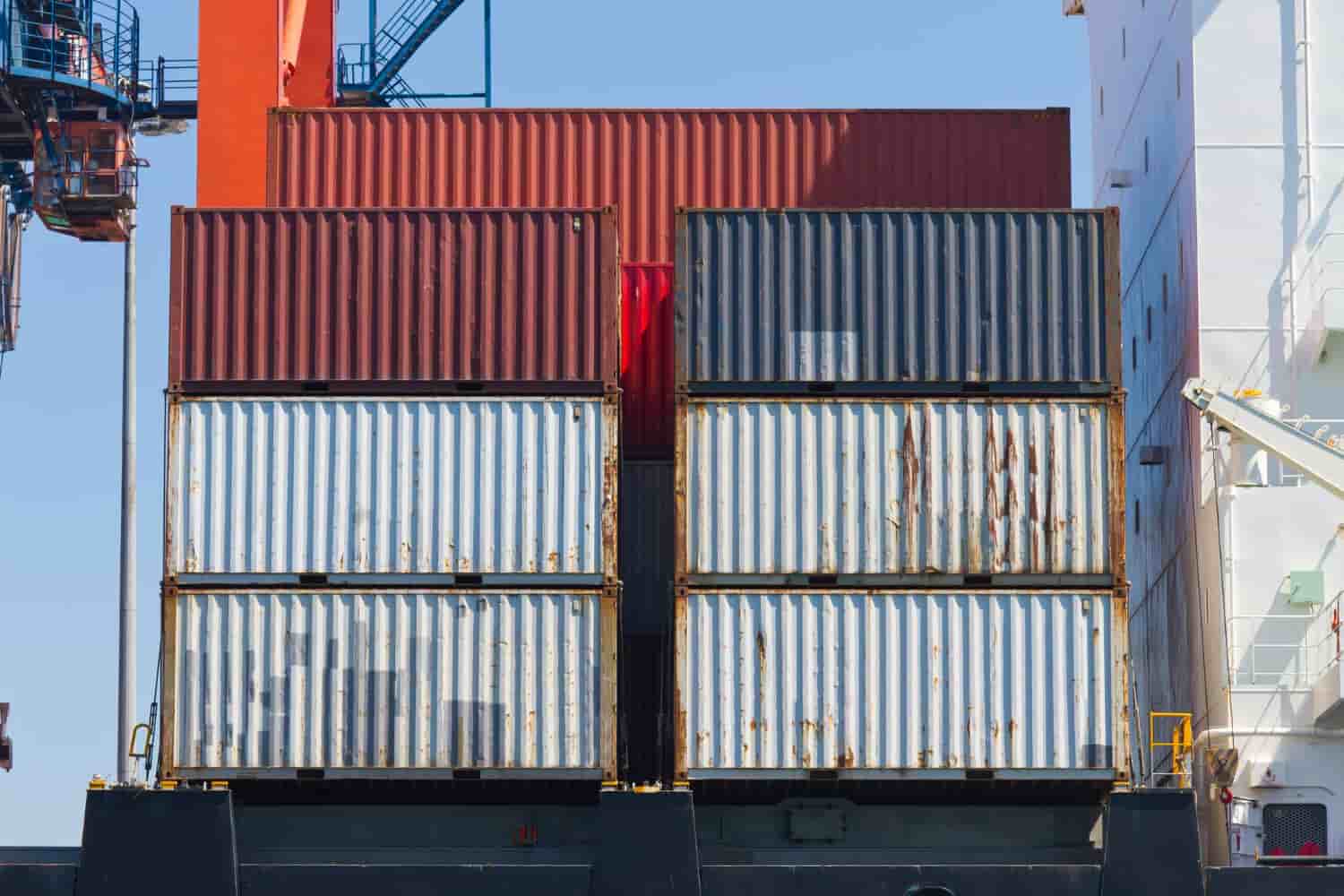
Bracing — the system of blocking, strapping, and void-filling that prevents load movement during transit — is the difference between furniture that arrives in installation-ready condition and furniture that arrives with accumulated transit damage. For the Turkey-to-Tema route, the relevant transit forces are sea freight vessel motion (rolling, pitching, and heaving), port handling at both ends (crane lifts, straddle carrier movements), and inland road transport from Tema to site.
Three bracing systems are used in hotel furniture container loading, often in combination:
Timber blocking and lashing: Timber battens fixed to the container floor create a physical stop that prevents forward and rearward load movement under braking and acceleration forces. Lashing straps — ratchet straps anchored to the container’s lashing rings — hold the load against the timber blocking. This system is the most reliable for heavy items — bed bases, solid wood pieces, marble tops — because it creates a mechanical restraint that does not depend on friction or air pressure. For a hotel furniture shipment, timber blocking should be used for the first and last rows of the load, and at any point where a heavy item is adjacent to a lighter one.
Inflatable dunnage bags: Airbags placed in voids between carton stacks fill the space and create lateral pressure that prevents movement. They are fast to deploy, do not require tools, and adapt to irregular void shapes. They are appropriate for medium-weight loads — panel furniture cartons, boxed seating — but should not be relied upon as the sole bracing for heavy items. Dunnage bags are the most practical tool for filling the voids that remain after blocking and lashing are in place.
Stretch wrap and corner protection: Pallet loads of smaller items — hardware cartons, accessories, spare parts — are stretch-wrapped to pallets and corner-protected before loading. This keeps the pallet as a single unit during handling and prevents individual cartons from shifting off the pallet during transit. For hotel furniture, hardware and accessory items should always be palletised and stretch-wrapped, not loose-loaded into voids between furniture cartons where they are difficult to locate at unpacking and create puncture risk for adjacent packaging.
Desiccant bags for a 40ft HC cost approximately $40 to $60 total. Full polyethylene wrapping for all furniture pieces in a container adds approximately $200 to $400 to packaging costs. Transit damage claims on hotel furniture shipments to Ghana — when they occur — typically run $3,000 to $15,000 per container in replacement production cost, not counting the 12 to 14 week production and reshipping timeline. The moisture protection investment is not worth calculating against the damage cost. It is simply the correct practice.
Hotel furniture container loading should not be left entirely to the factory’s warehouse team without oversight. A loading supervisor — either the manufacturer’s quality control representative, the developer’s appointed inspector, or a third-party inspection agent — should be present during loading and should verify a defined checklist before authorising container door closure.
The loading verification checklist covers:
Quantity and carton identification: Every carton loaded should be on the packing list. Carton numbers should be physically checked against the packing list as loading proceeds — not reconciled from a count at the end. Missing cartons discovered after the container is sealed require either unsealing and reloading or a separate shipment, both of which delay delivery. According to the International Institute of Container Lessors equipment inspection standards, container and cargo condition should be verified before loading begins — not assumed from the booking documentation.
Container condition: Before any furniture is loaded, inspect the container interior — floor, walls, ceiling, and door seals. Check for rust staining (indicates previous water ingress), residue from previous cargo (chemical contamination risk), floor damage (protruding nails or broken boards that puncture packaging), and door seal integrity. A container with a compromised door seal will admit moisture during transit regardless of desiccant placement. Reject any container with visible water staining, chemical residue, or door seal damage.
Load stability test: Once loading is complete and before doors are closed, push laterally against the load at several points. A correctly braced load should not move. Any movement indicates insufficient bracing — add dunnage bags or blocking before proceeding. This test takes two minutes and catches bracing failures before they become transit damage.
Documentation match: The carton count and container number recorded during loading should match the Bill of Lading, packing list, and commercial invoice exactly. Documentation mismatches at Tema Port customs cause clearance delays that generate demurrage charges. For how documentation accuracy affects customs clearance costs and timelines, the furniture import duty Ghana guide covers the full customs cost structure including classification and documentation requirements.
The most effective multi-container coordination tool is a single shared load plan document — a spreadsheet listing every room number, every furniture item, the container it ships in, and the carton number. Shared with the factory, the freight forwarder, the customs agent, and the site installation team before loading day, this document eliminates the ambiguity that causes handling errors, documentation mismatches, and installation delays. It takes two hours to prepare. The problems it prevents take days to resolve.
Hotel developers with smaller projects or partial deliveries sometimes consider LCL — less-than-container load — shipping as a cost-saving alternative to booking a full container. LCL consolidates multiple shippers’ cargo into one container, with each shipper paying for their portion of the space. The unit cost per cubic metre is typically higher than FCL, but the absence of a minimum container booking makes it attractive for volumes too small to fill a 20ft container.
For hotel furniture specifically, LCL introduces risks that FCL does not. In an LCL consolidation, your furniture shares a container with other shippers’ cargo — cargo that may have different packaging standards, different weight characteristics, and different handling requirements. The consolidation warehouse loads the container to optimise total volume across all shippers, not to protect your furniture specifically. Heavy cargo from another shipper can be placed adjacent to or above hotel furniture packaging. Moisture from another shipper’s improperly packaged goods can affect yours. The loading sequence is determined by the consolidator, not by your installation requirements.
LCL also introduces an additional handling point — the consolidation warehouse — where furniture is moved from the factory’s loading dock into consolidated storage before container loading. Each handling event is a damage opportunity. For hotel furniture with veneer surfaces, HPL edges, and upholstered pieces, the additional handling in a general freight warehouse significantly increases damage risk compared to a direct factory-to-container FCL load.
The practical threshold for FCL vs LCL decision-making in hotel furniture projects is approximately 10 to 12 cubic metres. Below this volume, LCL may be the only economically viable option and the risks must be managed through exceptionally robust packaging. Above this volume — which covers any hotel project of 4 or more rooms — FCL in a 20ft container is almost always the better choice on a total cost and risk basis. For how the FCL vs LCL decision interacts with shipping costs and timelines on the Turkey-to-Ghana route, the shipping hotel furniture Ghana guide covers the full cost and method comparison.
Understanding what happens to a container after it arrives at Tema Port helps developers anticipate the risks that occur between vessel arrival and site delivery — and plan accordingly. Tema is Ghana’s primary deep-water port and handles the vast majority of imported hotel furniture. Port operations at Tema follow standard container terminal procedures, but the specific conditions — congestion levels, handling equipment, storage yard conditions — affect how furniture arrives at site.
When a vessel arrives at Tema, containers are discharged by quay crane onto the terminal yard. They are then moved by straddle carrier or reach stacker to a storage position in the yard, where they wait until the importer completes customs clearance and arranges collection. The container is handled at least three times between vessel arrival and collection — crane discharge, yard placement, and collection movement. Each handling event subjects the container to lateral forces that act on the load inside. A correctly braced load absorbs these forces without movement. An inadequately braced load shifts with each handling event, accumulating damage that compounds across three or more movements.
Tema Port congestion is a variable that affects both handling and storage timelines. During peak import periods, containers can wait 5 to 10 days in the yard before collection is possible even after customs clearance. During this time, the container sits in an open yard exposed to Accra’s climate — heat, humidity, and occasional rainfall. Container door seal integrity becomes relevant here: a container with a compromised door seal that sits in the Tema yard for a week in humid conditions is exposing its contents to the same moisture risk as the sea freight itself.
The practical implications for hotel furniture container loading are: brace for port handling forces, not just sea freight forces; verify door seal integrity before loading begins; and plan customs documentation to minimise yard dwell time. Every day the container sits in the Tema yard after clearance is available costs demurrage — typically $150 to $300 per container per day. For how import duties and customs documentation affect clearance timelines and costs, the furniture import duty Ghana guide covers the full clearance cost structure.
A 40-foot high-cube container typically carries 15 to 20 standard three-star hotel room packages, or 9 to 14 four-star and five-star room packages. The range depends on furniture dimensions, packaging volume, and loading efficiency. A load plan prepared before loading begins gives a more accurate project-specific number than general estimates.
For hotel projects with standard full-height wardrobes and headboards, the 40ft high-cube is almost always the correct choice. The additional 31cm of internal height allows tall casegoods to be loaded upright — their most stable orientation. The freight rate premium over a standard 40ft is typically modest and is recovered in reduced damage risk and better load utilisation.
Container rain is condensation that forms on the steel interior of a container when it moves between temperature zones during sea freight — specifically relevant on the Turkey-to-Ghana route through the Mediterranean and Atlantic. Moisture drips onto the cargo, penetrating packaging and damaging MDF substrates, veneer surfaces, and upholstery. Desiccant bags and polyethylene wrapping on individual pieces are the standard mitigation.
The last items loaded are the first items unloaded. If installation begins at floor 1 and works upward, floor 1 furniture must be at the container door — loaded last. Without this sequencing, furniture must be moved multiple times at site to reach the correct installation location, creating additional handling that damages finished pieces and adds time to the installation schedule.
A 40-foot high-cube container on the Turkey-to-Ghana route typically requires 6 to 8 desiccant bags of 1kg capacity each, placed at 2-metre intervals along both sides of the container and at the far end. Bags rated for a 40-day cycle are appropriate for this route duration.
Before door closure, verify: every carton is on the packing list and physically present; the container interior has no rust staining, chemical residue, or door seal damage; the load does not move when pushed laterally (indicating sufficient bracing); and the carton count matches the Bill of Lading, packing list, and commercial invoice exactly. Documentation mismatches discovered at Tema Port customs generate demurrage charges and clearance delays.
Split by installation phase — not by furniture type. Phase 1 rooms in container 1, phase 2 rooms in container 2. Phase-based loading allows installation to begin from the first container while the second is still clearing customs. Splitting by furniture type (all wardrobes in one container, all beds in another) means no phase can be installed until all containers have arrived.
WhatsApp us