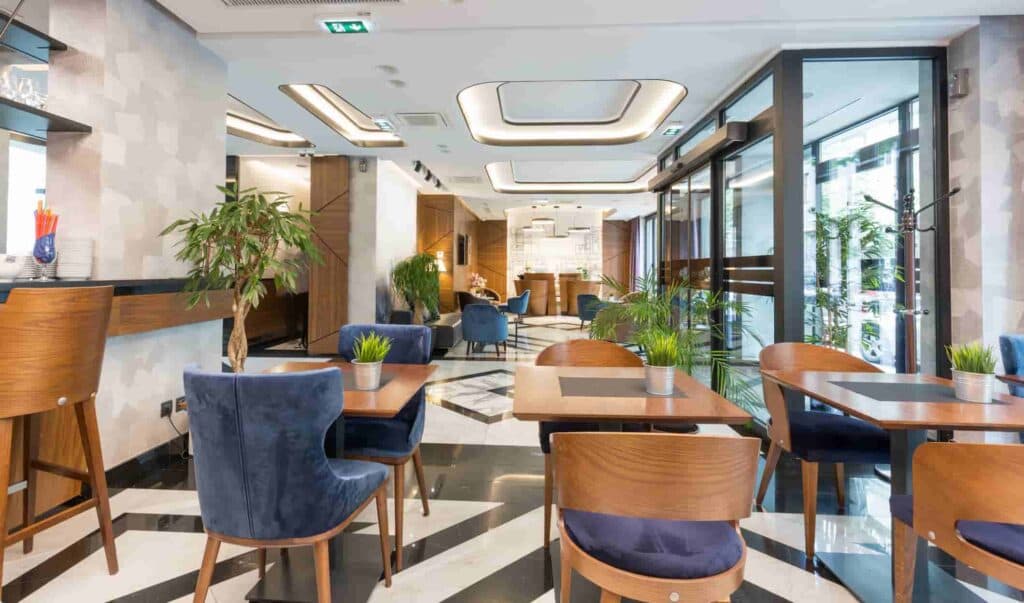
Restaurant furniture Ghana vs Turkey vs China comparison is essential for investors planning hospitality projects in West Africa. Each sourcing option offers different advantages in terms of cost, quality, customization, and lead time. While Ghana-based suppliers may provide faster delivery, Turkey offers a strong balance between quality and price, and China is often chosen for low-cost production. If you want to understand how restaurant furniture fits into a full hospitality project, you can explore this restaurant furniture Ghana guide:
Commercial Restaurant & Café Furniture for Ghana Hotels
Understanding restaurant furniture Ghana vs Turkey vs China helps you avoid costly mistakes and choose the right supplier for your project.
When comparing restaurant furniture Ghana vs Turkey vs China, Turkey typically offers the best balance between cost, quality, and reliability, while China is often lower cost but less consistent, and Ghana provides faster local solutions with limited scalability.
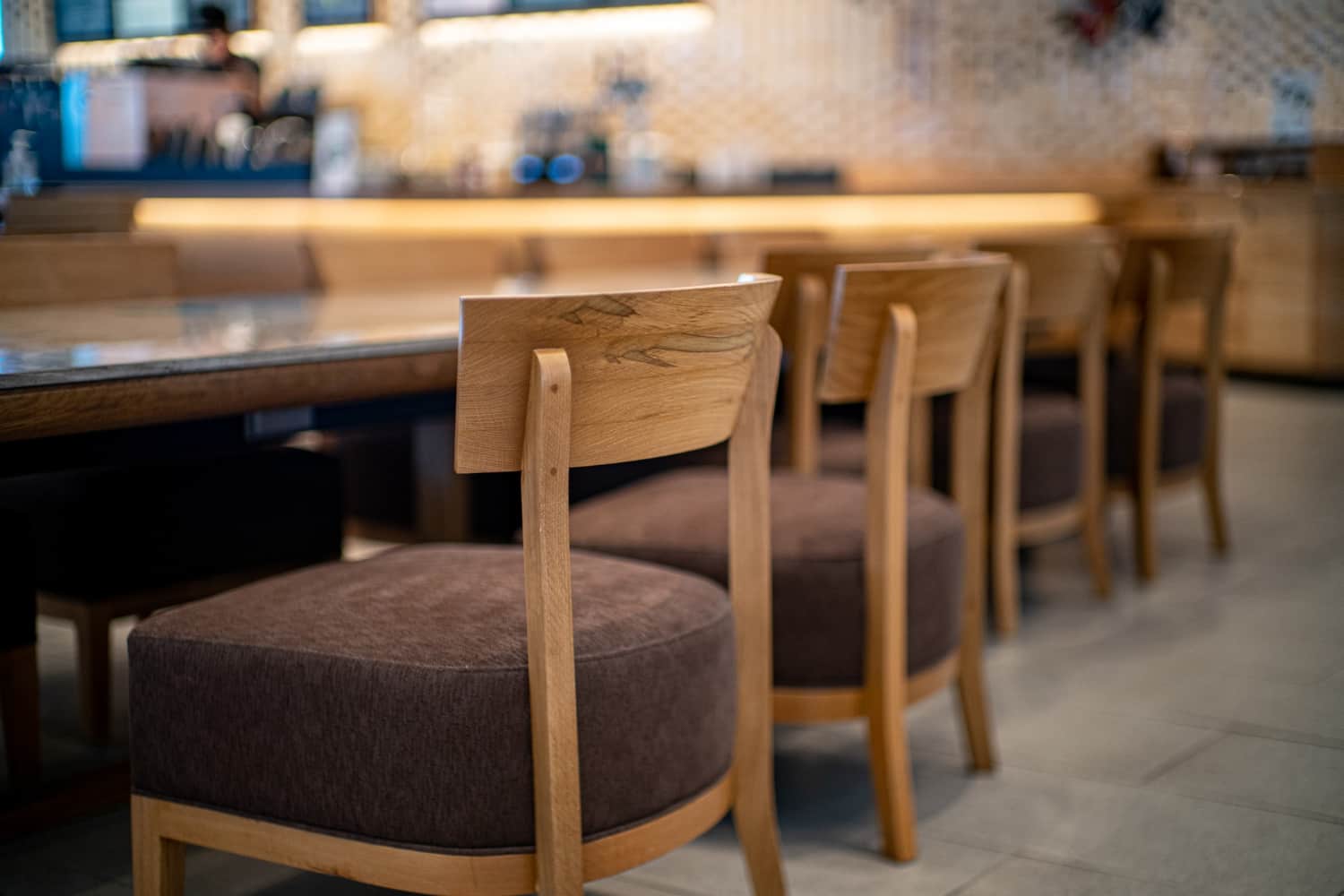
The demand for restaurant furniture Ghana has increased significantly due to:
Cities such as Accra, Tema, and Kumasi are leading this growth. As a result, restaurant spaces are no longer secondary — they are revenue-generating assets within hotel projects.
This shift requires:
When sourcing restaurant furniture, developers typically compare three options:
Each option has unique strengths and weaknesses.
For most hotel and large-scale restaurant projects in Ghana, Turkey is considered the best sourcing option due to its balance of quality, customization, and reliable export logistics, while China offers lower cost and Ghana provides faster local solutions for smaller projects.
Cost is one of the most important factors in restaurant furniture Ghana vs Turkey vs China comparison. Chinese suppliers typically offer the lowest upfront prices, but this often comes with compromises in durability and material quality. Ghana-based suppliers may have higher costs due to limited production scale, while Turkish manufacturers provide a strong balance between cost and quality. When evaluating restaurant furniture Ghana vs Turkey vs China, it is critical to focus not only on purchase price but also on long-term value and replacement costs.
| Cost factor | Ghana (local) | China | Turkey |
|---|---|---|---|
| Unit price | Medium — limited production scale drives cost up | Low — cheapest upfront price | Medium — competitive vs Europe |
| Logistics cost | Low — no shipping | High — long sea freight, port congestion risk | Medium — 18–24 days to Tema Port |
| Replacement cycle | Short — limited material quality | Short to medium — variable quality | Long — contract-grade production standard |
| Total landed cost | Higher than expected at scale | Can exceed Turkey after logistics and replacements | Most predictable for hotel-scale projects |
| Hidden cost risk | Replacement and maintenance | Delays, quality inconsistency, re-orders | Low — documentation and packaging experience |
In many hospitality projects, the cheapest sourcing option at the beginning often becomes the most expensive over time due to replacement, maintenance, and operational disruptions.
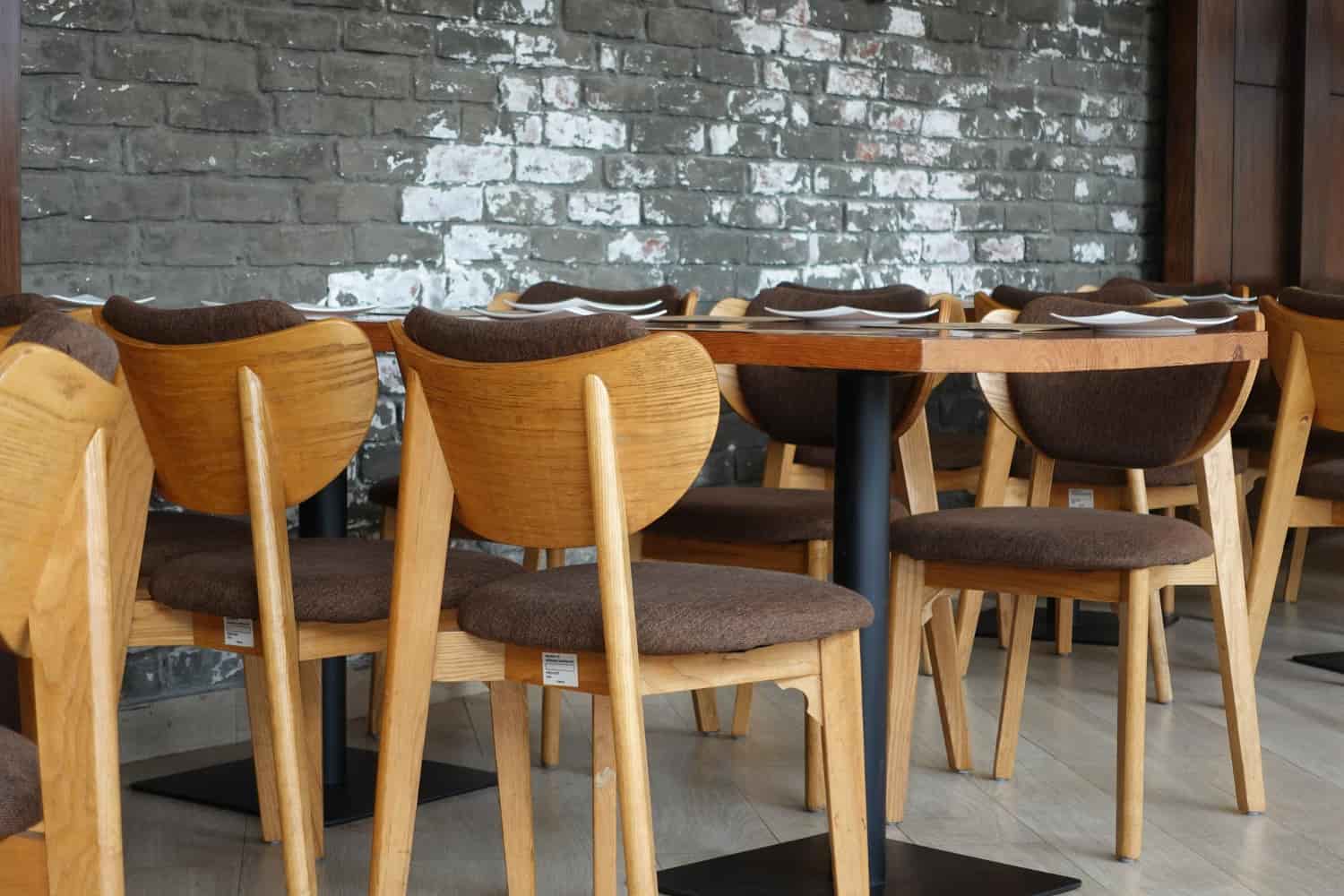
Quality differences play a major role in restaurant furniture Ghana vs Turkey vs China decisions. This is especially visible in restaurant chairs ghana, where structural strength, joint quality, and upholstery performance directly affect durability in high-traffic hospitality environments.
The selection of restaurant furniture materials ghana is one of the main factors that determines durability, consistency, and long-term performance across different sourcing options. Turkish manufacturers are known for consistent production quality, strong materials, and contract-grade standards suitable for high-traffic environments. Chinese suppliers may offer acceptable quality at lower prices, but consistency can vary between manufacturers. Ghana-based suppliers may have limitations in material sourcing. For this reason, restaurant furniture Ghana vs Turkey vs China comparison should always prioritize durability and long-term performance.
| Quality factor | Ghana (local) | China | Turkey |
|---|---|---|---|
| Material grade | Limited — dependent on locally available materials | Variable — wide range from low to acceptable | Consistent — MR-MDF, HPL, solid wood standard |
| Joint construction | Variable — limited engineering capability | Variable — dowel joints common at lower price points | Mortise-and-tenon or steel-reinforced standard |
| Upholstery standard | Residential grade in most cases | Commercial available but requires specification | Contract-grade — 50,000+ Martindale cycles |
| Finish consistency | Difficult to maintain across large volumes | Inconsistent across production runs | Controlled — matched finishes across full project |
| Climate suitability | Some local knowledge but limited specification depth | Not optimised for tropical conditions by default | Manufacturers with West Africa experience specify for Ghana climate |
International standards such as ISO 9001 ensure consistent quality systems and production processes. For restaurant environments, furniture must handle heavy daily use, frequent cleaning, and climate exposure — which becomes even more critical when selecting outdoor restaurant furniture Ghana for terrace and poolside hotel areas.
To ensure quality consistency across all furniture items, follow a structured restaurant furniture checklist Ghana during specification and production.
Quality in restaurant furniture is not visible at the point of delivery — it becomes visible at month 18, when chairs that were not built to contract specification begin showing joint failure, when table surfaces that were not properly sealed start lifting in Accra’s humidity, and when upholstery rated for residential use degrades under three daily service cycles.
For hotel restaurant projects in Ghana, the quality question is not “does this furniture look good on delivery?” It is “will this furniture still perform at year four without replacement?” That question can only be answered by the specification — frame construction method, material grade, foam density, upholstery rub cycle rating — not by the product photograph or the sample.
| Timeline factor | Ghana (local) | China | Turkey |
|---|---|---|---|
| Production time | 2–4 weeks for standard items | 4–10 weeks depending on factory load | 4–8 weeks for hotel-scale projects |
| Shipping to Tema | None | 28–35 days — longer routing | 18–24 days — direct routing |
| Customs clearance | Not applicable | 5–15 days — documentation errors common | 3–7 days — experienced with Ghana documentation |
| Total lead time | 2–4 weeks | 10–18 weeks | 8–14 weeks |
| Timeline reliability | Low at scale — capacity constraints | Low — port congestion and production delays frequent | High — milestone-based production schedules standard |
Timeline reliability matters more than timeline length in hotel projects. An opening date is a financial and operational commitment — a furniture delivery that arrives two weeks late does not just delay installation, it delays inspections, staffing schedules, and revenue generation. The relevant question when evaluating a sourcing origin is not “what is the fastest option?” but “which option delivers the most predictable timeline?”
Ghana local suppliers are genuinely fast for small replacement orders — two to four weeks is a real advantage for urgent pieces. For full hotel restaurant packages at 60+ seats, that advantage disappears: local capacity constraints mean production either gets delayed or quality gets compromised to meet the timeline. Turkey’s 8–14 week total timeline, managed by a manufacturer with a formal production schedule, is more reliable for project-scale work than a shorter but uncontrolled local process.
Customization is a key factor in restaurant furniture Ghana vs Turkey vs China comparison. Turkish manufacturers typically offer full customization options, including materials, finishes, and dimensions tailored to specific restaurant concepts. Chinese suppliers may provide limited customization, while Ghana-based suppliers often have fewer design options. If your project requires a unique identity, restaurant furniture Ghana vs Turkey vs China analysis clearly favors suppliers with advanced manufacturing capabilities.
| Customization factor | Ghana (local) | China | Turkey |
|---|---|---|---|
| Custom dimensions | Limited — dependent on available materials | Available but MOQ requirements often apply | Standard practice — BOQ-based production |
| Finish matching | Difficult across large volumes | Inconsistent — colour matching unreliable at distance | Controlled — RAL/NCS references with physical sample approval |
| Brand-specific requirements | Limited capability | Possible but requires very detailed specification | Standard — shop drawings and mock-up approval process |
| Multi-zone consistency | Not achievable at scale | Difficult — multiple factories often involved | Achievable — single factory, matched production runs |
Defining the correct restaurant table sizing standards is essential during customization, as table dimensions directly affect layout efficiency, seating capacity, and overall guest experience. These decisions should be developed through a structured restaurant seating layout ghana approach to ensure optimal circulation, seating balance, and efficient space utilization in hotel restaurant projects.
Customization in hotel restaurant furniture is not about unique design statements — it is about consistency. A 120-seat hotel restaurant needs every chair to match, every table surface to carry the same finish, and every booth to align with the wall dimensions exactly as drawn. That level of controlled production requires a manufacturer with shop drawing capability, a formal sample approval process, and a single production system managing all categories under one quality standard.
This is where the sourcing decision has the most practical consequence. A restaurant that opens with mismatched finishes between the dining area and the bar, or with chair dimensions that do not match the table height specification, cannot be corrected after installation without a partial re-order — which means another 8–12 week production cycle in an already-open hotel.
Choosing a supplier is not just about furniture — it is about project execution.
A professional supplier should provide:
To evaluate suppliers properly, you should read our guide on restaurant furniture supplier for Ghana projects.
In large hotel projects, supplier reliability has a greater impact on project success than unit pricing, as delays and inconsistencies directly affect opening timelines and revenue.
Low-cost furniture often comes with hidden risks:
These issues increase total cost over time and reduce operational efficiency.
The best choice depends on project scale:
For large-scale developments, planning restaurant furniture for hotel projects ghana requires a structured approach that integrates durability, layout efficiency, and long-term operational performance.
Because it offers:
The best sourcing strategy depends on balancing cost, quality, and project scale. Developers who focus only on price often face higher long-term costs, while those who prioritize durability and supplier reliability achieve better results.
For most Ghana projects, working with experienced manufacturers who understand export logistics and hospitality standards ensures smoother execution and more predictable outcomes.
Choosing between Ghana, Turkey, and China for restaurant furniture Ghana sourcing should be based on total project value rather than initial price.
For hotel projects, Turkey consistently offers the best balance between cost, quality, and reliability.
The best sourcing decision is not based on price alone, but on long-term project performance. Choosing the right supplier affects durability, consistency, and operational efficiency.
Developers who align sourcing decisions with project scale, design requirements, and logistics planning achieve better financial results and smoother project execution.
Restaurant furniture Ghana vs Turkey vs China comparison shows that Turkey offers the best balance between quality, customization, and price, while China is cheaper and Ghana offers faster local availability.
In most restaurant furniture Ghana vs Turkey vs China comparisons, Turkish furniture is considered higher quality with better materials and finishing, while Chinese furniture focuses more on lower cost.
In restaurant furniture Ghana vs Turkey vs China analysis, Ghana-based suppliers may have higher costs due to smaller production scale, limited materials, and less industrial manufacturing capacity.
Restaurant furniture Ghana vs Turkey vs China comparison highlights that Turkish furniture generally offers the best durability, followed by Ghana suppliers, while Chinese products may vary depending on manufacturer quality.
Restaurant furniture Ghana vs Turkey vs China evaluation suggests that importing from Turkey is often the best option for large projects, as it provides better quality, customization, and long-term value compared to local sourcing. If you are planning a full project, you can explore this restaurant furniture Ghana guide:
👉
Commercial Restaurant & Café Furniture for Ghana Hotels
WhatsApp us