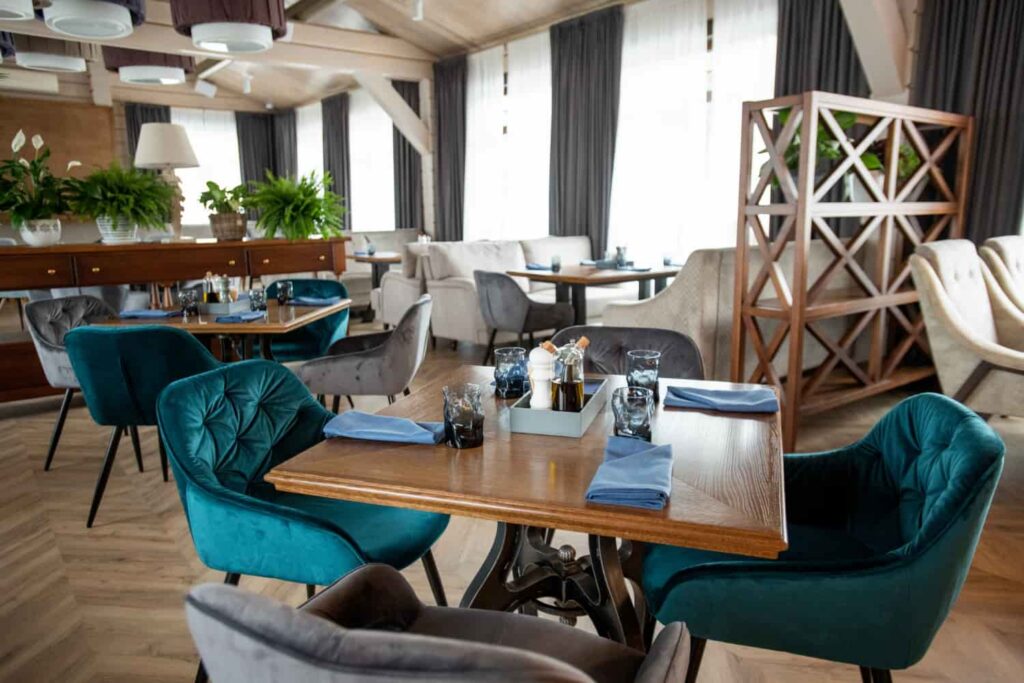
Understanding the restaurant furniture cost Ghana is critical when planning a restaurant, café, or hotel dining area. Furniture is not just a design element — it is a long-term investment that affects durability, maintenance costs, and customer experience.
If you are working on a full hospitality project, restaurant furniture Ghana hotel projects should be evaluated as part of your overall FF&E strategy.
From seating layouts to material selection, every decision directly impacts your total project budget.
Restaurant furniture cost in Ghana typically ranges between $80 and $250 per seat, depending on materials, customization, and project size, with total budgets influenced by layout efficiency, durability, and logistics.
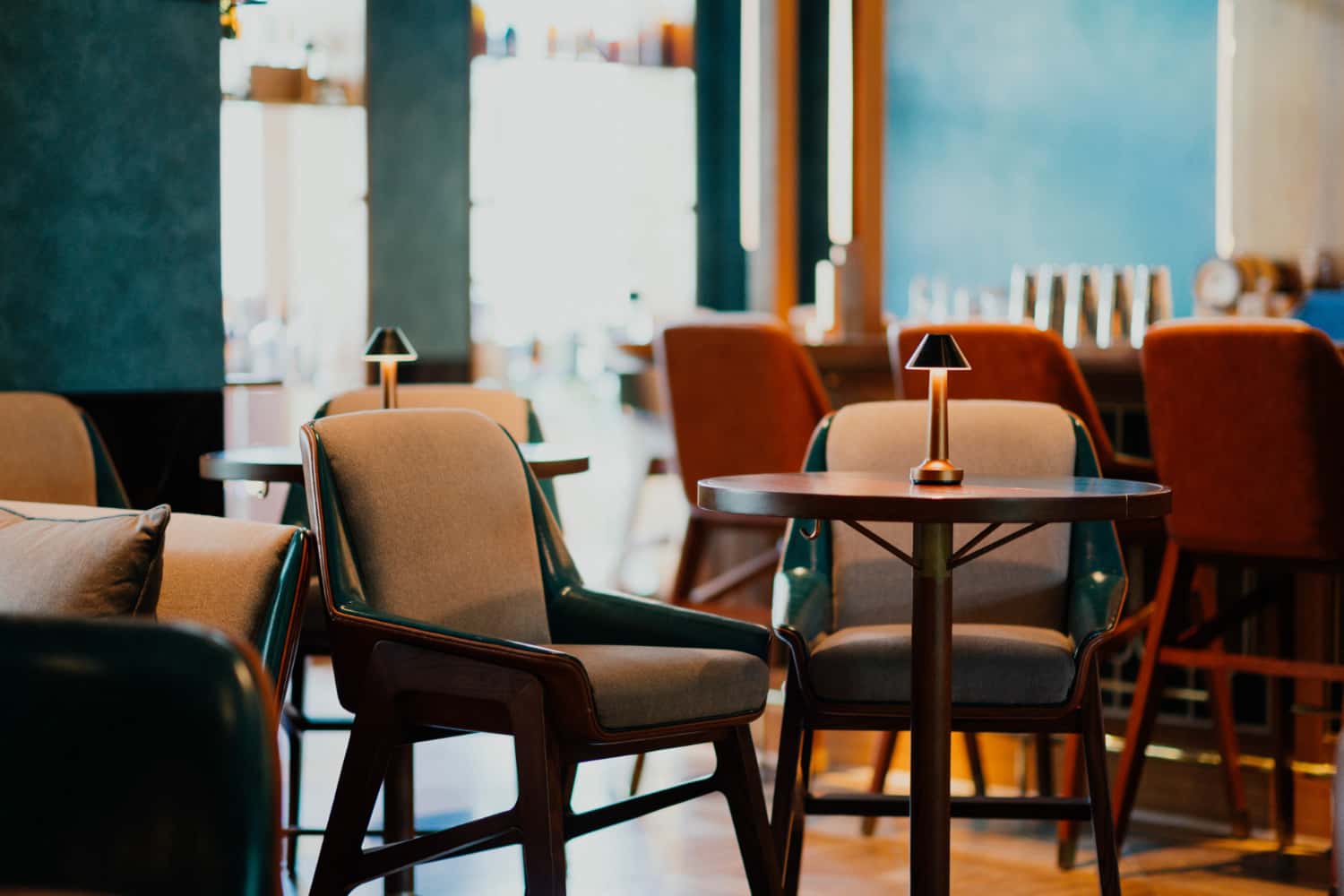
Several key factors determine the total cost of restaurant furniture in Ghana.
The choice of restaurant furniture materials ghana plays a critical role in balancing durability, maintenance requirements, and long-term cost efficiency in hospitality projects.
Lower-quality materials may seem cheaper initially but often lead to faster wear and higher replacement costs. Using a structured inspection process helps avoid these risks.
Custom furniture increases upfront cost but provides:
Standard furniture is cheaper but limits long-term value.
Bulk production significantly reduces cost per item.
Following the correct standard restaurant table dimensions is also important, as table sizes directly influence material usage, production cost, and overall space efficiency.
Restaurant furniture in Ghana can be sourced from:
Choosing the right Choosing the right supplier is essential for balancing cost and quality, especially when working with professional manufacturers for large projects. To evaluate your options in detail, read our guide on restaurant furniture supplier for Ghana projects.
Below is a realistic price breakdown:
Selecting the right restaurant chairs ghana is essential to balance durability, comfort, and long-term cost efficiency in hospitality environments.
Outdoor furniture pricing varies significantly depending on durability requirements, especially when selecting outdoor restaurant furniture Ghana for terrace and poolside hotel areas.
For a mid-size restaurant (80–100 seats):
👉 Estimated total cost: $12,000 – $30,000+
In most restaurant projects, layout efficiency and furniture durability have a greater impact on total cost than unit prices, as inefficient planning increases both initial investment and long-term operational expenses.
Choosing low-cost restaurant furniture may seem like a smart decision at the beginning, but it often leads to significantly higher long-term costs. In hospitality environments where furniture is exposed to heavy daily use, cleaning chemicals, and constant movement, lower-quality products tend to fail much faster.
Common issues include weak structural joints, surface peeling, unstable frames, and low-grade upholstery that deteriorates under frequent use. These problems not only require early replacement but also disrupt daily operations and negatively affect guest experience.
In Ghana hotel and restaurant projects, where replacement and maintenance can be logistically complex, these risks become even more costly. Delays in sourcing replacements, additional shipping costs, and installation downtime all contribute to higher total project expenses.
In contrast, contract-grade furniture is engineered for commercial environments, using stronger materials, reinforced construction methods, and tested finishes. These production processes are often aligned with internationally recognized systems such as the ISO 9000 family of quality management standards, which define how consistency, durability, and process control are maintained in manufacturing. Although the initial investment is higher, these products deliver better durability and significantly lower maintenance costs over time.
In many hospitality projects, furniture that is 20–30% cheaper upfront can result in up to 2x higher total cost over a few years due to replacement, repairs, and operational disruptions.
The key is not to minimize cost, but to optimize value. Projects that prioritize durability, quality control, and proper material selection consistently achieve better financial outcomes and more stable operations.
Turkey offers a strong balance between cost and quality for restaurant and hotel projects:
Typical timeline:
Turkey offers a strong balance between cost and quality for restaurant and hotel projects. Many developers compare sourcing options before making a final decision, especially when evaluating restaurant furniture Ghana vs Turkey vs China.
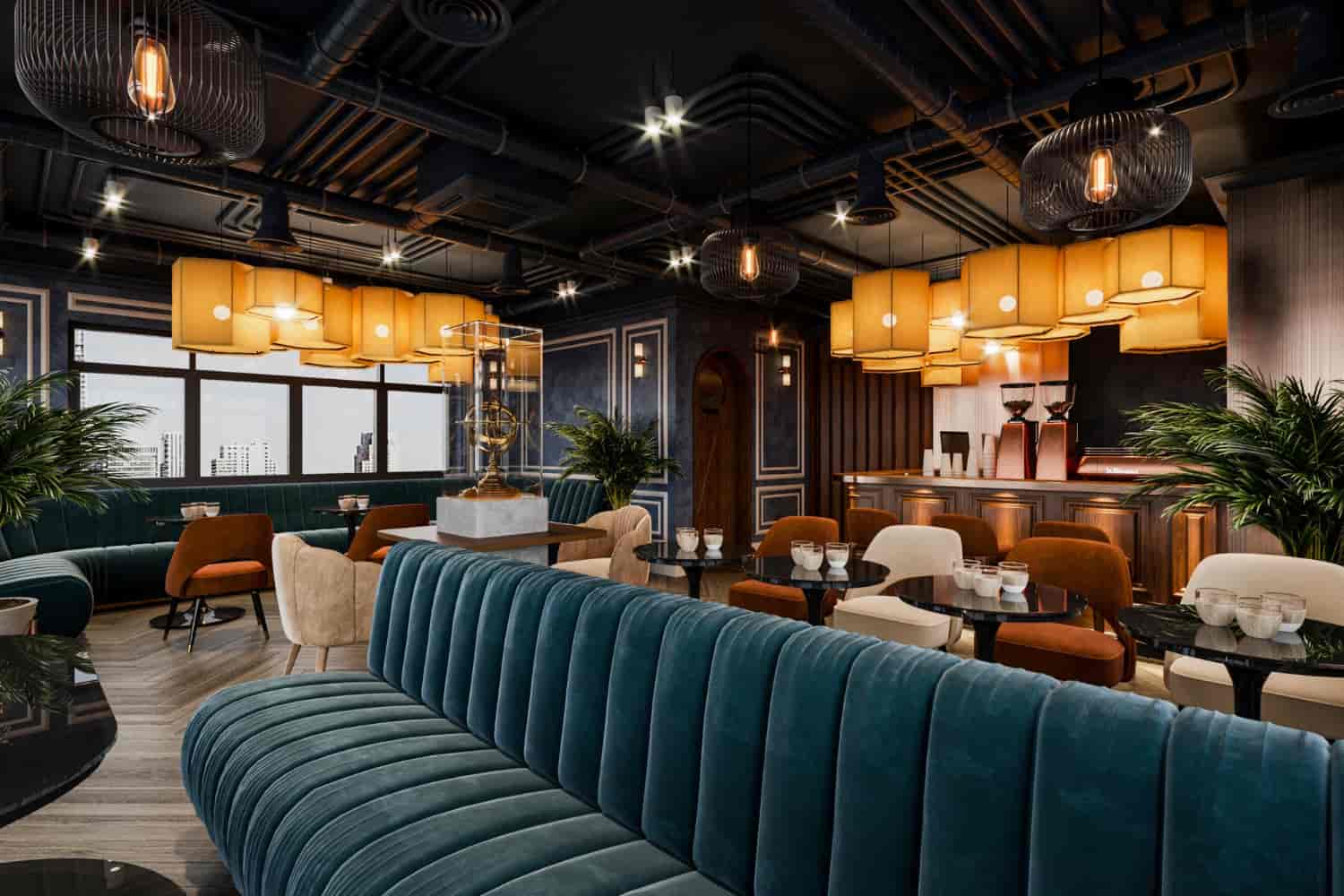
Optimizing restaurant furniture cost in Ghana is not about reducing quality, but about making smarter decisions during planning and production. A well-structured restaurant seating layout ghana plays a key role in improving space efficiency and reducing unnecessary furniture costs in hotel restaurant projects.Projects that approach furniture as a strategic investment rather than a simple purchase achieve significantly better long-term results.
One of the most effective strategies is material optimization. Instead of using premium materials for every component, high-quality finishes can be applied only to visible surfaces, while more cost-efficient materials are used in structural or hidden parts. This approach maintains visual quality while controlling production cost.
Design standardization is another key factor. Projects that minimize unnecessary variations in furniture types, dimensions, and finishes benefit from more efficient production processes and lower unit costs. Repetition improves manufacturing speed and reduces the risk of inconsistencies.
Early-stage planning also plays a critical role. Late design changes often lead to rework, production delays, and additional expenses. Coordinating layout decisions, furniture specifications, and supplier capabilities at the beginning of the project helps avoid these issues.
Working with project-based manufacturers instead of retail suppliers provides a major cost advantage in large-scale hospitality projects. These manufacturers understand how to balance cost, durability, and logistics, ensuring that the final outcome meets both budget and performance expectations.
Cost Optimization Insight:
In many restaurant projects, cost savings achieved through smart planning and standardization are more impactful than negotiating lower unit prices, as they reduce both initial investment and long-term operational costs.
Reducing the restaurant furniture cost Ghana does not mean compromising on quality. The key is to apply smart cost optimization strategies during the planning stage. One of the most effective methods is material optimization — using solid wood only for visible surfaces while combining it with MDF or veneer in non-visible areas.
Another important strategy is standardization. Instead of designing multiple furniture variations, using repeatable designs can significantly reduce production costs. Bulk production also lowers unit pricing, especially for large restaurant or hotel dining projects. Working with experienced suppliers who understand project-based manufacturing ensures that you avoid costly design mistakes from the beginning.
When evaluating the restaurant furniture cost Ghana, many buyers focus only on price, which can lead to poor long-term decisions. Low-cost furniture often uses weaker materials, lower-grade hardware, and inconsistent finishes, resulting in faster wear and replacement.
In contrast, contract-grade furniture is designed for heavy commercial use and provides long-term value. Investing slightly more at the beginning can significantly reduce maintenance and replacement costs over time. Using a structured quality control process is essential to ensure that the furniture meets durability standards. You can follow a detailed restaurant furniture checklist Ghana to avoid costly mistakes during specification and production.
For large-scale hospitality projects, restaurant furniture should never be evaluated separately from the overall concept. A more strategic approach is to consider how furniture integrates into the full project scope.
Furniture installation is the final stage of the project, but it directly determines whether all previous planning translates into a successful outcome. Even high-quality restaurant furniture can fail to deliver results if installation is poorly executed.
In hotel restaurant projects, installation must follow a structured and coordinated approach. Furniture should be delivered according to project phases, organized by area, and installed based on a predefined layout plan. Without proper coordination, delays, damage, and confusion on site can significantly impact project timelines.
One of the most effective strategies is area-based installation. Grouping furniture according to restaurant zones—such as dining area, bar section, and outdoor seating—simplifies both unloading and installation. This reduces handling time and minimizes the risk of damage.
Labeling and packaging systems also play a critical role in installation efficiency. Each furniture unit should be clearly labeled according to its location and function, allowing installation teams to work faster and more accurately without constant cross-checking.
Coordination between suppliers, contractors, and installation teams is equally important. Installation should be aligned with construction progress, ensuring that flooring, lighting, and mechanical systems are completed before furniture placement begins.
In many hotel projects, installation delays are not caused by furniture production, but by poor site coordination and lack of structured execution planning.
Successful projects treat installation as part of the overall system, not as a final step. When delivery, labeling, layout planning, and team coordination are aligned, installation becomes faster, safer, and significantly more efficient.
Proper installation planning reduces project delays and protects the overall investment.
Cost-efficient restaurant furniture planning is not about finding the cheapest option, but about balancing durability, layout efficiency, and long-term performance.
This is especially important when planning restaurant furniture for hotel projects ghana, where furniture must align with overall hotel operations, guest flow, and long-term investment strategy.
Projects that focus only on initial cost often face higher expenses over time, while those that invest in structured planning achieve better operational results and stronger return on investment.
The average restaurant furniture cost Ghana typically ranges between $12,000 and $30,000 for a mid-sized restaurant, depending on materials, design complexity, and supplier choice.
The main factors affecting restaurant furniture cost Ghana are material quality, customization level, quantity, and whether the furniture is sourced locally or imported.
Local furniture may have a lower upfront cost, but it often lacks durability and consistency. In many cases, imported contract-grade furniture provides better long-term value.
The full process usually takes 7 to 12 weeks, including 4–8 weeks for production and 3–4 weeks for shipping.
Custom furniture is recommended for most projects because it improves space efficiency, brand identity, and long-term durability, especially for hotel and large-scale restaurant projects.
WhatsApp us