Hotel contract furniture Ghana projects require is one of the most consequential decisions a developer makes — not because of the purchase price, but because every operational problem that follows an opening traces back to a furniture choice made before production began. Ghana’s hospitality market is growing fast, and the hotels gaining ground in it are not necessarily the ones that spent the most on furniture. They are the ones that specified correctly from the start: right materials for the climate, right supplier for the scale, right timeline for the construction schedule. This guide covers the complete picture — from understanding what contract-grade actually means in a Ghana context, through materials, costs, supplier selection, and project execution. For the wider procurement context, the hotel furniture Ghana guide covers the full FF&E scope across all hotel zones. On the production side, hotel furniture manufacturing Turkey Ghana explains how Turkish factories handle custom hospitality projects at scale. For dining areas specifically, restaurant furniture Ghana covers the unique demands of F&B spaces. When the project reaches the logistics stage, the complete export hotel furniture to Ghana guide walks through the shipping and customs process end to end. For room layout, zone planning, and clearance standards, the hotel furniture design planning Ghana guide sets the broader design framework. For product-level specification across guest rooms and public areas, see hotel guest room furniture specification. For finding and evaluating Turkish manufacturers, see hotel furniture suppliers Turkey.
Quick Answer
Hotel contract furniture Ghana refers to commercial-grade furniture engineered for heavy daily use, humidity resistance, and long-term performance in hospitality environments. Unlike residential furniture, it is built to project specifications, tested to international standards, and sourced through a structured procurement process that accounts for Ghana’s climate, usage intensity, and import logistics.
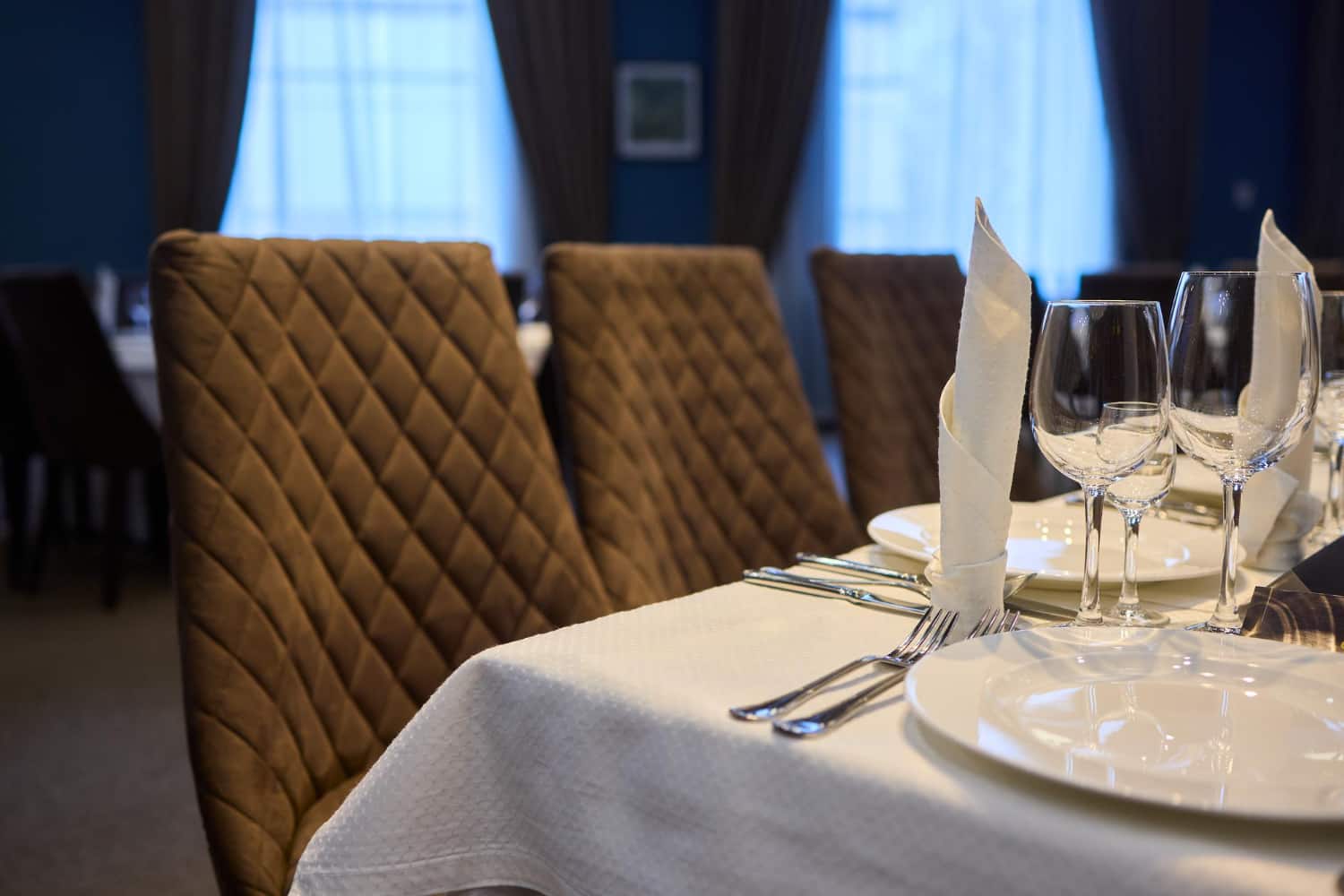
Contract furniture is not a marketing term for expensive furniture. It is a production and specification category that defines how a piece is engineered, what materials it uses, how it is tested, and what usage load it is designed to sustain. A hotel guest chair made to contract specification uses a hardwood or steel frame construction with reinforced joints, high-density foam rated for 100,000+ compression cycles, and a surface fabric tested for 50,000+ rub cycles on the Martindale scale. A visually identical chair made to residential specification uses none of those standards and will show structural failure within 18 months in a hotel environment.
In Ghana specifically, the distinction carries additional weight. Humidity levels in coastal cities like Accra and Takoradi accelerate the deterioration of materials that were not specified for tropical conditions. MDF boards without moisture-resistant cores swell and delaminate. Untreated veneer lifts at the edges within a season. Standard foam turns permanently compressed in high-occupancy guest rooms inside two years. Developers who make the mistake of sourcing residential furniture for a hotel project — often to save 20 to 30 percent on initial cost — typically spend more than that difference on replacements within the first three years of operation.
Commercial furniture performance standards are defined by organisations such as BIFMA, whose testing protocols for strength, durability, and safety give hotel contract furniture Ghana buyers a measurable benchmark for evaluating supplier claims. Understanding what hotel contract furniture materials Ghana projects actually require is the first step in avoiding the replacement cycle. For a complete breakdown of what contract furniture means, how it is tested, and how it differs from retail specification, see what is contract furniture. For a detailed explanation of how hotel contract furniture fits within the broader FF&E scope, see hotel contract furniture vs FF&E.
The most expensive furniture decision in a Ghana hotel project is not the one that costs the most upfront — it is the one that gets replaced in year two. Residential-grade furniture in a commercial environment fails predictably. The replacement cost, combined with the operational disruption of refurnishing active rooms, consistently exceeds the original saving by a factor of two or three. Specify contract grade from the start. The math does not work any other way.
One of the most common planning errors in hotel furniture procurement is treating the project as a single order. A hotel has four distinct furniture zones, and each one demands a different specification, a different material logic, and in many cases a different production approach. Grouping them under one brief produces compromises that serve none of them well.
Guest rooms are the highest-volume zone and the one where consistency matters most. Every room needs to look and perform identically on day one and year five. That requires standardised modules — bed base, headboard, nightstands, wardrobe, desk, desk chair — produced in a single factory run with matched finishes and hardware. The durability spec for guest room casegoods should prioritise surface scratch resistance, hinge and drawer mechanism quality, and board moisture resistance. A detailed breakdown of how to plan this zone is covered in the hotel furniture space planning guide, which addresses zone dimensions, clearance standards, and layout optimisation.
The lobby and public areas carry the brand impression load. These pieces absorb foot traffic, luggage contact, and the kind of casual misuse — sitting on armrests, dragging chairs across floors — that destroys residential furniture within months. Upholstered lobby seating needs commercial-grade fabric with a Martindale rating above 30,000, foam density above 40kg/m³, and leg caps that protect both the furniture and the floor finish. Restaurant and dining areas present the harshest physical environment in any hotel — chairs get scraped across tiled floors dozens of times a day, tables absorb spills, cleaning chemicals, and heat from plates. The specification logic for F&B furniture is different enough from guest room furniture that it deserves its own planning process — covered in detail in the restaurant furniture Ghana guide. Outdoor and poolside furniture operates in the most demanding conditions of all — UV-stabilised materials, rust-resistant frames, and quick-dry cushion fabrics are not optional upgrades but baseline requirements for furniture exposed to Ghana’s coastal climate year-round.
Each of the four hotel furniture zones in Ghana requires a different material logic — not a different quality level, but a different set of performance priorities. Guest room casegoods prioritise moisture resistance and dimensional consistency. Lobby seating prioritises fabric durability and foam density. Restaurant furniture prioritises structural rigidity and surface cleanability. Outdoor furniture prioritises UV stability and corrosion resistance. A single specification that tries to cover all four zones with the same material and finish logic will underperform in at least two of them.
Material specification for hotel contract furniture in Ghana needs to account for two things that are often underweighted in procurement briefs: humidity and maintenance capacity. A material that performs well in a European hotel may behave very differently in a coastal Ghanaian one, and a finish that requires specialist maintenance products or trained technicians creates operational problems if those resources are not reliably available at the property level.
HPL (High Pressure Laminate) is the highest-performing surface material for hotel casegoods in Ghana’s coastal conditions — resistant to moisture contact, cleaning chemical exposure, and the surface abrasion of daily hotel use. Moisture-resistant MDF core is the minimum substrate specification for all panel-based casegoods — standard MDF without MR treatment swells at edges and around hardware fixings in coastal humidity within 12 to 24 months. Veneer on MR core is appropriate for upscale guest rooms and suites where visual quality justifies the additional maintenance requirement, but must be specified with a closed-pore lacquer topcoat system to perform in Ghana’s conditions. Solid beech or rubberwood — kiln-dried and correctly sealed — provides excellent durability for chair frames and table bases. Steel frames with powder coating and aluminium for outdoor applications provide the structural performance and corrosion resistance that hotel contract furniture in Ghana requires.
| Material | Humidity resistance | Durability | Best for |
|---|---|---|---|
| HPL (High Pressure Laminate) | Excellent | Very high | Casegoods, desk tops, wardrobe interiors |
| Moisture-resistant MDF core | Good | High | Structural panels in all casegoods |
| Veneer on MR core | Moderate | Medium-high | Upscale guest rooms, suites |
| Solid beech / rubberwood | Good (if treated) | Very high | Chair frames, table bases |
| Steel frame (powder coated) | Good | Very high | Seating frames, bed bases |
| Aluminium (outdoor) | Excellent | Very high | Poolside, terrace furniture |
| Standard MDF (no MR treatment) | Poor | Low in humid climates | Not recommended for Ghana |
Two materials consistently cause problems in Ghana projects when incorrectly specified: standard MDF without moisture-resistant treatment and natural rattan for outdoor use. Both look acceptable in product photographs and both fail visibly within the first humid season. Specifying moisture-resistant board throughout — even in interior guest room casegoods — adds a modest cost at production but eliminates a category of failure that is both expensive and disruptive to fix post-opening. For the complete material specification framework covering how each material type is processed inside the factory and what manufacturing adjustments are required for Ghana’s conditions, see the hotel furniture wood materials guide.
Budgeting for hotel contract furniture in Ghana requires thinking in total landed cost per key, not in unit price per piece. The per-key metric captures everything that needs to happen before a guest can actually use the room — not just the manufacturing cost, but packaging, sea freight, import duties, inland delivery, and installation. Developers who budget on manufacturing cost alone consistently discover a 35 to 50 percent gap between the factory quote and what the furniture actually costs to get into a finished room in Accra.
A standard three-star guest room package — bed base, headboard, two nightstands, wardrobe, desk, desk chair, luggage rack — sourced from a Turkish manufacturer and delivered to site in Ghana typically lands in the range of $800 to $1,400 per key depending on material spec and order volume. A four-star package with veneer surfaces, upholstered headboard, and additional seating runs $1,400 to $2,200 per key landed. Five-star and boutique hotel packages with full custom design and premium materials can reach $3,000 to $5,000 per key or beyond. These are landed cost ranges — they include freight and duties. For a detailed breakdown of how duties and taxes are calculated on furniture imports specifically, the hotel contract furniture cost Ghana guide covers the full cost structure including HS code classifications and Ghana Revenue Authority levy calculations.
The gap between factory price and landed cost in Ghana is not a negotiation variable — it is a structural reality of international furniture procurement. Export packaging adds 3 to 5 percent. Sea freight from Turkey to Tema Port adds 8 to 12 percent depending on container utilisation. Ghana import duties and levies on furniture add 15 to 25 percent depending on HS code classification and declared value. Inland delivery from Tema to the project site and installation add a further 5 to 8 percent. Every component of this calculation must be in the project budget before any supplier is briefed. Discovering these costs after the container arrives is not a logistics surprise — it is a planning failure.
On a 60-room hotel project in Ghana, the difference between budgeting on factory price versus total landed cost per key can easily reach $60,000 to $90,000 in unplanned spend. Import duties, Tema port charges, inland delivery, and installation combined typically add 35 to 50 percent on top of the manufacturing cost. Build that into the project budget before the order is placed — not after the container arrives.
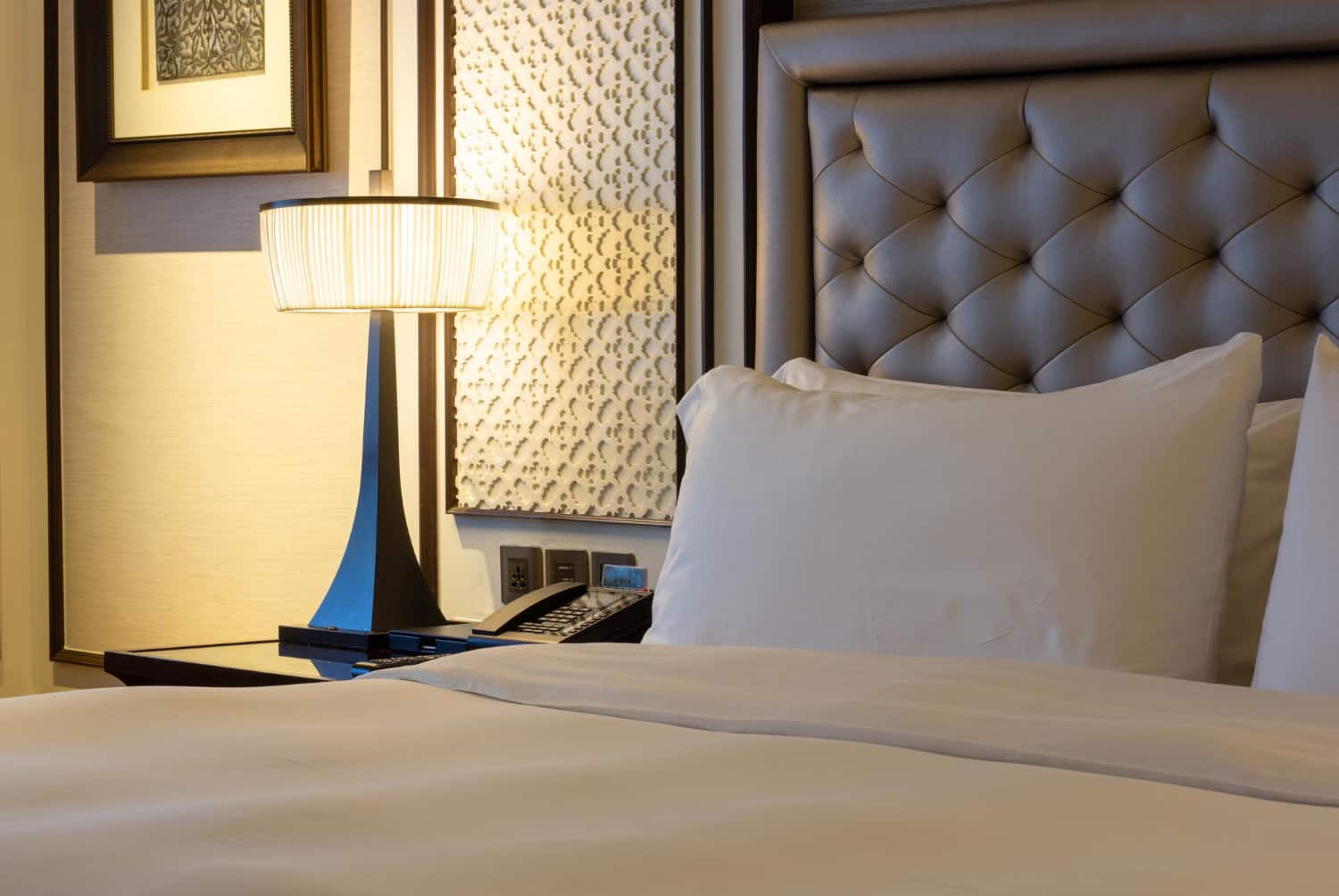
Three sourcing options dominate hotel furniture procurement for Ghana: Turkish manufacturers, Chinese factories, and local or regional suppliers. Each has a genuine use case, and the right choice depends on project scale, timeline, budget, and specification complexity — not on a blanket preference.
Turkish manufacturers have become the dominant choice for mid-to-large Ghana hotel projects over the past decade for three converging reasons. Turkish factories operate at hospitality project scale — they are set up to produce complete room packages across guest rooms, lobbies, and F&B areas under one roof, with consistent quality control across thousands of pieces. Turkey’s geographic position gives it competitive sea freight times to West Africa — 18 to 24 days to Tema Port versus 28 to 35 days from China. And the production standard — HPL, solid wood, and upholstery work under one manufacturing system — matches what Ghana hotel contract furniture specifications typically require. Working with an experienced hotel contract furniture supplier Ghana projects rely on means getting a factory that understands BOQ-based procurement, sample approval processes, and export documentation — not just a furniture maker who ships internationally.
Chinese factories offer competitive unit pricing on standard pieces and can handle very large volumes. The trade-offs are real: quality varies significantly between factories, minimum order quantities are often higher, the sample-to-production consistency gap is wider, and lead times on custom pieces are longer than they appear in initial quotes. Chinese sourcing works well for standardised, non-custom items where the specification is locked and the buyer has the experience to manage factory oversight effectively. Local and regional suppliers — primarily based in Accra or sourcing from Nigeria and Ivory Coast — offer shorter lead times and easier communication. Their limitation is customisation capacity and production scale. For a 100-room hotel requiring identical room packages to a specific finish spec, local sourcing cannot realistically deliver what is needed. For smaller boutique projects, replacement pieces, or supplementary items alongside a primary import order, local suppliers provide real value. For a full framework comparing all three sourcing options across cost, quality, lead time, and export experience, see the hotel furniture comparison guide.
The most common sourcing mistake in Ghana hotel contract furniture procurement is selecting a supplier based on the lowest quote before the BOQ is finalised. A quote produced against an incomplete specification is not a price — it is an estimate that will change as the scope becomes clear. Comparing quotes from three suppliers on the same complete BOQ produces a meaningful comparison. Comparing quotes on incomplete or different specifications produces a false ranking that often results in the wrong supplier being selected for the wrong reasons.
One of the most consistent planning failures in Ghana hotel projects is starting the furniture procurement process too late. The timeline from first supplier contact to furniture installed in finished rooms is longer than most construction project managers account for, and compressing any stage of it creates cascading problems that affect the opening date.
The procurement sequence for hotel contract furniture from a Turkish manufacturer for a Ghana project runs in eight defined stages, each of which must complete before the next can begin. BOQ preparation and supplier briefing (1 to 2 weeks) requires final room layouts and design concept to be locked before starting. Quotation and supplier selection (2 to 3 weeks) requires a complete BOQ and material specifications. Sample production and approval (2 to 4 weeks) requires a signed contract and deposit payment. Mass production (4 to 8 weeks) requires samples approved and production payment released. Pre-shipment QC and container loading (3 to 7 days) requires production complete and QC passed. Ocean freight from Turkey to Tema (4 to 6 weeks) requires the container loaded and export documentation complete. Tema customs clearance (5 to 10 days) requires import documents filed pre-arrival. Inland delivery and installation (1 to 2 weeks) requires site rooms ready to receive furniture.
| Stage | Duration | What must be complete before this starts |
|---|---|---|
| BOQ preparation & supplier brief | 1–2 weeks | Final room layouts and design concept |
| Quotation and supplier selection | 2–3 weeks | BOQ and material specifications locked |
| Sample production & approval | 2–4 weeks | Contract signed, deposit paid |
| Mass production | 4–8 weeks | Samples approved, production payment released |
| Pre-shipment QC & container loading | 3–7 days | Production complete, QC passed |
| Ocean freight (Turkey → Tema) | 4–6 weeks | Container loaded, export docs complete |
| Tema customs clearance | 5–10 days | Import docs filed pre-arrival |
| Inland delivery & installation | 1–2 weeks | Site rooms ready to receive furniture |
The total from first brief to furniture installed runs 18 to 26 weeks in a well-managed project. That means the furniture process needs to start no later than six months before the planned opening date — and earlier is better, because late approvals and design changes at the sample stage consume the buffer that protects the opening date. Projects that start the furniture process at four months before opening are already in a compressed position before a single piece has been produced.
The single most effective action a developer can take to protect a hotel opening date is completing room layout drawings and material selections before approaching any manufacturer for a quote. Factories cannot produce meaningful timelines or accurate pricing from a brief that says “standard hotel furniture.” Every week spent finalising specifications before the supplier is engaged is a week saved during production — where time is far more expensive.
The custom versus standard question comes up on almost every hotel contract furniture project, and the answer depends entirely on the project’s hotel category and what the developer is trying to achieve operationally and commercially. There is no universal right answer — but there is a logical framework for reaching the right one for each project.
Standard furniture — catalogue pieces produced in standard sizes and finishes — works well for budget and economy hotels where room dimensions are uniform, the brand does not require visual differentiation, and operational simplicity matters more than design distinctiveness. Standard pieces have shorter lead times, lower minimum order quantities, and easier replacement sourcing. The trade-off is that standard furniture in a standard hotel looks standard — which matters more in some market segments than others. For a budget business hotel in Accra where guests are judging cleanliness, price, and location above all else, standard contract furniture at the correct specification level is the right procurement decision.
Custom production means designing pieces specifically for the project: dimensions matched to room layouts, finishes matched to the interior concept, details matched to the brand positioning. For mid-scale, upscale, and boutique hotels in Ghana, custom hotel contract furniture is almost always the better investment. Ghana’s hotel market is becoming more competitive, and the difference between a property that looks designed and one that looks assembled is visible to guests within seconds of entering a room — and visible in the online review scores that determine booking conversion. Custom contract furniture is also the only way to ensure that every piece of furniture fits the space it was designed for. A wardrobe that is 20mm too wide for the alcove it was planned for is a planning problem, but it happens regularly when furniture is specified before layouts are finalised — and custom production requires that layouts are finalised before production begins, which is the correct sequence regardless of specification level.
Custom production adds 2 to 4 weeks to the procurement timeline compared to standard catalogue pieces — the time required for technical drawing production and approval before mass production can begin. For a project where the opening date is fixed, this additional time must be built into the procurement schedule from the start. The decision between custom and standard is not only a specification decision — it is a timeline decision that must be made before the supplier is briefed, not after.
Hotel contract furniture Ghana investments are only as good as the installation they receive and the maintenance programme they operate under. Both are frequently underplanned in Ghana hotel projects, and both have measurable impact on furniture lifespan and operating cost.
Installation quality depends on having the right people doing it. Flat-pack assembly by untrained site workers produces inconsistent joints, incorrectly tensioned fixings, and surface damage during handling — none of which are covered by manufacturer warranties and all of which shorten furniture life. Professional installation — either by the supplier’s team or by a qualified furniture installation contractor — is worth budgeting as a line item, not treating as something the main contractor absorbs. The cost is a fraction of the furniture value and the protection it provides is disproportionate. A wardrobe installed with hinges incorrectly adjusted will show door misalignment within weeks — not because the hinge failed, but because the installation was inadequate. Correcting it in an operating hotel room is disruptive, and repeated correction accelerates the physical wear on the hinge fixing points.
Maintenance planning for Ghana’s climate needs to account for humidity effects on wooden surfaces, the impact of cleaning chemicals on fabric and lacquer finishes, and the importance of catching minor damage before it becomes major damage. A wardrobe door with a loose hinge that gets used for three months before anyone reports it will have a damaged frame by the time it is fixed. Quarterly inspection routines — checking hinges, drawer mechanisms, castors, upholstery seams, and surface finishes — cost almost nothing to run and consistently extend hotel contract furniture Ghana lifespan by two to three years compared to reactive maintenance alone. Housekeeping teams should be briefed on which cleaning products are compatible with the furniture finishes specified — commercial cleaning products that are appropriate for tile floors can damage HPL surfaces and lacquered finishes if applied incorrectly, and the damage accumulates gradually until it becomes visible across entire room zones simultaneously.
Before installation begins, confirm: professional installation team briefed on technical drawings for each piece type; hinge adjustment tools available on site; surface protection materials in place before furniture enters finished rooms; cleaning product compatibility list provided to housekeeping team; quarterly inspection schedule established with defined checkpoints for hinges, drawer mechanisms, upholstery seams, and surface finishes; replacement parts for high-wear items (hinge sets, drawer slides, castor wheels) ordered with the original production run and stored at the property.
One of the clearest ways to define what a project actually needs from its contract furniture is to work from the hotel’s star category and target guest profile. A three-star business hotel in Accra and a five-star resort on Ghana’s coast are both buying hotel contract furniture — but the specification logic between them is different enough that treating them the same way produces either overspend or premature failure.
Three-star and budget hotels need furniture that performs reliably under high occupancy and fast room turnover. The priority is durability and consistency over aesthetics. HPL surfaces on moisture-resistant board, powder-coated steel bed frames, and commercial fabric rated at 30,000 Martindale rub cycles covers the functional requirement at a cost point that works for the financial model. The guest is not scrutinising the finish quality — they are judging cleanliness, comfort, and whether the wardrobe door works. Design investment here is best directed at the lobby, where the brand impression is formed, rather than distributed evenly across every room element. Four-star hotels need a step up in both visual quality and construction. Veneer on moisture-resistant core becomes appropriate for suites and feature areas. Upholstered headboards with fabric matched to the room concept, solid wood or brushed metal chair frames, and higher-density foam in seating are reasonable investments at this category — they are visible to the guest and influence online review scores in ways that HPL casegoods do not.
Five-star and boutique hotels operate in a different register entirely. Custom production from technical drawings is the baseline, not an upgrade. Material combinations — stone surfaces, solid oak, hand-stitched upholstery, brushed brass hardware — are determined by the design concept, and the manufacturer needs to be selected on the basis of whether they can execute that concept consistently across 100 or 200 rooms. Lead times are longer, sample approvals are more involved, and the cost per key is higher — but the commercial consequence of getting the specification wrong is also higher, because five-star guests have direct comparators from properties around the world and they know the difference.
| Hotel category | Surface spec | Upholstery | Expected cycle |
|---|---|---|---|
| Budget / 2-star | HPL on MR-MDF | 30,000+ Martindale | 5–7 years |
| 3-star | HPL / PVC edge | 35,000+ Martindale | 6–8 years |
| 4-star | Veneer or premium HPL | 50,000+ Martindale | 8–10 years |
| 5-star / boutique | Custom: stone, solid wood, lacquer | 100,000+ Martindale | 10–15 years |
A Bill of Quantities — the BOQ — is the document that turns a hotel concept into a production order. Without one, manufacturers cannot give accurate pricing, lead times are estimates rather than commitments, and the gap between what was ordered and what arrives becomes a recurring source of conflict. Every hotel contract furniture Ghana project that runs over budget or misses its delivery window can trace at least part of the problem back to a BOQ that was incomplete, ambiguous, or prepared too late in the process.
A well-structured BOQ lists every furniture item in the project by room type, with quantities, dimensions, material specifications, finish codes, and hardware requirements for each piece. It is not a wish list — it is a manufacturing brief. The wardrobe in room type A is not “a wardrobe.” It is a 900mm wide, 550mm deep, 2100mm high unit in 18mm MR-MDF with HPL surface in finish code RAL-9001, two internal hanging rails, four shelves, a full-length mirror on the interior door, and concealed hinges from a named hardware brand. That level of detail allows a factory to price accurately, schedule production correctly, and produce samples that match the intent without going back and forth on interpretations. The BOQ must also account for all hotel zones — lobby seating, reception desks, restaurant chairs and tables, bar stools, outdoor terrace pieces, pool loungers, and corridor console tables all need to be itemised if they are part of the order.
Prepare the BOQ after room layouts are finalised but before approaching any supplier. Sharing it with two or three manufacturers simultaneously allows a genuine comparison — same specification, different prices and lead times — rather than comparing quotes that are based on different assumptions. Projects that send a complete BOQ receive quotes that can actually be compared across suppliers. Projects that send a partial brief receive indicative numbers that inflate during the sample and production phase once the full scope becomes clear. One practical addition: include a photograph or sketch reference for each piece type. Factories work faster and more accurately when they can see what the buyer has in mind alongside the technical specification.
A complete hotel contract furniture BOQ must define for every item: external dimensions (width, depth, height); substrate specification (MR-MDF at defined thickness); surface finish with RAL or NCS colour reference; edge banding material and thickness (minimum 2mm ABS); hardware specifications with named brand and cycle count; internal layout for all casegoods; fabric specification with Martindale rating and FR certification for all upholstered pieces; and quantities by room type. Any item without all of these defined will be produced to the manufacturer’s cost preference — not the project’s operational requirement.
The sample approval stage is the most important quality control event in a hotel contract furniture project, and it is the one most frequently rushed. A developer who approves samples quickly to keep the production schedule moving is taking on risk that cannot be undone once mass production begins. A developer who treats sample review as a proper gate — something that must genuinely pass before production is authorised — is protecting 80 or 100 rooms of furniture with a decision that takes a few focused hours.
The gold standard in hotel furniture procurement is a mock-up room: a full-scale installation of every piece of furniture for one room type, assembled in the factory and reviewed either in person or through a structured video review. The mock-up allows the developer or their representative to check dimensions against the actual room layout, evaluate finish colours under different lighting conditions, test every moving part — hinges, drawer slides, wardrobe doors — and identify issues before the factory has produced 300 wardrobes to the same pattern. Factories that resist producing mock-up rooms, or that ask for additional payment for them on orders above a certain value, are a warning signal — a manufacturer who cannot show you a complete assembled room before mass production is a manufacturer whose output you cannot verify before commitment.
During sample review, check five categories systematically. Dimensions — measure actual pieces against the BOQ, not just the drawings, because production tolerances can accumulate in ways drawings do not show. Finish and colour — compare against approved swatches under consistent lighting, because finish samples approved under a factory’s fluorescent lights can look different in a room with warm ambient lighting. Hardware function — open and close every door and drawer at least ten times, check for alignment, binding, and noise. Structural integrity — apply load to chairs, press on bed bases, check that joints are tight and that the wobble test on seating returns a stiff result. Surface quality — check for air bubbles under HPL edges, paint inconsistencies, scratch resistance, and edge finish at joints. Document every finding in writing and photograph everything. The approved sample becomes the reference standard for the entire production run — sign off in writing only when the sample meets the specification, not when it is close enough.
The most common sample approval mistake in Ghana hotel contract furniture projects is approving a showroom sample rather than a project-specific sample produced to the BOQ specification. A showroom sample demonstrates what the manufacturer can produce at their best — not what they will produce for your order at your price point and your material specification. Request a project-specific sample produced from the exact materials, hardware, and finish references in the BOQ. The cost of re-sampling one incorrect piece is a fraction of the cost of rejecting a container of furniture at Tema Port.
Ghana’s hotel market has diversified significantly over the past decade, and the range of hotel concepts now operating — or under development — in cities like Accra, Kumasi, Takoradi, and Cape Coast represents meaningfully different operational models. Each concept demands a different approach to hotel contract furniture Ghana procurement, and understanding those differences helps developers make specification decisions that align with what their property actually needs to deliver.
Business hotels, which make up a significant proportion of the mid-market supply in Accra, need furniture that serves a working guest efficiently. Desk setup is critical — a proper work surface at correct height, with accessible power and USB points integrated into the furniture rather than retrofitted, and a desk chair that functions as a work chair, not just a decorative element. Storage matters more than it does in leisure hotels because business guests unpack for multi-night stays. The aesthetic can be restrained — clean lines, neutral finishes, nothing that dates quickly — because the guest is judging functionality first. Boutique hotels compete on character and distinctiveness. The furniture is often the strongest visual expression of the hotel’s concept, and standard catalogue pieces undermine that positioning immediately. Custom production is almost always the right approach for boutique properties — pieces designed specifically for the space, in finishes and materials that reinforce the brand story. The risk to avoid is letting a boutique concept be produced to budget-hotel specification because the developer wanted to save on FF&E.
Resort and leisure hotels along Ghana’s coast face the most demanding physical environment: humidity, salt air, UV exposure, and guests who interact with furniture in ways that business hotel guests do not. Outdoor furniture specification is as important as indoor. Indoor pieces in open-plan lobby or restaurant areas adjacent to pools or terraces need moisture-resistant specification throughout. Upholstery choices need to account for guests arriving in wet swimwear. The palette tends toward natural materials and textures that complement the coastal environment — but those materials must be treated and specified for the conditions, not just chosen for appearance. Serviced apartments and extended-stay properties have a distinct requirement that is often underspecified: furniture must perform under residential-style use patterns while retaining commercial-grade construction. Guests staying for weeks or months use drawers and wardrobes differently from overnight guests, and form opinions about furniture comfort over long periods. The specification should lean toward pieces that feel quality over extended contact — higher-density foam, smoother drawer action, more substantial door and drawer handles — while maintaining the durability thresholds that hotel occupancy demands.
Ghana’s coastal resort properties face a specific furniture challenge that inland business hotels do not: salt air accelerates metal corrosion on standard powder-coated steel hardware within 12 to 18 months. Hinge fixings, drawer slide rails, and bed frame joints all require corrosion-protected specification — zinc-plated or stainless steel hardware — for properties within 5 to 10 kilometres of the coast. This specification adjustment adds a modest cost at procurement and eliminates a failure category that is expensive and disruptive to correct in an operating hotel.
Warranty coverage on hotel contract furniture is an area where developer expectations and manufacturer reality frequently diverge, and clarifying the terms before signing a production contract avoids disputes that are difficult to resolve once furniture is installed in a finished hotel.
Turkish manufacturers typically offer structural warranties of two to five years on casegoods covering manufacturing defects — joint failure, delamination, hardware malfunction under normal use. What most warranties explicitly exclude is surface wear from cleaning chemicals, fabric deterioration from UV exposure or humidity, foam compression from normal use, and damage caused by misuse or incorrect assembly. In a Ghana hotel context, that exclusion list is significant: the conditions that accelerate furniture deterioration most in Ghana — high humidity, intensive cleaning, tropical UV — are largely the ones warranties do not cover. This makes specification quality — choosing the right materials for the conditions from the start — more important than warranty coverage as a risk management strategy. For how warranty terms work in practice with Turkish manufacturers and what to negotiate before signing a production contract, see the hotel furniture warranty Turkey guide.
After-sales support from a Turkish manufacturer for a Ghana project means the supplier can provide replacement parts, additional units matching the original production run, and technical advice on maintenance issues. When evaluating suppliers, ask specifically whether replacement orders can be placed after the original project closes, whether finish codes and material specifications are archived for future reference, and whether the factory will honour the same price for small replacement orders as for the original bulk quantity. Suppliers who cannot answer these questions clearly are not set up to support long-term project relationships. Replacement planning should be part of the original procurement brief, not an afterthought. The highest-wear items in any hotel are seating — restaurant chairs, lobby armchairs, and bar stools absorb more abuse than any other furniture category. In a well-run Ghana hotel, chair seats and foam inserts in high-traffic seating typically need replacement at three to five years even with correct specification and maintenance.
Order a 10 to 15 percent overage of high-wear upholstered pieces — restaurant chairs, lobby armchairs, bar stools — with the original production run and store them at the property. The cost per unit in the original bulk order is 30 to 50 percent lower than a standalone replacement order placed two years later. Finish matching is guaranteed because the production run is the same. This one decision eliminates one of the most common operational headaches in Ghana hotel furniture management.
It is commercial-grade furniture designed for heavy use in hospitality projects.
Because climate and usage conditions require higher durability and performance.
Yes, especially from experienced manufacturers with export capabilities.
Typically 5–10 years depending on materials and usage intensity.
Choosing low-quality materials to reduce initial costs.
WhatsApp us