The hotel headboard is the single most visible piece of furniture in a guest room — it anchors the room’s visual concept, communicates the property’s quality positioning, and is among the first things a guest notices and photographs. It is also one of the most consistently under-specified items in Ghana hotel procurement, because its visual prominence encourages investment in aesthetics at the expense of the structural, material, and mounting specifications that determine whether it performs correctly over years of commercial hotel use. Working with the right hotel headboards supplier for Ghana projects requires understanding not just which headboard type to choose, but how each type must be specified for substrate quality, foam density, fabric performance, and mounting coordination to perform under Ghana’s coastal humidity and commercial hotel conditions. A complete guest room furniture package — covering how headboard decisions coordinate with nightstands, wardrobes, desks, and outdoor furniture — must be aligned with the broader procurement and design frameworks that govern the full hotel scope: hotel furniture Ghana for the complete FF&E context, hotel contract furniture Ghana for commercial-grade specification standards, hotel furniture manufacturing Turkey Ghana for production and quality control, hotel furniture design planning Ghana for layout and zoning coordination, restaurant furniture Ghana for F&B area specification, and export hotel furniture to Ghana for the complete shipping and customs process. For finding and evaluating Turkish manufacturers across the full guest room package, see hotel furniture suppliers Turkey.
Hotel headboards are available in four main types — wall-mounted upholstered panels, freestanding upholstered headboards, wooden headboards, and integrated headboard systems with built-in lighting or bedside panels. For Ghana hotel projects, the specification must define mounting method, fabric Martindale rating (minimum 50,000 cycles), foam density (minimum 40 kg/m³), and a moisture-resistant finish system appropriate for Ghana’s coastal humidity. The headboard type and specification should be confirmed before the BOQ is written — mounting system requirements affect wall preparation, electrical rough-in, and bed base specification simultaneously.
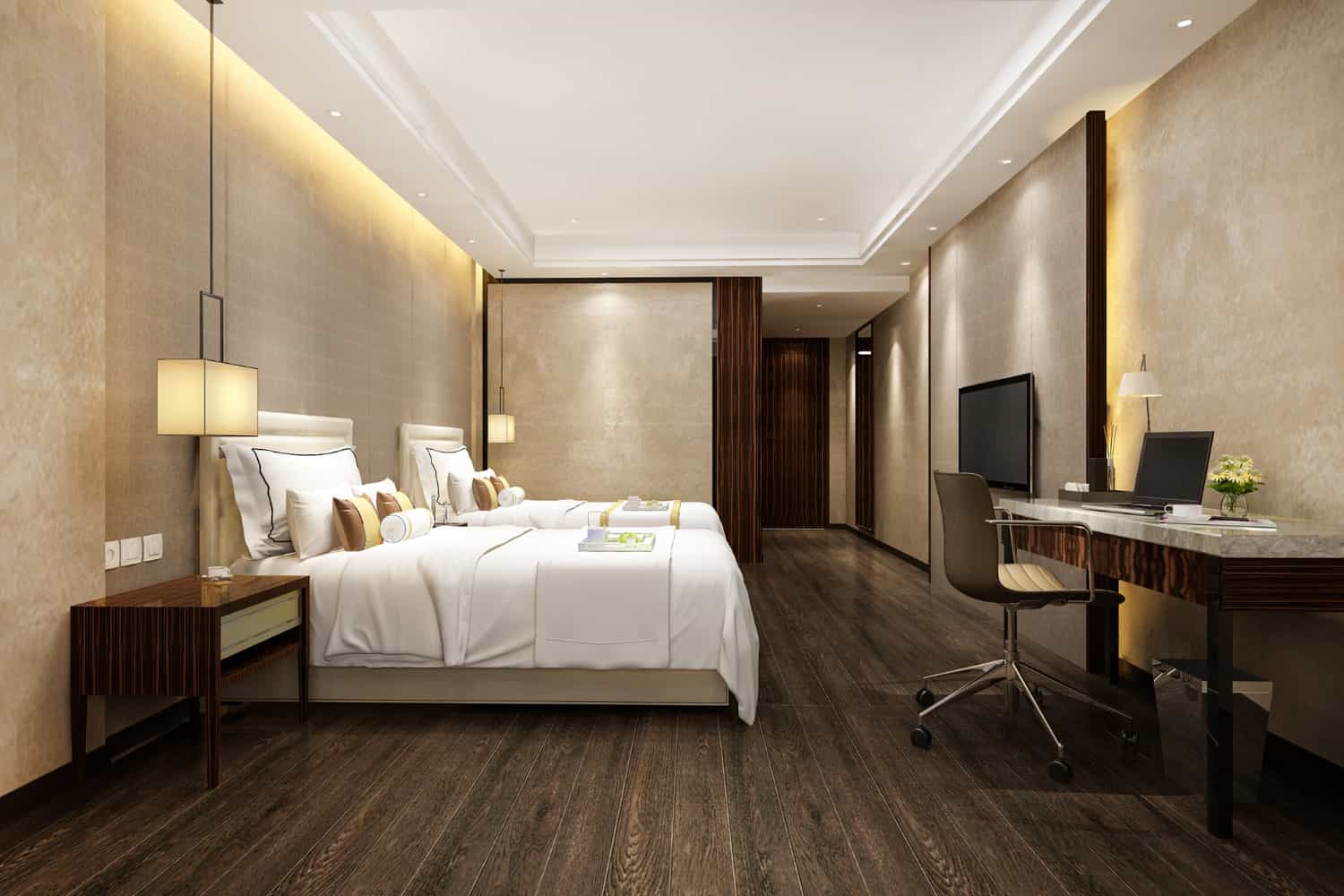
Headboard type selection is not primarily an aesthetic decision — it is a structural and operational decision that affects wall preparation requirements, bed base specification, room cleaning protocol, and long-term maintenance cost. Each headboard type has a different performance profile in Ghana’s hotel operating conditions, and the choice between them should be made with full awareness of those differences.
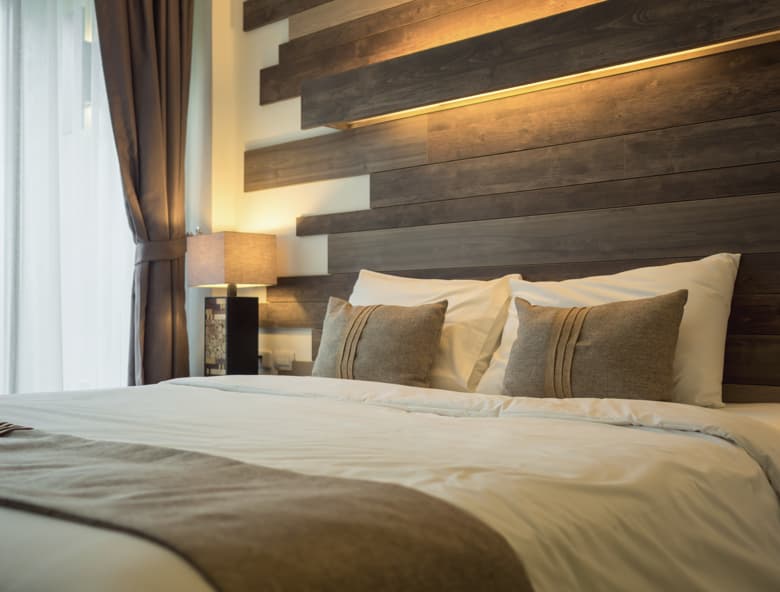
Wall-mounted headboards are the most common specification in mid-to-upscale Ghana hotel projects. They fix directly to the wall — typically through a French cleat system or direct bolt fixing — independently of the bed base. This independence is operationally significant: the bed base can be moved for room cleaning without disturbing the headboard, and the headboard can be replaced without replacing the bed base. Wall-mounted panels also allow the headboard to span the full wall width behind the bed, creating a stronger visual statement than a headboard attached to the bed base. The specification requirements are rigorous: the fixing system must be appropriate for the wall construction type (reinforced concrete is standard in Ghana hotel construction and requires different anchor specifications than timber stud framing), and the panel must be level across the full width — a wall-mounted headboard that is slightly off-level across a 2000mm width is visible to every guest who looks at the bed from the room entrance.
Freestanding upholstered headboards attach to the bed base through bolt-on legs or an integrated base system. They require no wall preparation beyond a painted surface and are faster to install than wall-mounted panels. The trade-off is that they move with the bed base — any bed movement during use creates a gap between the headboard and the wall that accumulates dust, looks unkempt, and is difficult to clean. In high-occupancy hotel rooms, this gap typically becomes visible within months of opening. Freestanding headboards are appropriate for budget and three-star properties where installation speed and cost are priorities and the visual gap is acceptable within the brand standard. The base leg material must be appropriate for the floor finish — unprotected metal or wood bases on polished concrete or tile floors create scratching and noise issues that generate guest complaints.
Wooden headboards — in solid wood, veneer panel, or carved wood — provide a visual character that upholstered panels cannot replicate and are appropriate for boutique, resort, and heritage-themed hotel concepts. In Ghana’s coastal humidity, wooden headboards require full specification of the finish system — not just the wood species or veneer selection. An unsealed or inadequately sealed wooden headboard will show surface deterioration within 12 to 18 months in Accra’s coastal conditions. The finish specification must define the sealing system: closed-pore lacquer, UV-cured finish, or oil-wax treatment, each with different maintenance implications for the hotel’s housekeeping protocol. Solid wood headboards must specify kiln-dried hardwood at 8 to 10 percent moisture content.
Integrated headboard systems incorporate bedside lighting, reading lights, USB and power outlets, storage shelves, or decorative panels into a single floor-to-ceiling or wall-to-wall furniture unit. These systems are the most complex to specify because they sit at the intersection of furniture, electrical, and sometimes plumbing services. The furniture manufacturer produces the case; the electrical contractor installs the connections; coordination between the two is the developer’s responsibility. An integrated headboard system specified without pre-construction coordination with the electrical contractor consistently produces installation problems — conduit positions that do not match power unit locations, cable routes that require surface-mounted trunking, and light fitting positions that conflict with the headboard panel geometry. The same coordination challenge applies to the nightstand when power integration is specified — which is why headboard and nightstand electrical requirements must be planned together before the BOQ is written.
| Specification element | Wall-mounted upholstered | Wooden | Integrated system |
|---|---|---|---|
| Substrate | MR-MDF or plywood min 18mm | Kiln-dried hardwood or MR-MDF with veneer | MR-MDF carcass with cable routing channels |
| Foam | Min 40 kg/m³, CMHR grade | N/A or accent cushion at min 35 kg/m³ | Min 40 kg/m³ on upholstered sections |
| Fabric | Min 50,000 Martindale, FR treated | N/A or accent fabric min 30,000 Martindale | Min 50,000 Martindale on upholstered panels |
| Finish system | Defined fabric + seam specification | Closed-pore lacquer or UV-cured system | Panel finish + light diffuser specification |
| Mounting method | French cleat or direct bolt — wall type specified | Direct bolt or integrated base | Floor-fixed or wall-fixed with electrical coordination |
| Height above mattress | Min 400mm above mattress top | Min 350mm above mattress top | Determined by integrated element positions |
| Width | Bed width + 100–200mm each side | Bed width or full wall width | Full wall width for integrated systems |
| Ghana climate adjustment | MR-MDF substrate, moisture-barrier poly wrap | Closed-pore finish, kiln-dried wood at 8–10% MC | Sealed cable channels, MR-MDF throughout |
In Ghana coastal properties, the guest room furniture package must be treated as a climate system, not a design selection. Every substrate must be MR-MDF. Every foam must be CMHR grade. Every fabric must carry a written cleanability protocol for high-humidity environments. Every hardware fixing in a coastal location must be corrosion-protected. These are not star-category upgrades — they are the baseline specification that determines whether the full guest room package performs for 8 to 10 years or requires partial replacement within 3. A single under-specified piece in the package — one wardrobe with standard MDF, one headboard with standard foam — creates a maintenance anomaly that is visible to guests and inconsistent with every other piece in the room.
The most common hotel headboard failure in Ghana coastal properties is not structural — it is fabric or finish deterioration accelerated by humidity. A headboard specified with standard MDF substrate, standard foam, and an unsealed fabric in a property 5km from the coast will show visible mould spotting, surface delamination, and fabric colour change within 18 months. The specification adjustments that prevent this — MR-MDF, CMHR foam, solution-dyed or moisture-resistant fabric — add modest cost at procurement and eliminate a failure category that requires full headboard replacement to correct.
The choice between wall-mounted and freestanding headboards is one that most Ghana hotel developers make on visual preference rather than operational analysis — and the operational consequences of the wrong choice become visible within months of opening.
Choose wall-mounted when: the hotel category is four-star or above and visual consistency across all rooms is a brand standard requirement; the room design uses a full-wall headboard panel that extends beyond the bed width; the bed base will be moved regularly for deep cleaning and the headboard must remain level and wall-flush; or the headboard incorporates integrated lighting or power elements that require wall electrical connections. Wall-mounted installation adds 30 to 60 minutes per room to the installation timeline and requires pre-drilled anchor points coordinated with the construction contractor before wall finishes are applied.
Choose freestanding when: the hotel category is three-star or budget and installation speed and cost are primary constraints; the room design uses a headboard width equal to or slightly wider than the bed base without a full-wall extension; or the construction programme does not allow pre-drilled wall anchors before plastering. Every freestanding headboard will eventually develop a gap between the back and the wall — a consequence of bed movement during use that accumulates dust and is difficult to clean. The headboard specification should include a felt or rubber wall buffer pad on the back panel that reduces the gap size and prevents wall marking. Freestanding headboards must also specify base leg material and floor contact protection — unprotected metal legs on tiled floors create noise when the bed is used and mark the floor finish.
Wardrobe type selection is the first decision: hinged door, sliding door, or open wardrobe. Hinged door wardrobes require clearance in front of the door swing — typically 500 to 600mm — which affects room layout planning. Sliding door wardrobes eliminate the swing clearance requirement but introduce a sliding mechanism that must be specified by cycle count. Open wardrobes remove doors entirely and suit properties where the design concept supports an open storage aesthetic, but they require housekeeping to maintain visible order in every room. Internal layout specification is where most wardrobe BOQs are incomplete. A wardrobe specified as “900mm wide, 550mm deep, 2100mm high, HPL finish” does not tell the manufacturer how many hanging rails, how many shelves, whether a safe housing is required, where the luggage shelf sits, or what the internal finish specification is. Every internal element must be in the BOQ.
Substrate specification for Ghana is MR-MDF throughout — including internal panels that are not visible in normal use. Internal MDF panels exposed to the humidity that enters the wardrobe when it is opened in a high-humidity environment will absorb moisture at edges and around hinge fixings even when external surfaces are correctly sealed. Hinge specification should be a named brand with a published cycle rating — minimum 100,000 cycles for hotel use. For the complete hotel wardrobe specification guide — covering sliding vs hinged door decisions, internal layout planning, hinge cycle ratings, and moisture-resistant substrate requirements — the dedicated wardrobe guide covers every element in detail. For production options and configurations, see the hotel wardrobe manufacturer page.
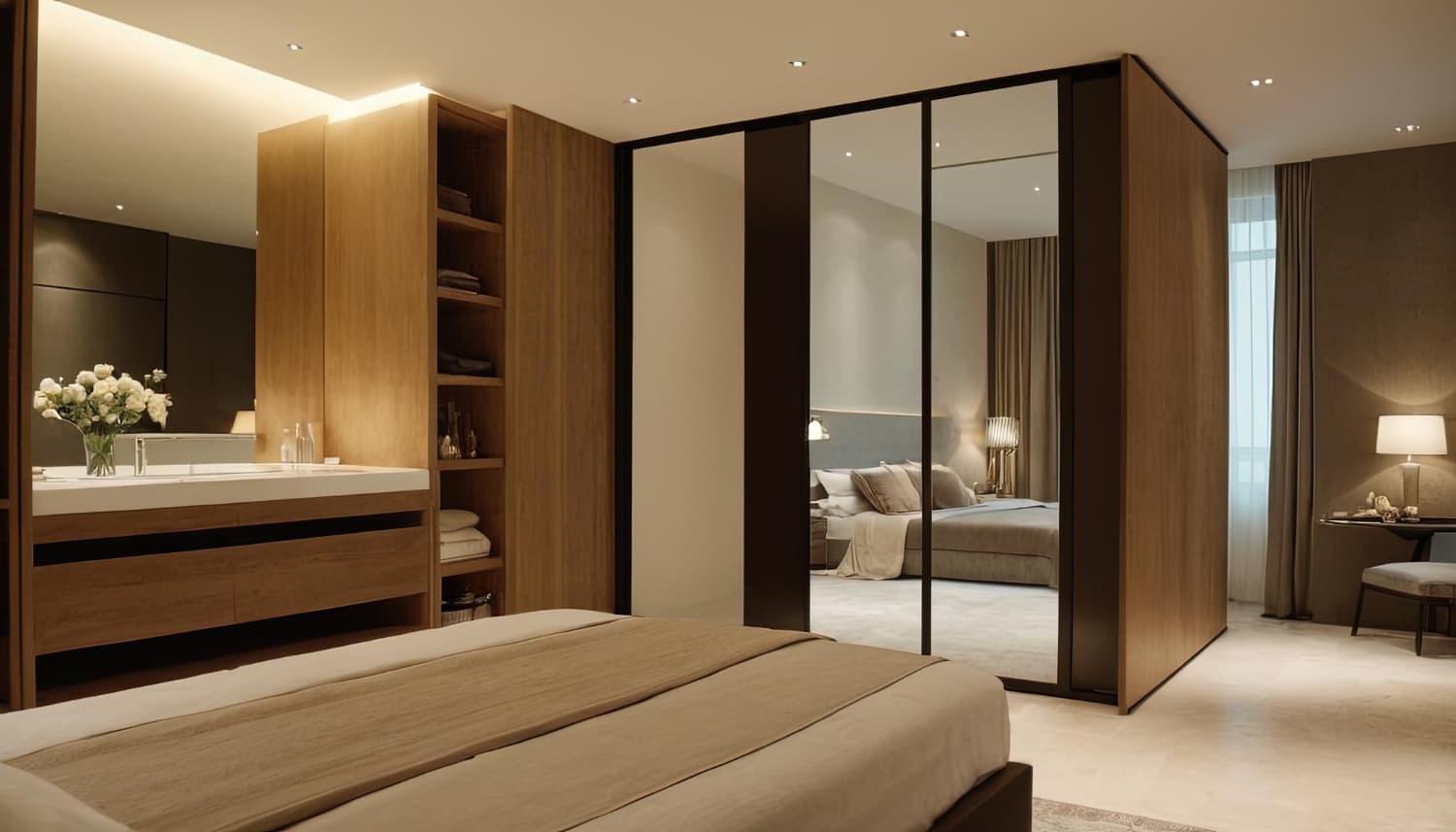
Hotel headboard sizing is determined by three variables: bed base width, mattress height, and room layout. Each must be confirmed before the headboard is specified — and confirmed in the correct sequence, because each constrains the next.
Standard bed base widths in Ghana hotel projects follow international hospitality conventions. Single beds run 900 to 1000mm; double beds 1200 to 1400mm; queen beds — the most common configuration in three-star and four-star Ghana hotel guest rooms — 1500 to 1600mm; king beds 1800 to 2000mm. Headboard width should exceed bed base width by 100 to 200mm on each side for upholstered panels — a 1600mm queen base typically uses a 1800 to 2000mm headboard panel. This overhang creates a proportionally balanced visual relationship between bed and headboard and conceals the gap between mattress edge and wall on each side.
Headboard height above the mattress top should be minimum 400mm for upholstered panels — this ensures the headboard remains visible above pillows in the standard hotel bed-making configuration and provides a meaningful surface for guests to lean against when sitting up. Low headboards that disappear behind pillow stacks when the bed is made look undersized and weak in room photography, which in Ghana’s growing hotel market directly affects online booking conversion rates. The headboard height must also be confirmed against the nightstand height — the bottom edge of a wall-mounted headboard panel should sit at approximately the nightstand top surface level or slightly above it, to avoid a visual gap between the two pieces. Since the nightstand dimensions depend on mattress height and are specified through the hotel nightstand supplier process, both pieces must be confirmed from the same reference point — finished floor level — before either is sent to production. For the full headboard product range, see the hotel headboard manufacturer page.
Before any guest room furniture piece goes to production, confirm: all pieces specified in a single BOQ document with finish palette references matching across all items; substrate specification confirmed as MR-MDF throughout on every piece including internal panels; hardware cycle counts defined for hinges (min 100,000), drawer slides (min 50,000), and bed base mechanisms; fabric Martindale rating confirmed with mill certificate for all upholstered pieces; power integration positions confirmed against as-built electrical conduit positions for headboard, nightstand, and desk; all piece dimensions confirmed from finished floor level as the common reference point; production released as a single coordinated run not as individual sequential orders.
The headboard specification must be finalised before the bed base BOQ is written — not after. The bed base height determines the mattress height, which determines the headboard mounting position, which determines the wall anchor positions, which determines the electrical rough-in positions for integrated lighting. Each decision constrains the next. Starting with the headboard type and working forward through the bed system produces a coordinated specification. Starting with the bed base and retrofitting the headboard specification consistently produces mounting and sizing problems that are expensive to correct after production.
Headboard specification in Ghana hotel projects should be calibrated to the hotel’s star category and target guest profile — not because lower-category hotels deserve lower-quality headboards, but because the specification elements that justify cost investment vary significantly between categories.
Budget and three-star hotels benefit from simple, durable upholstered panel headboards in neutral commercial fabrics. The investment priority is substrate quality (MR-MDF throughout) and fabric Martindale rating (50,000+ cycles) — the specification elements that determine longevity. Design complexity adds cost without proportional guest value at this category.
Four-star hotels justify investment in fabric quality, design detail, and finish consistency. A four-star headboard specification might include a two-tone fabric panel with contrast piping, a defined stitch pattern, and a fabric selection that reflects the room’s colour concept. The additional investment in moving from 50,000 to 100,000 Martindale fabric extends the headboard’s visual life significantly and reduces the likelihood of negative reviews related to room condition.
Five-star and boutique hotels require headboard specifications that function as design statements — custom-sized panels, custom fabrics sourced to the interior designer’s specification, integrated lighting designed as part of the headboard concept, and finish quality that communicates premium positioning. At this category, the headboard manufacturer must be selected for their ability to execute a complex, custom specification consistently across every room — not for their unit price. For supplier evaluation criteria covering headboard procurement and the full guest room package, see the hotel furniture suppliers Turkey guide. The wardrobe, desk, and outdoor furniture specifications must align with the same design concept — the hotel wardrobe specification, hotel writing desk specification, and hotel pool outdoor furniture guides each cover the specification decisions for their respective categories within the same coordinated project framework.
TV unit specification must begin with the television specification — screen size, mounting VESA pattern, and connection point locations. The TV unit dimensions are derived from the television dimensions, not selected independently. Cable management specification is the difference between a TV unit installation that looks designed and one that looks improvised. The specification must define how cables route from the television connection points through the unit to the wall conduit — whether through a dedicated cable management channel, a grommet system, or an enclosed back panel. According to Hospitality Net’s analysis of guest room design trends, integrated technology coordination between furniture and building services has become one of the most cited sources of specification errors in hotel FF&E projects globally. For production configurations, see the hotel TV unit manufacturer page.
Hotel headboard installation is the stage where specification decisions made months earlier either translate smoothly into the finished room or create on-site problems that are expensive and time-consuming to resolve.
Wall preparation for wall-mounted headboards requires anchor points installed at the correct positions before wall finishes are applied. The anchor positions are determined by the headboard’s French cleat or bolt fixing geometry — which is determined by the headboard’s width and the mounting rail position. This means headboard dimensions and mounting system must be confirmed with the manufacturer before the construction contractor applies plaster and paint. A wall that is finished before headboard anchor positions are confirmed requires either surface-mounted fixings or drilling through finished wall surfaces, both of which damage paint and plaster and require patch repairs. In Ghana hotel projects where construction and furniture procurement timelines run in parallel, this coordination point is one of the most frequently missed sources of installation delay.
Electrical coordination for integrated headboard systems requires the furniture manufacturer’s shop drawings showing exact connection point positions to be shared with the electrical contractor before first fix electrical work begins. When this coordination does not happen, the electrical contractor installs conduits at standard positions that do not align with the headboard’s connection geometry — and the mismatch is discovered at installation when the headboard arrives on site.
The headboard height above the finished floor must be consistent across every room in the property. Establishing a reference height — marked on a story rod or defined as a dimension from finished floor level — and verifying it in every room before fixing is a simple installation discipline that takes seconds per room and prevents the correction work that inconsistent headboard heights require.
Lobby seating specification requires higher fabric performance than guest room upholstery. The Martindale rub cycle minimum for lobby use is 30,000 cycles for light-traffic areas and 50,000+ for high-traffic seating zones. Foam density for lobby seating must be specified at minimum 40 kg/m³ for seat cushions. Reception desk specification combines furniture and building services requirements. The desk height — typically 1100mm for the guest-facing surface and 740mm for the staff working surface — must match operational workflow requirements. For the full lobby furniture range including reception desks, lobby sofas, lounge chairs, coffee tables, and ottomans, see the lobby and reception furniture manufacturer page. For a detailed specification guide, see hotel lobby furniture.
A correctly specified upholstered hotel headboard — MR-MDF substrate, CMHR foam at 40 kg/m³, fabric at 50,000 Martindale, properly sealed — will maintain its visual and structural integrity for 7 to 10 years under standard hotel occupancy conditions. In Ghana’s coastal properties where humidity is consistently high, the lower end of this range is more realistic.
The replacement planning decisions that should be made at the initial procurement stage are: whether to order a small quantity of replacement fabric — 1 to 2 metres per room type — with the original production run to guarantee future colour and weave matching; and whether to archive the headboard’s technical specification with the supplier for future re-order reference. Turkish manufacturers who archive production specifications can supply matched replacement headboards years after the original order. Manufacturers who do not archive create a situation where replacement pieces either do not match the original installation or require a complete re-specification exercise. For how after-sales support works with Turkish suppliers, see the hotel furniture suppliers Turkey guide.
Banquet chair specification must prioritise three things: stackability, structural stability under repeated use by varied body weights, and cleanability. A banquet chair that stacks to 10 or 12 units high requires a frame and seat shell geometry specifically designed for stacking — this is not a feature that can be retrofitted. The frame must be steel for the load-bearing requirements of stacking storage. For banquet and conference furniture production including chairs, tables, auditorium seating, see the conference and meeting furniture manufacturer page. For a detailed guide, see hotel banquet furniture Ghana.
The most consistently repeated guest room furniture package mistake in Ghana hotel projects is writing individual piece BOQs at different stages of the project — headboard first when the interior concept is confirmed, wardrobe when the construction dimensions are finalised, desk when the electrical plan is approved. This sequential approach produces a package where each piece is individually specified but the finish palette, dimension relationships, and production timing are never confirmed as a coordinated whole. The result is visible in the finished room: slight finish variations between pieces, nightstands that sit at the wrong height relative to the headboard, desk finishes that do not coordinate with the wardrobe. Write the complete guest room BOQ as a single document before approaching any manufacturer.
Fabric selection for hotel headboards involves decisions beyond Martindale rating and fire retardancy — the texture, pattern, and colour of the fabric determine how the headboard reads in the room, how it photographs for marketing, and how visible wear becomes over time. These decisions are as consequential as the performance specification, and they interact with the performance specification in ways that are not always obvious at the sample selection stage.
Smooth, tightly woven fabrics — velvets, bouclés, and fine weaves — show surface pilling and abrasion more quickly than textured or loosely woven fabrics because their smooth surface has less tolerance for surface disturbance before the change becomes visible. A headboard fabric in a fine plain weave that develops pilling at the top edge where guests lean creates a visible quality deterioration that guests notice and photograph within 12 to 18 months, even when the Martindale rating technically remains within its rated cycle count. Textured fabrics — linen-look, slub weave, or basket weave — mask surface wear more effectively because their inherent surface variation absorbs minor abrasion without creating visible contrast. For properties where the headboard fabric is a key visual element of the room concept, the texture decision is as important as the performance specification.
Patterned headboard fabrics introduce a repeat that must be managed across all rooms in the property. A large-scale geometric or floral pattern requires centering on the headboard panel — a pattern that is not centered on a 2000mm panel is visually off-balance and is visible in every room photograph. Centering a pattern also means fabric waste at the cut edges, which adds cost to the fabric procurement and must be accounted for in the BOQ. For a property with 80 rooms, a large-scale pattern with 600mm repeat and a 200mm fabric waste at each headboard cut edge represents a significant additional fabric quantity compared to a small-scale or plain fabric. Confirm pattern repeat dimensions and centering requirements with the headboard manufacturer before approving fabric selection — the production cost implication of a large repeat can be significant.
Dark headboard fabrics — charcoal, navy, deep green — show light-coloured dust, lint from bed linen, and cleaning product residue more visibly than mid-tone or light fabrics. In a hotel where the headboard is cleaned daily by housekeeping, this creates a maintenance burden that lighter fabrics do not. Light headboard fabrics — ivory, cream, pale grey — show food and beverage stains more visibly but are cleaned more completely with standard commercial products. The colour decision must account for the specific cleaning products used in the hotel’s housekeeping protocol — some commercial cleaning agents cause colour shift in certain fabric dyes, which produces an uneven appearance that develops gradually and is difficult to attribute until it is already visible across multiple rooms.
Hotel room photography in Ghana’s competitive hospitality market is a commercial asset — the quality of room photographs directly affects online booking conversion rates on platforms like Booking.com, Expedia, and direct hotel websites. The headboard is the dominant visual element in almost every hotel room photograph, because the standard photography angle — from the room entrance looking toward the bed wall — places the headboard at the centre of the frame. A headboard that reads well in photography communicates quality and generates bookings; a headboard that photographs poorly or shows visible wear undermines the property’s online positioning regardless of the actual room quality.
Several headboard specification decisions have a direct effect on how the headboard photographs. Panel width relative to the bed width: a headboard that does not extend beyond the bed base on each side looks visually cramped in photography — the bed base edges are visible on either side of the headboard, which makes the room look smaller and the headboard look undersized. A headboard that extends 150 to 200mm beyond the bed base on each side fills the bed wall more completely and photographs as a purposeful design element rather than a functional piece. Panel height: a headboard that sits below the pillow line when the bed is made in standard hotel configuration effectively disappears from the photograph — the pillows obscure it and the bed reads as headboard-less. Minimum 400mm above the mattress top ensures the headboard remains visible above the pillow arrangement in every standard photography setup. Fabric colour and room lighting: headboard fabric photographed under the warm ambient lighting used in hotel room photography reads differently from the same fabric under the cool natural light of a showroom. Fabrics with warm undertones — cream, caramel, soft grey — photograph more warmly and invitingly under hotel room lighting conditions than cool-toned fabrics that can appear flat or cold under warm LED.
A headboard that shows visible wear — fabric pilling, seam separation, surface staining — requires room photography to be scheduled around the headboard condition, which is operationally inconvenient. Properties with correctly specified headboards that maintain their visual integrity for 7 to 10 years can photograph rooms at any point in the property’s life cycle without headboard condition limiting the quality of the output. Properties with under-specified headboards that show visible deterioration within 3 to 5 years must either absorb the cost of early headboard replacement before photography, accept marketing photography that shows visible wear, or use photography that obscures or crops the headboard — all three options represent costs that a correct initial specification would have prevented.
The headboard does not exist in isolation — it is the visual anchor of a guest room furniture system that includes the bed base, nightstands, wardrobe, desk, and seating. Specification decisions for each of these pieces interact with the headboard specification in ways that, if not coordinated before production begins, create visual inconsistencies and installation problems that are expensive to correct after furniture arrives on site.
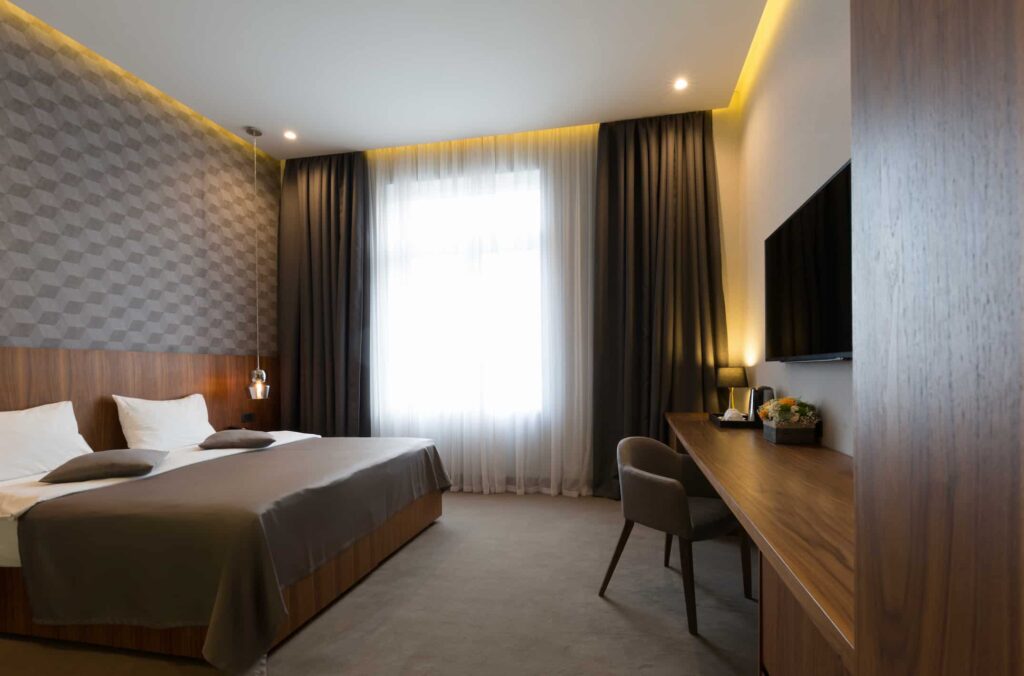
The headboard fabric and frame finish must be confirmed against the wardrobe, desk, and nightstand finishes before any piece goes into production. In a room where the wardrobe and desk use a warm walnut veneer and the nightstands use a matching HPL, a headboard fabric in a cool grey tone creates a colour temperature conflict that is visible in the finished room and in room photography. The finish palette — upholstery colours, wood tones, metal finishes for hardware and trim — must be confirmed as a complete room decision before individual pieces are specified in isolation. This is particularly relevant for the wardrobe, where the hotel wardrobe specification often involves the largest panel surface area in the room; a wardrobe finish that does not coordinate with the headboard creates the most visible finish conflict of any pairing in the guest room.
The headboard mounting height determines the visual relationship between the headboard and the nightstands on each side — and the nightstand height is determined by the mattress height, which is determined by the bed base height. These three dimensions — headboard mounting height, nightstand surface height, and mattress height — must be confirmed from the same reference point before any of the three pieces goes into production. The hotel nightstand supplier process must produce confirmed nightstand dimensions before the headboard mounting height is finalised. Similarly, the hotel writing desk specification must confirm desk height before the desk chair is specified — and the desk finish must coordinate with the headboard and wardrobe finish palette as part of the same room design decision. For properties that also specify hotel pool outdoor furniture, the outdoor furniture finish palette should be considered as a secondary coordination — guests who move between guest rooms and pool areas will notice significant visual discontinuity between the two if outdoor furniture finishes are selected in isolation from the interior palette.
All guest room casegoods — headboard, nightstand, wardrobe, desk, TV unit — should be produced in a single coordinated production run from the same manufacturer wherever possible. A nightstand produced in a different batch from the wardrobe, even from the same manufacturer using the same HPL reference, may show a slight colour variation that is visible when pieces are installed in the same room under the same lighting. The headboard fabric should be cut from a single fabric roll per room type to prevent dye lot variation between rooms. The finish palette decision is a design decision that must be made before it becomes a production decision — changing finish specifications after production starts is either impossible or expensive, adding weeks to the timeline and triggering partial repricing across the full furniture package.
A standard hotel guest room furniture package covers bed base, headboard, two nightstands, wardrobe, writing desk, desk chair, TV unit, and luggage rack. Four-star and five-star packages may include additional seating — a lounge chair or sofa — and decorative occasional pieces. The exact items must be listed in the BOQ before approaching any manufacturer.
For hotel guest room upholstery — headboards, bedroom chairs — the minimum is 30,000 Martindale rub cycles. For lobby and public area seating, the minimum is 50,000 cycles for standard use zones and 100,000+ for high-traffic areas. These are performance thresholds, not brand preferences — request test certificates from the fabric mill to verify compliance.
Ghana’s coastal cities maintain relative humidity above 70 percent for most of the year. Standard MDF absorbs moisture at edges and around hardware fixings under these conditions, causing swelling, delamination, and hinge failure. MR-MDF uses a moisture-resistant resin system that significantly reduces this absorption. The cost premium is modest; the performance difference in Ghana’s climate is significant. Verify compliance by checking the cut edge colour — green core indicates MR-MDF, cream indicates standard.
Wardrobe dimensions are determined by the room layout — the alcove or wall space designated for the wardrobe in the architectural drawings — and by the internal layout requirements: hanging rail length, shelf count, safe housing, luggage shelf position. All these dimensions must be in the BOQ. A wardrobe specified only by external dimensions without internal layout detail will be produced to the manufacturer’s standard internal configuration, which may not match the hotel’s operational requirements.
Drawer slides in hotel nightstands and wardrobes should be specified at minimum 50,000 cycles. Hinges on wardrobe and nightstand doors should be specified at minimum 100,000 cycles. These cycle counts correspond to approximately 10 years of hotel occupancy use. Hardware specified below these thresholds will require replacement within the expected furniture lifespan, generating maintenance cost and room disruption.
Standard hotel desk height is 740 to 760mm. The desk chair must provide an adjustable or fixed seat height that positions a typical adult at correct ergonomic posture for this desk height — approximately 430 to 460mm seat height for a non-adjustable chair. Specifying desk and chair independently without verifying height compatibility creates a guest experience failure that cannot be corrected without replacing one or both pieces.
From BOQ finalisation to furniture installed on site in Ghana, the total timeline runs 14 to 18 weeks in a well-managed project — covering sample approval, mass production, sea freight, Tema Port customs clearance, and installation. The furniture procurement process must start no later than six months before the planned opening date. See the complete breakdown in the hotel furniture lead time guide.
WhatsApp us