Contract furniture is commercially rated furniture built to withstand heavy daily use in hospitality, healthcare, and office environments. It differs from retail furniture in structural construction, material specification, durability testing, and compliance with fire and safety standards. For hotel projects, it is the only appropriate specification.
The word “contract” does not refer to a purchase agreement. It refers to a contractual relationship between a furniture manufacturer and a commercial operator — typically a hotel brand, restaurant chain, or facilities manager — who specifies performance requirements that go beyond what retail products offer. A contract furniture manufacturer accepts those performance requirements as binding, not aspirational.
In practice, this means the furniture is engineered to a defined specification before production begins. The buyer specifies foam density, fabric rub cycle rating, frame joint construction method, surface finish durability, and — in many markets — fire retardancy classification. The manufacturer commits to meeting those requirements across every unit in the production run. That is the contract. It is a specification contract as much as a supply contract, and it is what separates contract furniture from everything else on the market.
Retail furniture — including furniture sold as “commercial” or “semi-commercial” in local markets — is not produced to this model. It is produced to a price point, with materials and construction methods selected by the manufacturer to achieve that price point. The buyer gets what the manufacturer decided to build, not what the buyer specified.
Specifying residential or retail-grade furniture in hotel guest rooms is not a cost-saving decision — it is a deferred replacement cost. Retail seating in a hotel environment typically requires replacement within 18 to 24 months. The replacement cost, installation disruption, and guest experience impact during an operating hotel consistently exceed the savings made at procurement.
In contract hotel furniture, structural material choice is inseparable from construction method. A solid beech frame built with mortise-and-tenon joints performs differently from a solid beech frame built with dowels — and a specification that says “solid wood frame” without defining the joint system is an incomplete specification that leaves quality to the manufacturer’s discretion.
Panel-based casegoods (wardrobes, nightstands, TV units): The structural question here is substrate, not solid wood vs metal. MR-MDF (moisture-resistant) at minimum 18mm for carcass panels, plywood for door cores and drawer bases. Standard MDF in Ghana’s humidity absorbs moisture at the edges and around hardware fixings — this is where most casegood failures originate, not in the surface material. Edge banding must be 2mm ABS minimum, hot-melt applied, with no visible joint at corners.
Upholstered seating frames (lobby sofas, bedroom chairs): Kiln-dried solid hardwood — beech or rubberwood — with glued and screwed or mortise-and-tenon joint construction. Foam density for hotel seating should be specified at minimum 40 kg/m³ for seat cushions, 28 kg/m³ for back cushions. Lower density foam compresses within 12–18 months under hotel usage, creating visible sagging that cannot be corrected without reupholstering.
Metal elements (bed bases, occasional frames, outdoor pieces): Powder-coated steel for indoor contract use; powder-coated aluminum for any piece with outdoor exposure or in high-humidity zones like pool areas. The coating thickness specification matters: minimum 60–80 microns for indoor, 80–100 microns for outdoor. Below this, corrosion appears at edges and fixings within two to three years in Ghana’s coastal conditions.
Contract furniture is tested and certified against industry standards that define minimum performance levels for commercial use. Understanding these standards helps hotel developers evaluate supplier claims and specify correctly.
The most referenced standards in international hotel contract furniture procurement are:
BIFMA (Business and Institutional Furniture Manufacturers Association) standards are the most widely used benchmarks for commercial seating and casegoods, particularly in North American and internationally oriented projects. BIFMA X5.1 covers office seating; BIFMA X5.4 covers lounge seating. These standards define load capacity, fatigue resistance, stability, and durability test requirements. A chair that passes BIFMA X5.4 has been tested to 100,000 seat and back cycles, 400 lb drop tests, and arm load tests. A chair without BIFMA certification has not been tested to any standardized performance threshold. According to BIFMA’s published standards, these tests simulate real-world use patterns rather than theoretical stress scenarios.
BS 5852 (British Standard for fire performance of upholstered furniture) defines flammability resistance requirements for upholstered pieces. It is referenced in hotel brand standards globally, including many international chains operating in West Africa. The standard tests ignition resistance from cigarettes (source 0) and matches (source 1) as baseline requirements, with higher sources for more demanding applications.
EN 1728 and EN 12520 are European standards for seating strength and durability. EN 1728 covers test methods; EN 12520 covers requirements for domestic seating — hotels typically specify above domestic requirements and use EN 1022 (stability) and EN 15373 for non-domestic seating.
Martindale rub cycle testing (EN ISO 12947) tests fabric durability by measuring how many abrasion cycles a fabric withstands before showing visible thread breakdown. Contract hospitality use specifies 50,000+ cycles for most areas, with 100,000+ for high-traffic zones. This is a fabric-level specification, not a furniture-level certification, but it is a critical input to any contract upholstery specification.
When evaluating a Turkish manufacturer for hotel contract furniture, requesting compliance documentation means asking for: BIFMA or equivalent test reports for seating, fire test certificates for foam and fabric, Martindale test certificates for upholstery fabrics, and E1 formaldehyde emission certificates for all panel-based casegoods. A factory that cannot provide these documents is not operating at contract specification level, regardless of how professional its showroom looks. For a full guide to material selection by hotel zone — HPL vs veneer, metal vs wood, humidity impact — see hotel contract furniture materials Ghana.
Understanding where hotel contract furniture ends and the broader FF&E scope — fixtures and equipment — begins is essential for accurate budget planning and supplier briefing. For a complete breakdown of how the two categories relate, see hotel contract furniture vs FF&E.
The hotel contract furniture model works as follows: a developer or interior designer produces a BOQ (Bill of Quantities) and specification document. The contract manufacturer reviews the specification, proposes materials and production methods, produces samples for approval, manufactures all items in a coordinated production run, and ships the complete package to site. The developer approves at each stage — technical drawings, samples, pre-shipment inspection — before the process advances. This model is structurally different from retail purchasing in one critical way: the developer controls the specification, not the manufacturer. Every material, finish, dimension, and hardware component is agreed before production begins. Changes after production starts trigger repricing and timeline extensions — which is why front-loaded specification work is the most cost-effective investment a hotel developer can make.The cost difference between contract-grade and retail-grade furniture at the point of procurement is typically 20 to 40 percent per unit. Over a five-year operating horizon — accounting for replacement cycles, maintenance costs, and installation disruption in an operating hotel — contract-grade furniture consistently delivers lower total cost of ownership. The break-even point in most hotel environments is 18 to 30 months.
A complete hotel contract furniture package covers several distinct zones, each with different specification logic. Understanding the categories helps developers scope accurately and avoid missing items that only become visible during installation.
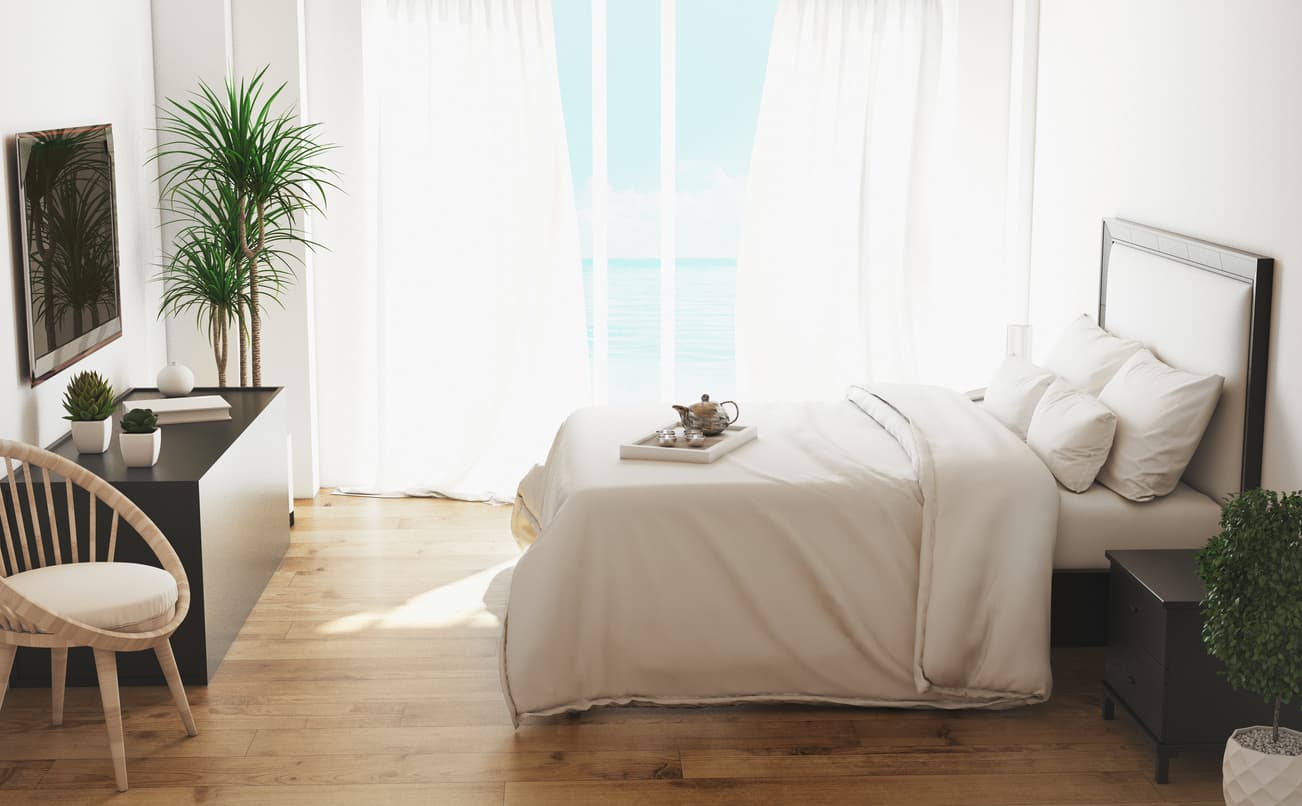
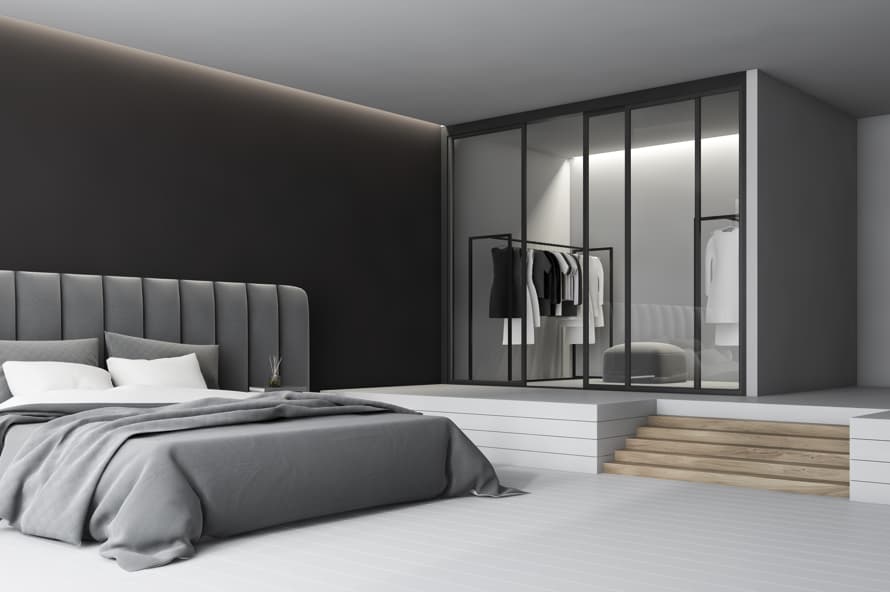
Guest room casegoods are the structural furniture pieces in hotel rooms: wardrobes, TV units, desks, bedside tables, and minibar units. These are panel-based — typically MR-MDF or plywood substrate with HPL or veneer surface — and represent the largest portion of a hotel furniture budget by volume. Casegoods specification focuses on substrate quality, edge banding, hardware cycle ratings, and finish consistency across all rooms. For a 100-room hotel, even a small specification gap in wardrobe construction compounds across every room and every operating year. For a detailed breakdown of which materials perform in Ghana’s climate by zone, see hotel contract furniture materials Ghana.
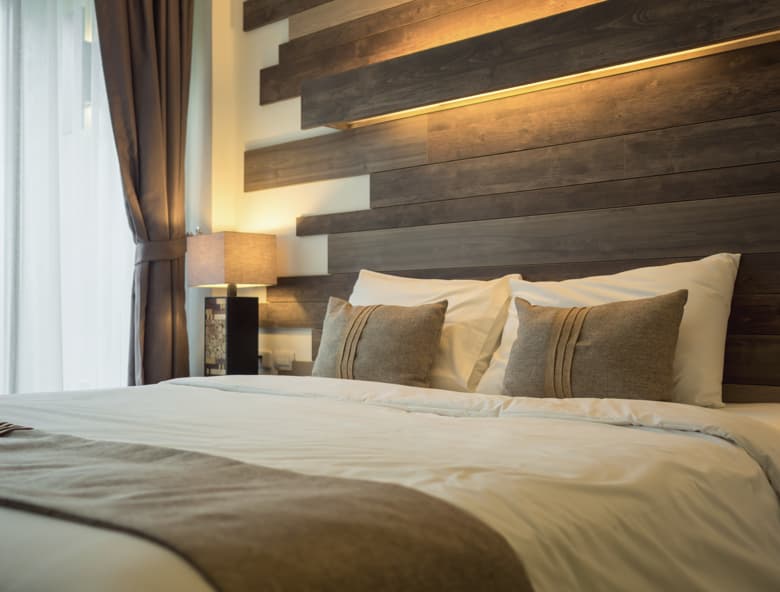
Upholstered pieces cover headboards, bedroom chairs, lobby seating, and restaurant upholstery. These require the most detailed specification: frame construction method, foam grade, fabric rub cycle rating, and fire compliance. Upholstered pieces are also the most expensive to replace post-opening and the most visible to guests — a lobby sofa that sags or a headboard fabric that pills reflects directly on brand perception.
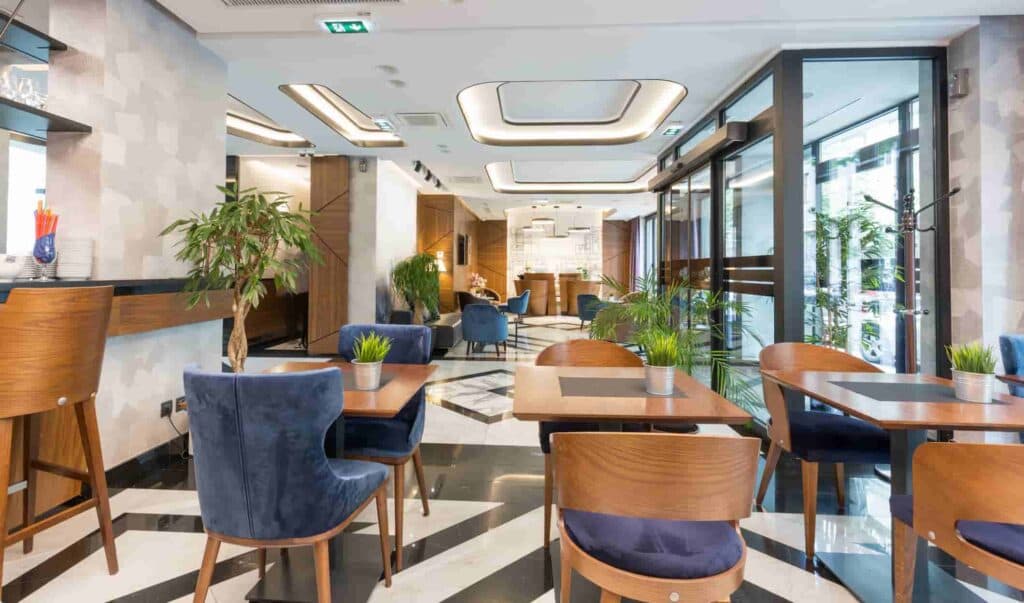
Restaurant and F&B furniture operates under the highest usage intensity in any hotel. Three service periods per day, continuous chair movement, cleaning chemical exposure, and reconfiguration for events all create demands that exceed standard commercial restaurant specification. For hotel restaurant furniture specification in Ghana, see the complete guide on restaurant furniture Ghana.
Outdoor and pool furniture requires specification for UV exposure, salt air, and humidity — conditions that standard indoor contract furniture is not engineered to handle even when rated for commercial use. Aluminum frames, synthetic rattan, compact laminate surfaces, and UV-resistant fabrics are the correct baseline for Ghana’s coastal and tropical conditions.
Corridor and back-of-house furniture is frequently under-specified because it is not guest-facing. This is a mistake. Corridor furniture — console tables, seating alcoves, luggage stands — absorbs trolley impact, cleaning chemical exposure, and continuous traffic at a rate that makes it a high-replacement-risk category if specified below contract grade.
Hotel developers focused on construction and operational planning sometimes treat furniture procurement as a late-stage purchasing exercise. It is not. The furniture specification determines guest experience, maintenance cost, replacement cycle, and brand consistency for the entire operational life of the property. Getting it right requires treating furniture procurement as a project management process — with defined specifications, approved samples, production milestones, and pre-shipment inspection — rather than a series of purchase orders.
The most common failure mode in hotel furniture procurement is not choosing a bad product. It is choosing a product without a specification. A chair that looks right in a catalogue, ordered without a frame construction spec, a foam density requirement, or a fabric rub cycle rating, is a chair that may or may not perform in operation. There is no way to know until it fails — which, in a hotel environment, happens faster than the developer anticipated and costs more to fix than the original furniture cost to buy.
Contract furniture procurement, done correctly, eliminates this uncertainty. The specification defines performance before production. The sample approval process confirms it before the full run begins. The pre-shipment inspection verifies it before the container ships. Each stage exists to catch problems at the point where they are cheapest to resolve — which is always before, not after, the furniture reaches site. For how to evaluate manufacturers for contract hotel furniture projects, see the detailed guide on how to choose a hotel furniture manufacturer in Turkey.
Most hotel developers evaluate contract furniture suppliers on three visible criteria: price, product appearance, and delivery timeline. These are the wrong primary criteria — not because they are irrelevant, but because they are downstream of the decision that actually determines long-term performance. The primary criterion is production capability: can this manufacturer consistently produce to a defined specification across every unit in a large-scale order?
A manufacturer who produces 120 wardrobes where 115 are correct and 5 have finish inconsistencies, dimensional deviations, or hardware failures has not delivered a 96% success rate. They have delivered a problem — because those 5 wardrobes are distributed across 5 different rooms, and correcting them requires production of replacement units, re-shipping, re-installation, and room downtime in an operating hotel. The cost of that correction is not 4% of the furniture budget. It is multiples of it.
This is why sourcing decisions in contract hotel furniture must evaluate production systems, not just products. The questions that reveal real capability are not “what does your showroom look like?” but “what is your production defect rate on large orders?”, “how do you handle dimensional variance across a 150-unit wardrobe run?”, and “can you provide a reference from a completed hotel project of comparable scale?” A manufacturer who answers these with specifics — process documentation, inspection records, verifiable references — operates differently from one who responds with marketing language.
For Ghana hotel projects specifically, sourcing decisions carry an additional layer of consequence. Replacing furniture in an operating hotel in Accra is not logistically simple. A re-order from Turkey adds 12 to 14 weeks before replacement pieces arrive on site. During that window, rooms with failed furniture are either taken out of service — reducing revenue — or left in service with visible quality failures — damaging guest experience and online review scores. Neither outcome is recoverable without cost. The sourcing decision made before production began determines whether this scenario is possible.
Execution Insight
The most reliable indicator of a contract furniture manufacturer’s capability is not their product catalogue or their price list — it is their production process documentation. A factory that can provide in-process inspection records, dimensional tolerance specifications, and pre-shipment inspection reports as standard practice has built quality control into its workflow. A factory that produces these documents only when asked has not.
Standard contract furniture specification — even when correctly applied for European or Gulf hospitality projects — requires adjustment for Ghana’s operating environment. The combination of high ambient humidity, tropical heat, intensive cleaning cycles, and the logistics reality of long replacement lead times creates a specification context that is more demanding than most international hotel brand standards account for by default.
Humidity is the most consequential variable. Ghana’s coastal cities — Accra, Tema, Takoradi — maintain relative humidity above 70% for most of the year. Inland cities like Kumasi run lower but still significantly above temperate conditions. At these humidity levels, materials that perform reliably in European hotel environments show accelerated degradation. Standard MDF without moisture-resistant treatment absorbs humidity at edges and around hardware fixings, causing swelling, surface lifting, and hinge failure within 12 to 18 months. Veneer applied without a closed-pore topcoat system delaminates faster than in dry conditions. Foam that meets standard contract specifications but is not specified for tropical conditions retains moisture between cleaning cycles, creating conditions for mold growth inside upholstered pieces.
The specification adjustments for Ghana are not complex, but they must be deliberately made. MR-MDF (moisture-resistant medium-density fibreboard) at minimum 18mm for carcass panels. Closed-pore lacquer or UV-cured finish systems on any veneer application. 2mm ABS edge banding on all exposed panel edges — not 0.4mm paper edge banding, which delaminates within months in high humidity. Commercial-grade upholstery fabric with confirmed Martindale rating, not residential fabric treated with a surface spray. Quick-dry foam with adequate ventilation in upholstered outdoor pieces.
The other Ghana-specific consideration is the replacement cost asymmetry. In markets with domestic contract furniture production or short logistics routes, a specification failure can be corrected within weeks at manageable cost. In Ghana, where all contract-grade hotel furniture is imported — predominantly from Turkey — a replacement order adds 12 to 14 weeks and the full landed cost of re-production and re-shipping. This asymmetry means that under-specification in Ghana carries a higher financial penalty than the same decision in a market with shorter supply chains. The correct response is more rigorous front-end specification, not acceptance of higher replacement risk. For the full breakdown of materials that perform in Ghana’s conditions by hotel zone, the guide on hotel contract furniture materials Ghana covers HPL vs veneer performance, structural material selection, and fire retardancy requirements in detail.
Contract furniture is manufactured to commercial performance specifications — defined load cycle ratings, material grades, and fire compliance standards — that retail furniture does not meet. The difference is not aesthetic but structural and operational. Contract furniture is the only appropriate specification for hotel guest rooms, lobbies, and restaurants where furniture faces continuous daily use by many different people.
The higher unit cost reflects higher material grades, defined construction methods, third-party testing and certification, and production consistency at scale. Over an operating horizon of three to five years, contract furniture typically delivers lower total cost of ownership than retail alternatives because replacement cycles are significantly longer and maintenance requirements are lower.
For hotel contract furniture, the key certifications are BIFMA or equivalent cycle testing for seating, BS 5852 or equivalent fire performance for upholstered pieces, Martindale rub cycle certificates (50,000+ cycles minimum) for fabrics, and E1 formaldehyde emission certificates for panel-based casegoods. Manufacturers who cannot provide these documents on request are not operating at contract specification level.
Not without accepting a significantly higher replacement cost within the first two years of operation. Retail furniture in hotel environments typically shows structural failure — loose joints, sagging cushions, surface deterioration — within 12 to 18 months. The cost of replacement, installation disruption in an operating hotel, and guest experience impact during that period consistently exceeds the procurement saving.
A complete hotel contract furniture package covers guest room casegoods (wardrobes, TV units, desks, bedside tables), upholstered bedroom pieces (headboards, chairs), lobby and public area seating, restaurant and F&B furniture, outdoor and pool area furniture, and corridor pieces. All items are produced to a unified specification with matched finishes under a single coordinated production schedule.
Production for a hotel contract furniture package typically runs 4 to 8 weeks depending on project scale and customization level. Total timeline from specification approval to furniture on site in Ghana — including production, sea freight from Turkey, customs clearance, and inland delivery — runs 12 to 18 weeks. This timeline must be built into the project schedule from the beginning, not treated as a final-phase activity. See the detailed breakdown in the hotel furniture cost in Ghana guide.
FF&E stands for Furniture, Fixtures and Equipment — it is a project accounting and planning category that covers all movable items in a hotel that are not permanently attached to the building. Contract furniture is the production and specification methodology for the furniture component of FF&E. All hotel contract furniture is FF&E, but FF&E also includes fixtures (lighting, mirrors) and equipment (televisions, minibars) that are not furniture.
WhatsApp us