Choosing the right hotel furniture manufacturing turkey ghana strategy is one of the most critical decisions for any hotel development project targeting long-term durability, cost efficiency, and operational success. In Ghana’s rapidly growing hospitality sector, where climate conditions, heavy usage, and logistics complexity all play a role, manufacturing decisions cannot be treated as a simple procurement step. Instead, they must be aligned with a broader hotel furniture design planning ghana approach, supported by a clear understanding of hotel contract furniture ghana systems, and integrated into the overall scope of hotel furniture ghana selection, including key operational areas such as restaurant furniture ghana. At the same time, a well-structured sourcing and logistics strategy — such as export hotel furniture to ghana — ensures that manufacturing, shipping, and installation processes work together seamlessly from production to on-site execution. For product-level specification across all hotel zones, see hotel guest room furniture specification. For guidance on finding and evaluating Turkish manufacturers, see hotel furniture suppliers Turkey.
Quick Answer:
Hotel furniture manufacturing in Turkey for Ghana projects combines custom production, climate-resistant materials, structured quality control, and export-ready logistics to ensure long-term durability, consistent quality, and efficient project execution.
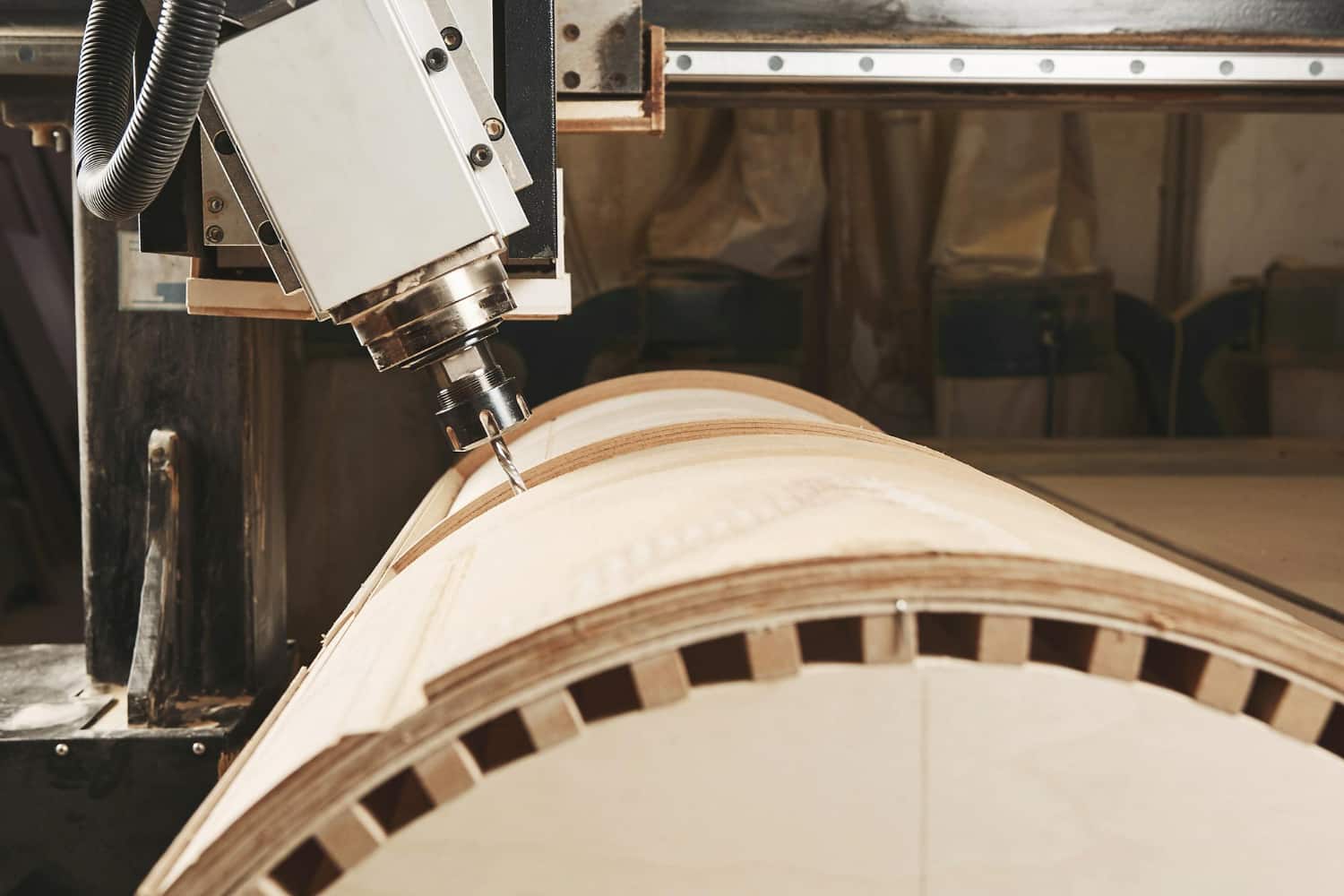
Hotel furniture manufacturing is fundamentally different from standard furniture production. In hospitality projects, furniture is not produced as individual items, but as part of a coordinated system that must meet design specifications, durability requirements, and operational needs simultaneously across every room and public area in the property.
Manufacturing begins with technical drawings and specifications that define dimensions, materials, finishes, and construction details. These specifications must align with the project’s layout, branding, and usage patterns. Once finalized, production is planned in batches to ensure consistency across all rooms and public areas. This structured approach is what defines the hotel furniture manufacturing process — it ensures that every piece fits into the overall project and performs under real hotel conditions, not just in a showroom sample.
Unlike retail furniture production, where items are produced for general use, contract manufacturing focuses on precision, repeatability, and long-term performance. A contract manufacturer produces 100 identical wardrobes to the same tolerance, with the same hardware cycle rating, from the same material batch — so that room 101 and room 205 are visually and structurally indistinguishable three years after opening. That repeatability is not achievable through retail or catalogue sourcing, regardless of the individual quality of each piece.
Turkey’s position as a leading hotel furniture manufacturer for Ghana projects is not accidental. It is the result of a combination of production capability, geographic advantage, and accumulated West Africa export experience that has developed over more than a decade of Ghana hospitality sector growth.
Turkish manufacturers operate with strong industrial infrastructure, allowing them to handle large-scale hotel projects with consistent quality. Production clusters in Kayseri, Bursa, and Istanbul’s industrial zones concentrate hotel contract furniture manufacturing expertise — CNC machining, edge banding, lacquering, upholstery, and export packaging — under one roof or within coordinated supply chains. This infrastructure allows a Turkish factory to produce a complete 100-room hotel furniture package — guest room casegoods, lobby seating, restaurant furniture, and outdoor pieces — to a unified quality standard, on a coordinated production schedule.
For Ghana projects, Turkey creates a balance between cost and quality that is difficult to achieve with other sourcing options. Compared to local suppliers, Turkish factories offer higher customization capability and better material technology. Compared to Asian suppliers, they provide more consistent quality, shorter sea freight transit (18 to 24 days to Tema Port versus 28 to 35 days from China), and more reliable communication. Turkish manufacturers that have shipped multiple hotel projects to Ghana have already navigated Ghana Revenue Authority documentation requirements, built relationships with freight forwarders experienced in Tema Port clearance, and learned how to package furniture for the Turkey-to-Atlantic-to-West Africa route — knowledge that reduces the documentation and logistics risks that first-time exporters encounter on almost every shipment.
The journey from concept to finished product is a structured process that requires coordination between designers, engineers, and production teams. Understanding this sequence helps Ghana hotel developers plan realistic timelines and identify the coordination points where delays most commonly originate.
The process begins with design translation — architectural and interior design concepts are converted into production-ready technical drawings. These drawings define every detail, from panel dimensions and joinery method to surface finish specification and hardware position. Once drawings are approved, material sourcing begins. This stage is critical because material quality directly affects durability and performance, and sourcing lead times for specific HPL colours, fabric specifications, or hardware grades can add 1 to 2 weeks to the production schedule if not planned in advance. Selecting the right materials for Ghana’s climate is non-negotiable — standard MDF, unsealed veneer, and uncoated metal components all show accelerated deterioration in coastal Ghana conditions.
Production then moves into fabrication, where components are cut, shaped, assembled, and finished. At this stage, precision is critical — even small dimensional inconsistencies create installation problems when 100 identical wardrobes must fit into 100 rooms with the same wall dimensions. CNC cutting ensures dimensional consistency across large production runs. Edge banding, lacquering, and upholstery follow fabrication — and each stage requires in-process quality checks to catch deviations before they compound into the next stage. A wardrobe door that is 3mm out of square is not a problem at the cutting stage; it becomes a visible problem at installation, 14 weeks later, in an operating hotel in Accra.
One of the biggest advantages of Turkish manufacturers for Ghana hotel projects is their ability to provide custom hotel furniture manufacturing solutions. In hotel projects, standard furniture rarely fits perfectly — room sizes vary, layouts differ, and branding requirements demand unique designs that catalogue pieces cannot deliver.
Custom manufacturing allows developers to adjust dimensions to match room-specific wall measurements, select materials that meet the project’s climate and durability requirements, apply finish palettes that coordinate across guest rooms, lobby, and restaurant areas as a unified design concept, and produce every piece to a defined technical standard that can be verified before production is released. For Ghana projects, where differentiation in the growing mid-market and upscale hotel segment is increasingly important, custom production provides a significant competitive advantage — the property looks and performs differently from hotels that sourced standard catalogue pieces.
Custom manufacturing also enables consistency across the entire project. When all guest room casegoods, lobby pieces, and restaurant furniture are produced in a single coordinated production run from the same manufacturer, using the same material batches and the same finish references, every area of the hotel reads as a designed whole rather than a collection of individually sourced pieces. This consistency is visible to guests, visible in room photography, and visible in online reviews — and it is only achievable through project-based custom production, not through multi-supplier catalogue sourcing.
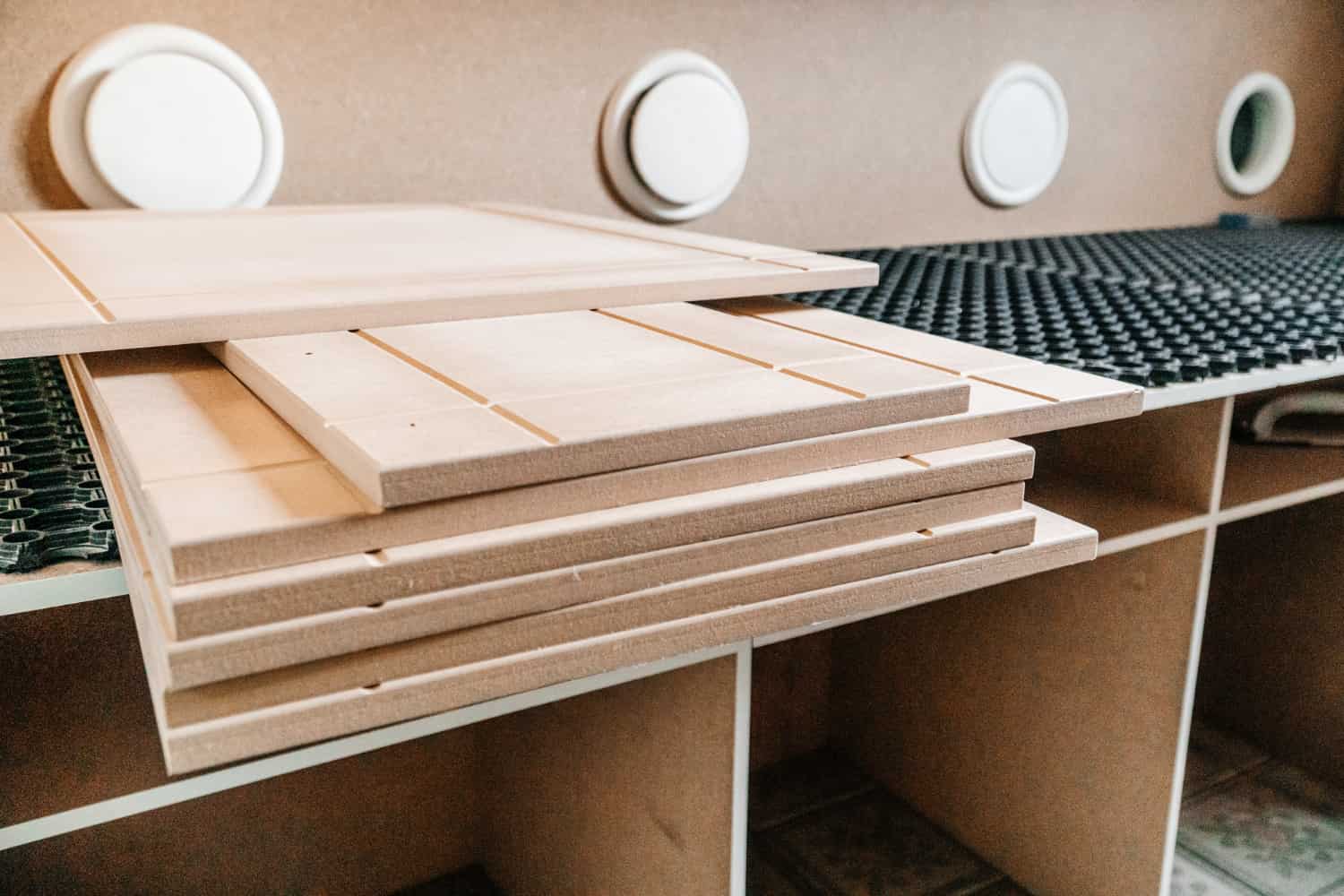
Quality control in hotel furniture manufacturing is not a final inspection step — it is integrated throughout the production process. In professional production environments, a defect caught at the material stage costs minutes to correct. The same defect caught at pre-shipment inspection costs days. The same defect discovered on site in Ghana costs weeks and thousands of dollars.
A structured quality control system covers material inspection before production begins, in-process dimensional checks at fabrication, finish consistency verification at the lacquering and edge banding stages, structural strength testing for seating and hardware, and pre-shipment verification against the approved sample. Each checkpoint has defined acceptance criteria — not general quality descriptions, but measurable thresholds: edge banding thickness minimum 2mm, hinge cycle rating minimum 100,000 cycles, foam density minimum 40 kg/m³. A manufacturer whose QC system operates on verbal quality descriptions rather than defined measurement criteria is not operating a quality control system — they are conducting a visual check.
Before shipment, finished products undergo final inspection covering dimensions, finishes, and structural integrity against the approved sample. This is the last opportunity to identify and correct specification non-compliance before furniture leaves Turkey. For Ghana hotel projects where replacement production and reshipping runs 12 to 14 weeks, pre-shipment inspection is not optional. For a complete breakdown of how each QC stage works in hotel furniture manufacturing for Ghana export projects, see the hotel furniture quality checklist.
Material selection is one of the most critical factors in manufacturing furniture for Ghana. The hotel furniture materials manufacturing process must consider environmental conditions — humidity, temperature fluctuations, and heavy usage — not as secondary factors but as primary specification constraints.
Materials commonly used in hotel furniture manufacturing each have specific advantages and limitations for Ghana’s conditions. MDF is cost-efficient and provides a smooth surface, but has low moisture resistance — standard MDF in coastal Ghana conditions swells at edges and around fixings within 12 to 24 months. MR-MDF adds moisture-resistant resin to the standard MDF formulation, significantly improving performance in high-humidity environments and representing the minimum substrate specification for Ghana hotel projects. Plywood provides higher structural strength and performs better in humid environments. Solid wood at correct moisture content (8 to 10 percent kiln-dried) provides the highest durability and is appropriate for premium and boutique hotel specifications. HPL surface finishes are the most robust option for high-traffic areas — resistant to moisture, cleaning chemicals, and surface abrasion.
| Material type | Durability | Cost level | Suitability for Ghana |
|---|---|---|---|
| Standard MDF | Low | Low | Not recommended — swells in coastal humidity |
| MR-MDF | Medium | Low–Medium | Minimum specification for Ghana hotel projects |
| Plywood | Medium–High | Medium | Good — preferred for structural components |
| Solid wood (kiln-dried) | High | High | Excellent — requires closed-pore finish system |
| HPL surface | Very high | Medium | Ideal — moisture, chemical and abrasion resistant |
Understanding how each material is processed inside the factory — cutting tolerances, jointing methods, edge banding systems, and moisture content management — is as important as knowing which material to specify. A correctly specified MR-MDF panel processed with inadequate edge banding loses most of its moisture resistance at the most exposed points: the edges. A solid wood component with correct species specification but inadequate kiln drying will move in service as moisture content equilibrates to Ghana’s ambient humidity. For the full manufacturing perspective on wood-based materials, see the hotel furniture wood materials guide.
One of the most important factors in hotel projects is timing. Production timeline directly affects the overall project schedule — and the most common cause of hotel opening delays in Ghana is not construction overrun, but furniture arriving late because procurement started too late.
Production timelines for hotel furniture from Turkish manufacturers typically range between 4 and 8 weeks depending on project size, customization complexity, and approval speed. This does not include the sample production and approval phase that precedes mass production — typically 2 to 4 weeks — or the shipping timeline that follows production completion. A project that finalizes its BOQ and begins supplier briefing 4 months before the planned opening date is already running late. The correct planning horizon is 6 months minimum: BOQ preparation and supplier selection (1 month), sample approval (4 to 6 weeks), mass production (4 to 8 weeks), sea freight to Tema Port (3 to 4 weeks), and customs clearance and installation (2 to 3 weeks).
The challenge is not only production duration, but coordination. Furniture must be ready at the right time to align with construction progress and installation schedules. Furniture that arrives before rooms are finished must be stored — in Ghana’s conditions, even two to three weeks of improper on-site storage can cause surface damage and humidity absorption. Furniture that arrives after rooms are ready delays installation and pushes back the opening date. In most hotel projects, furniture production and logistics account for approximately 40 to 60 percent of the total project execution timeline, making manufacturing coordination one of the most critical factors in overall project success.
The furniture procurement process for a Ghana hotel project must start no later than 6 months before the planned opening date. BOQ preparation takes 1 month, sample approval takes 4 to 6 weeks, production takes 4 to 8 weeks, sea freight to Tema Port takes 3 to 4 weeks, and customs clearance and installation take 2 to 3 weeks. Each stage must complete before the next begins — delays in sample approval do not compress the production timeline. They push every subsequent stage, and ultimately push the opening date.
When sourcing furniture, Ghana hotel developers often face a choice between working directly with a manufacturer or through an intermediary supplier. Understanding this difference is essential — not because one is always better, but because the implications for quality control, cost, timeline, and problem resolution are significantly different.
A factory provides direct production capability, better control over quality, and more flexibility in customization. When something goes wrong — a dimension is incorrect, a finish does not match the approved sample, a hardware specification was not followed — the developer speaks directly to the party with authority to stop production and issue a correction. That correction happens in hours. Through an intermediary, the same correction requires the intermediary to communicate the issue to the factory, the factory to respond, and the intermediary to relay the response — a cycle that typically runs days, during which production may continue on the incorrect specification.
A middleman adds cost — typically 10 to 18 percent of the production value — and reduces transparency. In exchange, they offer coordination convenience, which has genuine value for developers who cannot dedicate internal resource to managing a direct factory relationship. The problem arises when the intermediary’s margin incentivizes specification decisions that favour their cost structure rather than the project’s requirements. A developer who receives a completed wardrobe with standard MDF substrate when MR-MDF was specified — and who discovers this only at delivery — has paid an intermediary margin for less specification compliance than a direct factory relationship would have provided. For the complete framework on factory direct sourcing and how to verify direct manufacturer status, see the turkish hotel furniture factory direct guide.
For large hotel developments and hotel chains managing multiple properties, OEM (Original Equipment Manufacturer) hotel furniture production becomes highly relevant. OEM production allows developers to manufacture furniture under their own brand specifications while leveraging the full production capability of established Turkish factories.
OEM production allows hotel developers or chains to define every aspect of the furniture specification — dimensions, materials, finishes, hardware, branding details — and have those specifications consistently executed across multiple production runs, potentially across multiple properties. This approach is particularly useful for chains managing multiple Ghana or West Africa hotel projects, as it ensures finish consistency, specification consistency, and quality level consistency across all properties. A guest who stays at one property in the chain and then another experiences the same furniture quality — which reinforces brand positioning in a way that property-by-property catalogue sourcing cannot achieve.
The distinction between OEM production and standard custom production is one of ownership and archiving. In standard custom production, the manufacturer produces to the developer’s specification for a defined project. In OEM production, the developer’s specification is archived as a proprietary product line — available for repeated production runs without resampling and reapproval each time. This reduces the setup cost and timeline for subsequent orders, making OEM the most efficient model for developers who will be producing the same specification across multiple projects or multiple phases of the same development.
Design consistency is one of the most critical success factors in hotel furniture manufacturing — it directly affects brand perception, guest experience, and online review quality. In large-scale projects, even small variations in materials, finishes, or dimensions create visible inconsistencies across rooms and public areas that guests notice and photograph.
Maintaining consistency requires a structured approach that begins with approved samples and continues throughout production. A unified material palette, consistent finish selection from the same HPL or veneer batch, and standardized production processes ensure that all furniture elements align with the original design intent. The most successful projects treat consistency as a production system requirement, not a visual outcome — this means defining it in the BOQ with specific material references, finish codes, and hardware part numbers, not with general descriptions like “walnut veneer” or “quality hardware.” When specifications are defined precisely, consistency can be verified at each production stage. When they are defined vaguely, consistency depends on the manufacturer’s interpretation.
All guest room casegoods should be produced in a single coordinated production run from the same manufacturer, using HPL or veneer from the same material batch. A nightstand produced in a different batch from the wardrobe — even using the same HPL reference code — may show a perceptible colour variation under the room’s lighting that is visible to guests and visible in room photography. For properties that plan phased delivery or future expansion, the manufacturer should archive the exact material references, finish codes, and hardware specifications from the original production run, enabling matched replacement orders years later.
Manufacturing does not end when production is completed. Export preparation is a critical phase that determines whether furniture arrives at Tema Port in installation-ready condition or in a state that requires on-site remediation before rooms can be completed.
The hotel furniture export packaging process must ensure that products are protected against the specific conditions of the Turkey-to-Atlantic-to-West Africa sea route — including vessel vibration, container condensation, and the multiple handling points between factory loading dock and Tema Port unloading. Individual polyethylene film wrapping for every piece provides a moisture barrier and surface-contact buffer. Corner protectors at all vulnerable points prevent impact damage at the most exposed geometry. Foam padding between drawer faces and carton walls prevents surface contact under vibration. Carton stack ratings must support the weight of cartons loaded above in the container without transferring load to the furniture body.
Packaging must also be organized in a way that supports efficient unloading and installation at the Ghana project site. Furniture grouped by room type and area — all wardrobes together, all nightstands together, restaurant furniture in a separate zone — allows the installation team to unload by area and install sequentially rather than sorting through mixed cartons. Poor packaging and disorganized container loading generate damage claims, slow installation, and in Ghana’s conditions — where remediation requires new production from Turkey — are among the most expensive preventable errors in the entire project. For the complete container loading and export documentation framework, see the hotel furniture container loading guide.
Professional manufacturers follow international standards to ensure product quality and safety.
The hotel furniture manufacturing standards include testing for durability, load capacity, and surface resistance. These standards ensure that furniture can withstand heavy commercial use.
Compliance with these standards is particularly important for export projects, where quality expectations are higher and replacement costs are significant.
Ghana’s coastal cities — Accra, Tema, and Takoradi — maintain relative humidity above 70 percent for most of the year. At this humidity level, the difference between a correctly specified manufacturing process and a standard one is not visible at delivery — it becomes visible 18 to 24 months into hotel operation. MR-MDF specification, corrosion-protected hardware, and sealed finish systems are not premium upgrades for Ghana hotel projects. They are the baseline manufacturing specification that determines whether furniture lasts 8 to 10 years or requires property-wide replacement within 3.
One of the most common misconceptions in Ghana hotel projects is that local sourcing is always more cost-effective. While local suppliers may offer faster delivery and easier communication, this advantage consistently disappears in large-scale hospitality projects where production consistency and material performance are non-negotiable.
Local production is typically limited in terms of industrial capacity, material technology, and standardized quality control. Maintaining consistency across large projects — 50, 100, or 200 rooms where every wardrobe must match exactly — requires CNC production, systematic QC, and material procurement at a scale that most local Ghana workshops cannot support. A local workshop may produce an excellent sample. Maintaining that standard across 100 identical pieces, produced in the same material batch, to the same dimensional tolerance, is an industrial production challenge, not a craft challenge.
The difference between local and imported contract-grade furniture becomes most visible after installation. Locally produced furniture often requires more maintenance, more frequent repairs, and earlier replacement — all of which generate cost and operational disruption in an operating hotel. Developers who focus only on initial procurement cost may underestimate the total lifecycle cost significantly. A wardrobe that costs 30 percent less at procurement but requires replacement at year 3 — in an operating hotel, with replacement production and reshipping running 12 to 14 weeks — costs more over a 10-year operating period than imported contract-grade furniture specified correctly from the start.
A wardrobe that costs 30 percent less at procurement but requires replacement at year 3 — with replacement production and reshipping running 12 to 14 weeks and $8,000 to $15,000 per container — costs significantly more over a 10-year operating period than imported contract-grade furniture specified correctly from the start. The correct cost comparison for Ghana hotel furniture is not factory price versus factory price. It is total lifecycle cost: procurement, logistics, installation, maintenance, and replacement cycle — calculated over the expected operating lifespan of the property.
In many Ghana hotel projects, the biggest challenges are not caused by design quality, but by the gap between design intent and manufacturing execution. Projects that fail to align these stages experience delays, specification non-compliance, and inconsistencies that generate maintenance costs and negative reviews from the first year of operation.
Projects that succeed share consistent characteristics. They define complete specifications before approaching any manufacturer — not visual concepts, but BOQ-level specifications with dimensions, materials, hardware cycle counts, and finish references. They approve project-specific samples before releasing mass production — not showroom samples of similar pieces. They conduct or commission pre-shipment inspection before the container loads. And they treat the furniture manufacturer as a project partner rather than a vendor — sharing construction schedules, electrical rough-in plans for power-integrated pieces
Global manufacturing best practices emphasize the importance of integrating production, quality control, and logistics into a single coordinated system — rather than treating them as sequential phases managed by separate teams.
According to Hospitality Net’s analysis of hotel FF&E procurement failures, the majority of hotel furniture project problems originate not in production quality but in the gaps between design, manufacturing, and logistics coordination. When these three functions operate in isolation — design team defines the concept, manufacturer produces to their interpretation, logistics team books the shipment without reference to site readiness — the gaps between them generate the delays, specification non-compliance, and installation problems that developers attribute to “supplier failure.” In practice, they are coordination failures.
For Ghana hotel projects specifically, integrated manufacturing thinking means: the specification is complete before the manufacturer is briefed; the manufacturer’s shop drawings are reviewed by the electrical contractor before first-fix electrical work begins; the pre-shipment inspection criteria are defined in the contract before production starts, not improvised when the container is being loaded; and the logistics timeline is confirmed against the construction schedule before production is released. Each of these steps requires no additional cost — only coordination discipline. The projects that implement them consistently outperform those that do not.
Logistics is one of the most critical yet most underestimated components of hotel furniture projects in Ghana. While most developers focus on production quality, the risks that most frequently disrupt project timelines originate in the logistics chain — not on the production floor.
Shipping furniture to Ghana involves container loading, sea freight, port handling at Tema, customs clearance, and inland transport. Each stage introduces potential delays. Port congestion at Tema can extend clearance timelines beyond expectations even when documentation is perfect. Documentation discrepancies — mismatched product descriptions, incorrect HS codes, commercial invoice values that differ from the bill of lading — can slow clearance by days or weeks and trigger storage charges that accumulate at $200 to $400 per container per month. If furniture arrives too early, storage becomes a cost burden. If it arrives too late, installation schedules collapse and opening dates shift.
Another underestimated risk is packaging failure. Without correct export packaging, furniture suffers surface damage, edge compression, and structural stress during container transit — damage that is only discovered when cartons are opened on site in Ghana, 14 weeks after the furniture left the factory. At that point, the correction requires new production in Turkey, a new container booking, and another 12 to 14 weeks before replacement pieces arrive. For a hotel project that has already opened or is days from opening, this correction cycle is commercially catastrophic.
In many Ghana hotel projects, logistics delays create a chain reaction that impacts installation schedules, contractor coordination, and opening timelines — directly affecting revenue generation from the first day the hotel should have been operating. These delays are not caused by unforeseeable events. They are caused by container bookings made too late, documentation assembled without a clearing agent review, and packaging specified for a European destination rather than a West Africa route. Each of these failures is preventable with planning that starts at the production brief stage, not at the container loading stage.
Many Ghana hotel projects face avoidable problems not because of design failure, but because of weak manufacturing planning. The mistakes that most frequently generate cost overruns, timeline delays, and early furniture failure follow consistent patterns across property types and star categories.
Starting production without fully approved drawings and specifications is the most common and most expensive manufacturing mistake. A production run that begins from a partial specification — dimensions confirmed, materials TBD, hardware to be advised — will be completed to the manufacturer’s assumptions on every undefined element. Those assumptions are made in favour of production efficiency and cost structure, not in favour of the hotel’s operational requirements. The correction — when furniture arrives with standard MDF instead of MR-MDF, or with standard steel slides instead of zinc-plated coastal hardware — requires new production from Turkey and a 12 to 14 week correction cycle.
Selecting materials based only on price rather than performance is the second most consistent mistake. Low-cost materials that perform adequately in a showroom sample show accelerated failure in Ghana’s coastal humidity and commercial hotel conditions — typically within 12 to 18 months. The lifecycle cost of replacement production and reshipping multiples of the initial procurement saving. Lack of coordination between design, production, and logistics is the third consistent failure pattern. When the electrical contractor installs conduits at positions that do not align with desk and nightstand power unit grommets — because the furniture shop drawings were never shared before first-fix electrical work began — the result is surface-mounted cabling that is both visually poor and permanent.
The most consistently repeated manufacturing mistake in Ghana hotel projects is compressing the sample approval stage to save time. Sample approval takes 2 to 4 weeks and is the last opportunity to identify and correct specification non-compliance before mass production begins. Developers who approve samples by photograph rather than physical inspection, or who approve a showroom sample rather than a project-specific sample, are approving the manufacturer’s standard production — not the project specification. The defects that appear at pre-shipment inspection or on-site delivery — wrong substrate, incorrect edge banding, hardware below specification — were present in the production sample. They were simply not checked.
Successful hotel furniture manufacturing in Turkey for Ghana projects is built on coordination rather than isolated decisions. Projects that integrate design, material selection, production, and logistics into a single system consistently outperform those that treat these stages separately.
Developers who align specifications early, work with experienced manufacturers, and plan production in parallel with export logistics reduce both risk and cost. Front-loading the specification work — writing a complete BOQ with defined materials, hardware cycle counts, and finish references before approaching any manufacturer — is the single highest-value action available to a Ghana hotel developer. It enables accurate quotation, realistic timeline planning, and meaningful sample production. Without it, the procurement process consists of progressively refining an incomplete brief while the project timeline advances toward opening.
The difference between a successful project and a problematic one is rarely the budget — it is how well decisions are made during the planning and manufacturing stages. A coordinated manufacturing strategy ensures long-term durability, operational efficiency, and consistent guest experience. Every successful hotel furniture manufacturing project in Ghana is built on decisions made in the right sequence: specification before sampling, sampling before production, production coordination before logistics booking, logistics confirmation before container loading. For the complete hotel furniture suppliers framework covering how to find, evaluate, and work with Turkish manufacturers across all of these stages, see the hotel furniture suppliers Turkey guide.
Turkey is a leading hub for hotel furniture manufacturing due to its strong production infrastructure, customization capability, and export experience. For Ghana projects, Turkish manufacturers offer a balance of quality, cost efficiency, and reliable logistics, making them a preferred choice for large-scale hospitality developments.
Hotel furniture production typically takes between 4 to 8 weeks depending on project size, customization level, and approval speed. However, the total timeline also includes design, sample approval, packaging, and shipping, which can extend the full project schedule.
OEM hotel furniture manufacturing refers to producing furniture based on a developer’s or hotel brand’s specific design and technical requirements. This approach ensures consistency across multiple projects and allows better control over quality and brand identity.
Hotel furniture quality control is essential to ensure durability, consistency, and performance under heavy commercial use. Without proper quality control, defects can lead to costly replacements, delays, and operational issues after installation.
The best materials for hotel furniture in Ghana are moisture-resistant and durable options such as HPL surfaces, treated plywood, and metal structures. These materials perform better under humidity, heavy usage, and frequent cleaning conditions.
Custom hotel furniture is generally better than standard furniture for hotel projects because it is designed to fit specific room layouts, brand requirements, and operational needs. It improves space efficiency, ensures design consistency across all rooms, and provides better long-term durability under heavy commercial use.
Hotel furniture manufacturing cost is influenced by factors such as material selection, level of customization, production volume, design complexity, and quality standards. Additional elements like packaging, export logistics, and project timeline also impact the total cost, especially in international projects like Ghana.
WhatsApp us