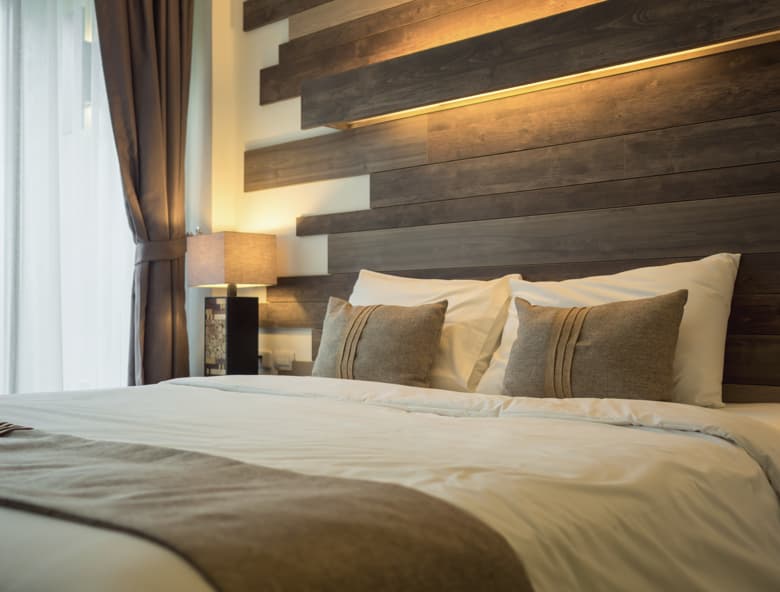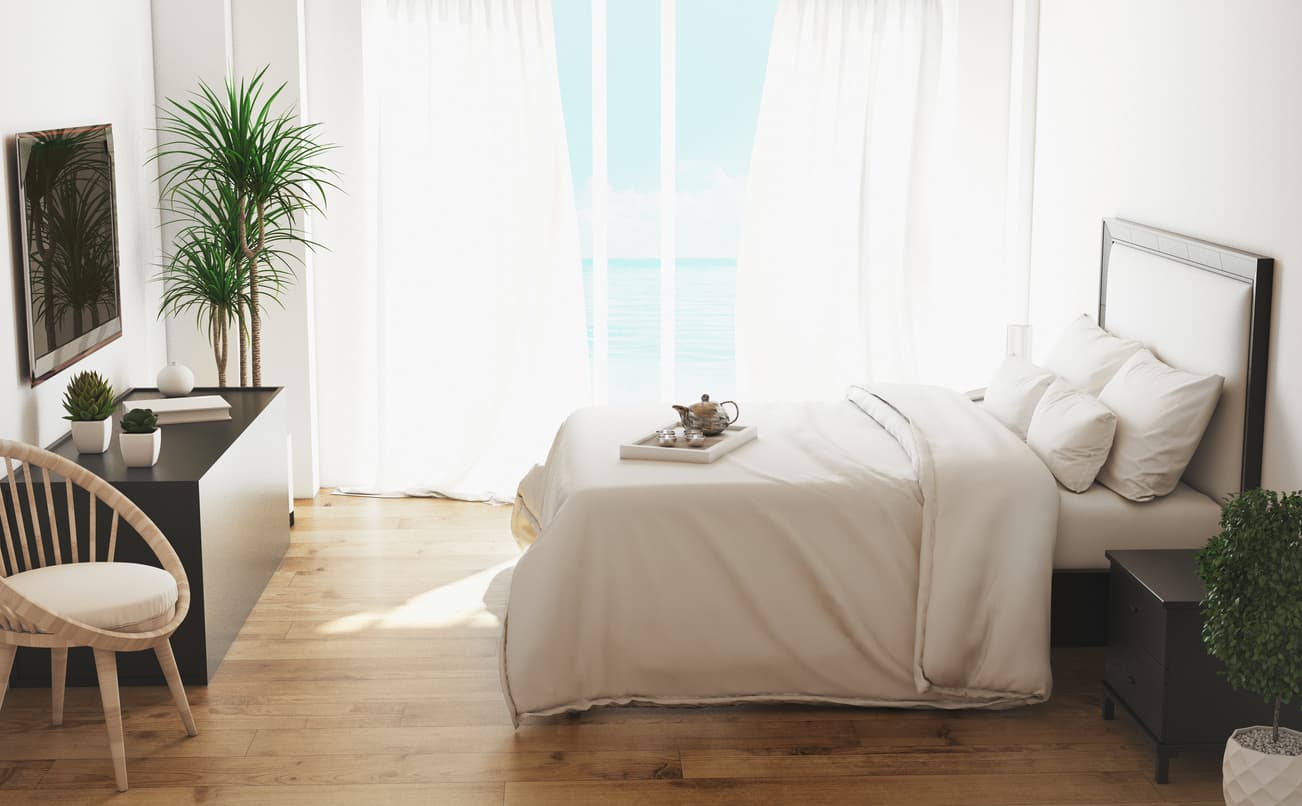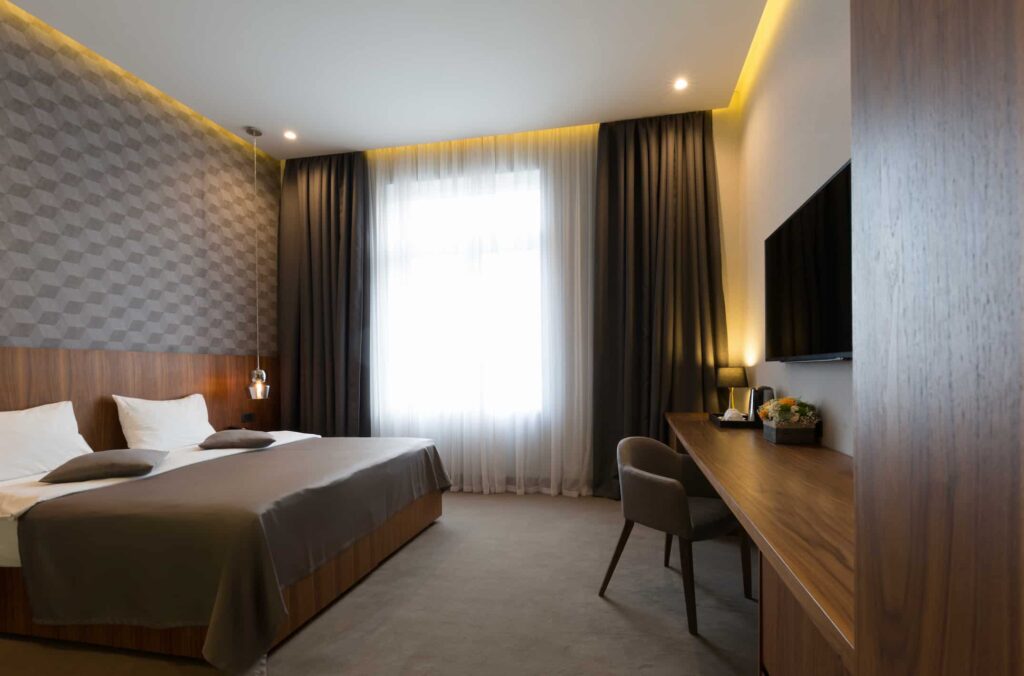
Hotel headboards are available in four main types — wall-mounted upholstered panels, freestanding upholstered headboards, wooden headboards, and integrated headboard systems with built-in lighting or bedside panels. For Ghana hotel projects, the specification must define mounting method, fabric Martindale rating (minimum 50,000 cycles), foam density (minimum 40 kg/m³), and a moisture-resistant finish system appropriate for Ghana’s coastal humidity. The headboard type and specification should be confirmed before the BOQ is written — mounting system requirements affect wall preparation, electrical rough-in, and bed base specification simultaneously.
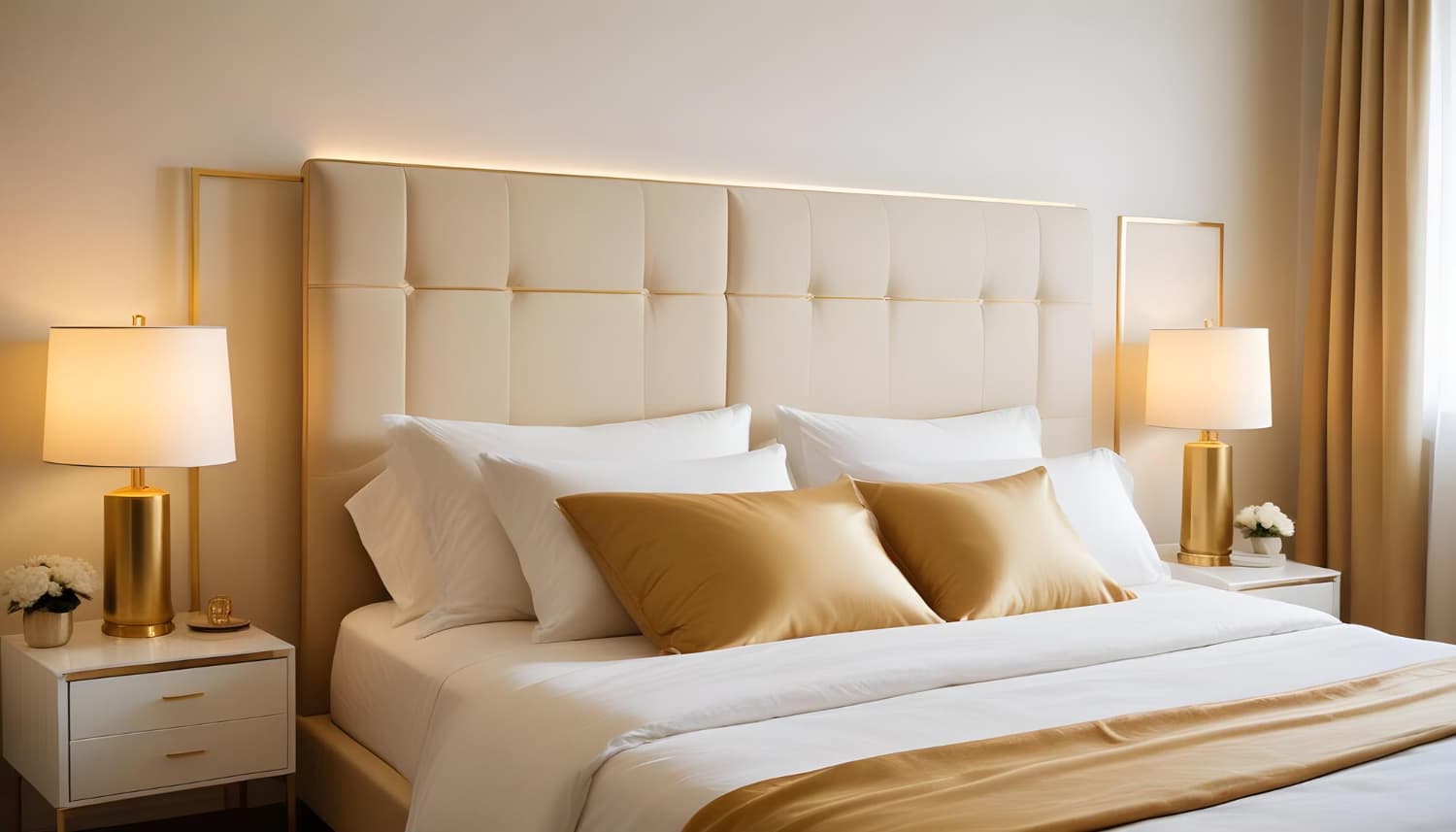
Headboard type selection is not primarily an aesthetic decision — it is a structural and operational decision that affects wall preparation requirements, bed base specification, room cleaning protocol, and long-term maintenance cost. Each headboard type has a different performance profile in Ghana’s hotel operating conditions, and the choice between them should be made with full awareness of those differences.
Wall-mounted upholstered panel headboards are the most common specification in mid-to-upscale Ghana hotel projects. They fix directly to the wall — typically through a French cleat system or direct bolt fixing — independently of the bed base. This independence is operationally significant: the bed base can be moved for room cleaning without disturbing the headboard, and the headboard can be replaced without replacing the bed base. Wall-mounted panels also allow the headboard to span the full wall width behind the bed, creating a stronger visual statement than a headboard attached to the bed base. The specification requirements are rigorous: the fixing system must be appropriate for the wall construction type (reinforced concrete is standard in Ghana hotel construction and requires different anchor specifications than timber stud framing), and the panel must be level across the full width — a wall-mounted headboard that is slightly off-level across a 2000mm width is visible to every guest who looks at the bed from the room entrance.
Freestanding upholstered headboards attach to the bed base through bolt-on legs or an integrated base system. They require no wall preparation beyond a painted surface and are faster to install than wall-mounted panels. The trade-off is that they move with the bed base — any bed movement during use creates a gap between the headboard and the wall that accumulates dust, looks unkempt, and is difficult to clean. In high-occupancy hotel rooms, this gap typically becomes visible within months of opening. Freestanding headboards are appropriate for budget and three-star properties where installation speed and cost are priorities and the visual gap is acceptable within the brand standard.
Wooden headboards — in solid wood, veneer panel, or carved wood — provide a visual character that upholstered panels cannot replicate and are appropriate for boutique, resort, and heritage-themed hotel concepts where the furniture expresses a specific design narrative. In Ghana’s coastal humidity, wooden headboards require full specification of the finish system — not just the wood species or veneer selection. An unsealed or inadequately sealed wooden headboard will show surface deterioration within 12 to 18 months in Accra’s coastal conditions. The finish specification must define the sealing system: closed-pore lacquer, UV-cured finish, or oil-wax treatment, each with different maintenance implications for the hotel’s housekeeping protocol.
Integrated headboard systems incorporate bedside lighting, reading lights, USB and power outlets, storage shelves, or decorative panels into a single floor-to-ceiling or wall-to-wall furniture unit. These systems are the most complex to specify because they sit at the intersection of furniture, electrical, and sometimes plumbing services. The furniture manufacturer produces the case; the electrical contractor installs the connections; coordination between the two is the developer’s responsibility. An integrated headboard system specified without pre-construction coordination with the electrical contractor consistently produces installation problems — conduit positions that do not match power unit locations, cable routes that require surface-mounted trunking, and light fitting positions that conflict with the headboard panel geometry.
| Specification element | Wall-mounted upholstered | Wooden | Integrated system |
|---|---|---|---|
| Substrate | MR-MDF or plywood min 18mm | Kiln-dried hardwood or MR-MDF with veneer | MR-MDF carcass with cable routing channels |
| Foam | Min 40 kg/m³, CMHR grade | N/A or accent cushion at min 35 kg/m³ | Min 40 kg/m³ on upholstered sections |
| Fabric | Min 50,000 Martindale, FR treated | N/A or accent fabric min 30,000 Martindale | Min 50,000 Martindale on upholstered panels |
| Finish system | Defined fabric + seam specification | Closed-pore lacquer or UV-cured system | Panel finish + light diffuser specification |
| Mounting method | French cleat or direct bolt — wall type specified | Direct bolt or integrated base | Floor-fixed or wall-fixed with electrical coordination |
| Height above mattress | Min 400mm above mattress top | Min 350mm above mattress top | Determined by integrated element positions |
| Width | Bed width + 100–200mm each side | Bed width or full wall width | Full wall width for integrated systems |
| Ghana climate adjustment | MR-MDF substrate, moisture-barrier poly wrap | Closed-pore finish, kiln-dried wood at 8–10% MC | Sealed cable channels, MR-MDF throughout |
In Ghana coastal properties, the foam layer inside an upholstered headboard is as vulnerable to humidity as the substrate. Standard polyurethane foam absorbs ambient moisture in high-humidity conditions, creating the internal environment that produces mould growth — visible first as surface spotting on the fabric, then as odour detectable by guests. CMHR foam (combustion-modified high-resilience) at minimum 40 kg/m³ absorbs significantly less ambient moisture than standard foam and maintains its structural profile longer under humidity cycling. For coastal Accra and Tema properties, CMHR foam specification is not a premium upgrade — it is the specification that prevents mould remediation in guest-occupied rooms.
The most common hotel headboard failure in Ghana coastal properties is not structural — it is fabric or finish deterioration accelerated by humidity. A headboard specified with standard MDF substrate, standard foam, and an unsealed fabric in a property 5km from the coast will show visible mould spotting, surface delamination, and fabric colour change within 18 months. The specification adjustments that prevent this — MR-MDF, CMHR foam, solution-dyed or moisture-resistant fabric — add modest cost at procurement and eliminate a failure category that requires full headboard replacement to correct.
The choice between wall-mounted and freestanding headboards is one that most Ghana hotel developers make on visual preference rather than operational analysis — and the operational consequences of the wrong choice become visible within months of opening. The decision framework below covers the factors that should drive this choice for different project types.
Choose wall-mounted when: the hotel category is four-star or above and visual consistency across all rooms is a brand standard requirement; the room design uses a full-wall headboard panel that extends beyond the bed width; the bed base will be moved regularly for deep cleaning and the headboard must remain level and wall-flush; or the headboard incorporates integrated lighting or power elements that require wall electrical connections. Wall-mounted installation adds 30 to 60 minutes per room to the installation timeline and requires pre-drilled anchor points in the correct positions — which must be coordinated with the construction contractor before wall finishes are applied.
Choose freestanding when: the hotel category is three-star or budget and installation speed and cost are primary constraints; the room design uses a headboard width equal to or slightly wider than the bed base without a full-wall extension; the construction programme does not allow pre-drilled wall anchors before plastering; or the project requires flexibility for future room reconfigurations without wall damage. Freestanding headboards must specify base leg material and floor contact protection — unprotected metal legs on tiled floors create noise when the bed is used and mark the floor finish.
The gap problem: Every freestanding headboard will eventually develop a gap between the headboard back and the wall behind it. This is not a manufacturing defect — it is a consequence of bed movement during use. The gap accumulates dust, is difficult to clean, and is visible to guests in rooms where the bed is not pushed hard against the wall. Housekeeping protocols must include regular bed repositioning to minimise the gap, and the headboard specification should include a wall buffer pad — a felt or rubber strip on the back of the headboard that reduces the gap size and prevents wall marking when the headboard does contact the wall.
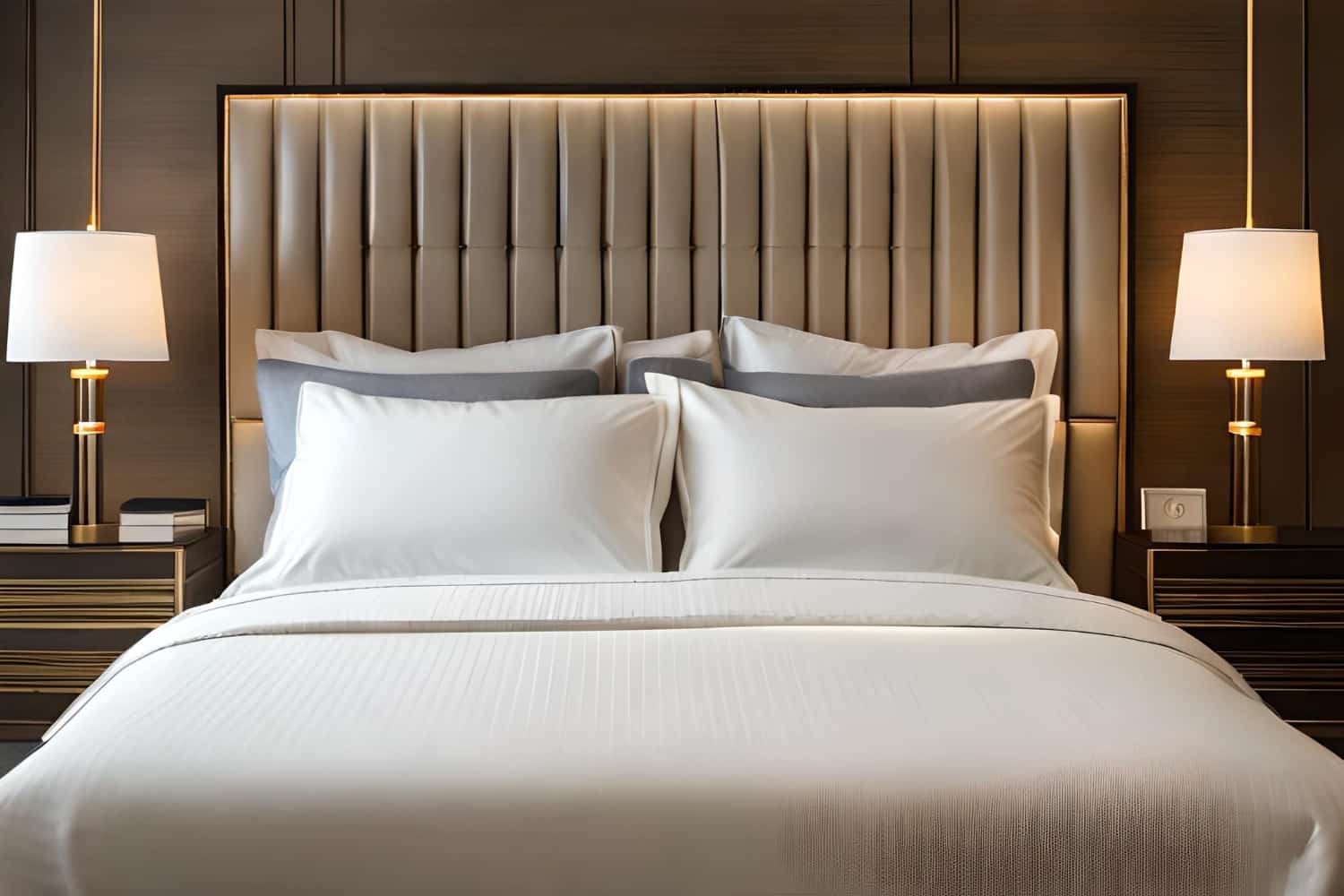
Hotel headboard sizing is determined by three variables: bed base width, mattress height, and room layout. Each of these must be confirmed before the headboard is specified — and confirmed in the correct sequence, because each one constrains the next.
Standard bed base widths in Ghana hotel projects follow international hospitality conventions. Single beds (used primarily in budget properties and staff accommodation) run 900 to 1000mm. Double beds run 1200 to 1400mm. Queen beds — the most common configuration in three-star and four-star Ghana hotel guest rooms — run 1500 to 1600mm. King beds run 1800 to 2000mm. Twin configurations (two singles in one room) require two separate headboards or a single wide panel spanning both beds with a visual division marking the centre.
Headboard width should exceed bed base width by 100 to 200mm on each side for upholstered panels — a 1600mm queen base typically uses a 1800 to 2000mm headboard panel. This overhang creates a proportionally balanced visual relationship between bed and headboard and conceals the gap between mattress edge and wall on each side. For wall-to-wall integrated headboard systems, the panel width equals the full wall width at the bed wall — typically 3000 to 4000mm depending on room dimensions.
Headboard height above the mattress top should be minimum 400mm for upholstered panels — this ensures the headboard remains visible above pillows stacked in the standard hotel bed-making configuration and provides a meaningful surface for guests to lean against when sitting up in bed. Low headboards that disappear behind pillow stacks when the bed is made look undersized and aesthetically weak in room photography — which in Ghana’s growing hotel market directly affects online booking conversion rates. For the full headboard product range produced for hotel projects including wall-mounted panels, integrated systems, and wooden headboards, see the hotel headboard manufacturer page. The headboard specification must also be coordinated with adjacent guest room pieces — for nightstand dimensions and hardware integration, see the hotel nightstand supplier guide; for wardrobe configuration and internal layout, see the hotel wardrobe specification guide; and for desk and work area requirements, see the hotel writing desk specification guide.
The headboard specification must be finalised before the bed base BOQ is written — not after. The bed base height determines the mattress height, which determines the headboard mounting position, which determines the wall anchor positions, which determines the electrical rough-in positions for integrated lighting. Each decision constrains the next. Starting with the headboard type and working forward through the bed system produces a coordinated specification. Starting with the bed base and retrofitting the headboard specification consistently produces mounting and sizing problems that are expensive to correct after production.
Headboard specification in Ghana hotel projects should be calibrated to the hotel’s star category and target guest profile — not because lower-category hotels deserve lower-quality headboards, but because the specification elements that justify cost investment vary significantly between categories.
Budget and three-star hotels benefit from simple, durable upholstered panel headboards in neutral commercial fabrics. The investment priority is substrate quality (MR-MDF throughout) and fabric Martindale rating (50,000+ cycles) — the specification elements that determine longevity. Design complexity adds cost without proportional guest value at this category — guests in three-star properties judge the headboard by whether it is clean, intact, and comfortable to lean against, not by its design sophistication.
Four-star hotels justify investment in fabric quality, design detail, and finish consistency. A four-star headboard specification might include a two-tone fabric panel with contrast piping, a defined stitch pattern, and a fabric selection that reflects the room’s colour concept. Repeat guests at four-star properties notice when headboards look tired — worn fabric edges, faded colour, visible seam separation — and mention it in online reviews. The additional investment in fabric quality (moving from a 50,000 to a 100,000 Martindale rating) extends the headboard’s visual life significantly and reduces the likelihood of negative reviews related to room condition.
Five-star and boutique hotels require headboard specifications that function as design statements — custom-sized panels, custom fabrics sourced to the interior designer’s specification, integrated lighting designed as part of the headboard concept, and finish quality that communicates premium positioning to guests who have direct comparators from properties around the world. At this category, the headboard manufacturer must be selected for their ability to execute a complex, custom specification consistently across every room — not for their unit price. For how headboard specification connects to the overall hotel guest room furniture procurement strategy, see the hotel furniture suppliers Turkey guide for supplier evaluation criteria that apply to headboard procurement specifically. For public area furniture specification including lobby seating and lounge chairs, see the hotel lobby furniture guide. For outdoor and poolside furniture specification for Ghana’s tropical climate, see the hotel pool outdoor furniture guide. For conference and banquet furniture including event seating, see the hotel banquet furniture Ghana guide.
Wall anchor positions for wall-mounted headboards must be confirmed and drilled before wall plaster is applied — typically 12 to 16 weeks before the planned headboard installation date. This requires the headboard type, dimensions, and mounting system to be confirmed at least 14 to 18 weeks before opening — earlier than most Ghana hotel developers initiate the headboard procurement conversation. A headboard BOQ written after wall finishes are complete leaves three options: surface-mounted fixings (visible and aesthetically poor), drilling through finished surfaces (requires patch repair), or freestanding headboards (different specification entirely). None of these is the intended outcome. The headboard specification must be confirmed before the construction contractor reaches the plastering stage on the bed wall.
Headboard replacement planning is the aspect of hotel headboard procurement that developers most consistently omit from their initial project planning — and the omission creates operational and budget surprises that are entirely predictable. In a Ghana hotel operating at commercial occupancy levels, upholstered headboards have a finite operational lifespan even when correctly specified. Understanding what that lifespan is, what drives replacement decisions, and how to plan for replacement efficiently is as important as the initial specification.
A correctly specified upholstered hotel headboard — MR-MDF substrate, CMHR foam at 40 kg/m³, fabric at 50,000 Martindale, properly sealed in an appropriate finish — will maintain its visual and structural integrity for 7 to 10 years under standard hotel occupancy conditions. In Ghana’s coastal properties where humidity is consistently high, the lower end of this range is more realistic. Properties that do not maintain their headboards proactively — allowing fabric seam separation to progress without repair, allowing foam compression to develop without cushion replacement, allowing surface mould to develop without treatment — will see headboard condition deteriorate toward the lower end of this range.
The replacement planning decisions that should be made at the initial procurement stage are: whether to order a small quantity of replacement fabric (1 to 2 metres per room type) with the original production run to guarantee future colour and weave matching; whether to archive the headboard’s technical specification — fabric codes, foam grades, substrate thickness, mounting dimensions — with the supplier for future re-order reference; and whether to include headboard replacement in the property’s FF&E reserve fund calculation from year one. Turkish manufacturers who archive production specifications can supply matched replacement headboards years after the original order. Manufacturers who do not archive create a situation where replacement headboards either do not match the original installation or require a complete re-specification exercise. For how after-sales support and replacement planning work with Turkish suppliers, see the hotel furniture suppliers Turkey guide.
The most consistently repeated headboard installation mistake in Ghana hotel projects is confirming wall anchor positions from the design drawing rather than from the as-built wall measurement. In Ghana hotel construction, wall surfaces are rarely exactly plumb and wall positions vary from the design drawing by 10 to 30mm. A headboard French cleat installed at the design drawing position on a wall that has moved 20mm during construction produces a headboard that is visually off-centre above the bed — visible to every guest and impossible to correct without reinstalling the cleat through finished wall surfaces. Confirm anchor positions from a physical measurement of the as-built wall after plastering, not from the design drawing.
Standard hotel headboard height is typically 1200 to 1500mm from the floor — placing the top of the headboard 400 to 600mm above the mattress top in a standard hotel bed configuration. The exact height should be determined by the mattress height (which varies between 400 and 700mm from the floor depending on bed base type) and the room’s ceiling height proportions. Low-profile headboards that fall below 400mm above the pillow line disappear behind standard hotel bed-making configurations.
Hotel headboard fabric should be specified at minimum 50,000 Martindale rub cycles for standard hotel use. Properties in high-occupancy locations or with very high turnover rates should specify 100,000 cycles. Request Martindale test certificates from the fabric mill — not from the furniture manufacturer — because the mill is the entity that conducted the test. A verbal Martindale rating claim without a test certificate is not a verifiable specification.
Wall-mounted headboards fix directly to the wall, independent of the bed base — they remain in position when the bed is moved for cleaning and do not develop a gap between headboard and wall during use. Freestanding headboards attach to the bed base and move with it — they are faster to install but develop a gap between headboard and wall over time. Wall-mounted is the correct specification for four-star and above; freestanding is acceptable for three-star and budget properties where installation speed and cost are priorities.
Hotel headboards should use minimum 40 kg/m³ CMHR (combustion-modified high-resilience) foam. Standard polyurethane foam below this density permanently deforms under repeated surface contact and ambient humidity cycling, creating visible unevenness within two to three years of hotel operation. CMHR foam specification also addresses fire retardancy requirements for commercial hospitality environments.
Ghana’s coastal humidity requires three specification adjustments for hotel headboards. Substrate — MR-MDF (moisture-resistant) rather than standard MDF; verify compliance by checking for green core when the panel is cut. Foam — CMHR grade with moisture-resistant properties rather than standard polyurethane, which retains moisture between cleaning cycles in high-humidity environments. Fabric — solution-dyed or moisture-resistant backed fabric rather than standard woven construction, which absorbs ambient moisture and creates conditions for mould growth inside the foam layer.
Hotel headboards from Turkish manufacturers to Ghana typically follow the standard hotel furniture lead time: 14 to 18 weeks from BOQ finalisation to installation on site. This covers sample production and approval (2 to 4 weeks), mass production (3 to 5 weeks for headboards specifically), sea freight Turkey to Tema Port (18 to 24 days), customs clearance (5 to 15 days), and installation. The headboard specification must be finalised and the BOQ submitted before this timeline begins.
WhatsApp us