Choosing the right hotel furniture suppliers Turkey is one of the most consequential decisions in a Ghana hotel development — not because furniture is the largest cost in the project, but because a supplier relationship that goes wrong creates problems that cannot be corrected quickly. All contract-grade hotel furniture in Ghana is imported, and a production failure, documentation error, or specification misalignment discovered after the container ships adds 12 to 14 weeks and significant unplanned cost before a correction arrives on site. This guide covers the complete picture of working with hotel furniture suppliers in Turkey for Ghana projects: how the supplier landscape is structured, how to find and verify the right factory, what factory direct sourcing means in practice, and what questions separate manufacturers who can deliver from those who cannot. For the complete procurement context, the hotel furniture Ghana guide covers the full FF&E scope. For manufacturing process detail, see hotel furniture manufacturing Turkey Ghana. For how supplier selection connects to export logistics, see export hotel furniture to Ghana. For quality control in manufacturing, see hotel furniture quality control. For contract furniture specification, see hotel contract furniture Ghana. For design and planning context, see hotel furniture design and planning Ghana. For restaurant furniture sourcing, see restaurant furniture Ghana. For product-level specification across guest rooms and public areas, see hotel guest room furniture specification.
Hotel furniture suppliers in Turkey range from direct manufacturers with full production capability to intermediaries and trading companies that source from third-party factories. For Ghana hotel projects, working directly with a manufacturing factory — one that controls its own production floor, quality control, and export documentation — consistently produces better outcomes than working through intermediaries. The evaluation must go beyond product appearance and pricing to cover production systems, West Africa export experience, certification documentation, and post-delivery support capability.
Turkey’s furniture manufacturing industry is concentrated in several production clusters — Kayseri, Bursa, Istanbul, and İzmir being the main centres for hotel contract furniture. Within these clusters, the market is structured across three distinct supplier types that present differently to international buyers but operate very differently in practice.
Direct manufacturers own and operate production facilities. They employ their own workforce, control their own raw material procurement, run their own quality control, and produce furniture in their own factory. A direct manufacturer can show you the production floor, introduce you to the technical team, and provide production documentation — shop drawings, material certificates, inspection records — as a standard part of their workflow. When something goes wrong, there is one party responsible and one decision-maker who can resolve it. For Ghana hotel projects, direct manufacturers are almost always the correct sourcing choice for orders above 20 rooms.
Trading companies and intermediaries present as suppliers but do not own production facilities. They source from factories — sometimes multiple factories for different product categories — and act as the commercial interface between the buyer and the production floor. Some intermediaries manage this effectively. Many do not — particularly when a problem requires rapid production intervention, because the intermediary has limited authority over a factory they do not own. The buyer may not know they are working through an intermediary until a problem reveals the communication layer between them and the actual production team.
Hybrid operations own some production capability but outsource other categories. A company that manufactures casegoods in its own facility but purchases upholstered pieces from a third-party factory is not a fully integrated manufacturer for a complete hotel room package. Understanding which categories a supplier produces in-house and which they source externally is critical for assessing where quality control gaps may appear in a full-scope hotel furniture order.
The distinction between these types is not visible in a product catalogue or a showroom visit. It requires direct questions about production ownership, factory location, workforce structure, and which product categories are produced in-house versus sourced externally.
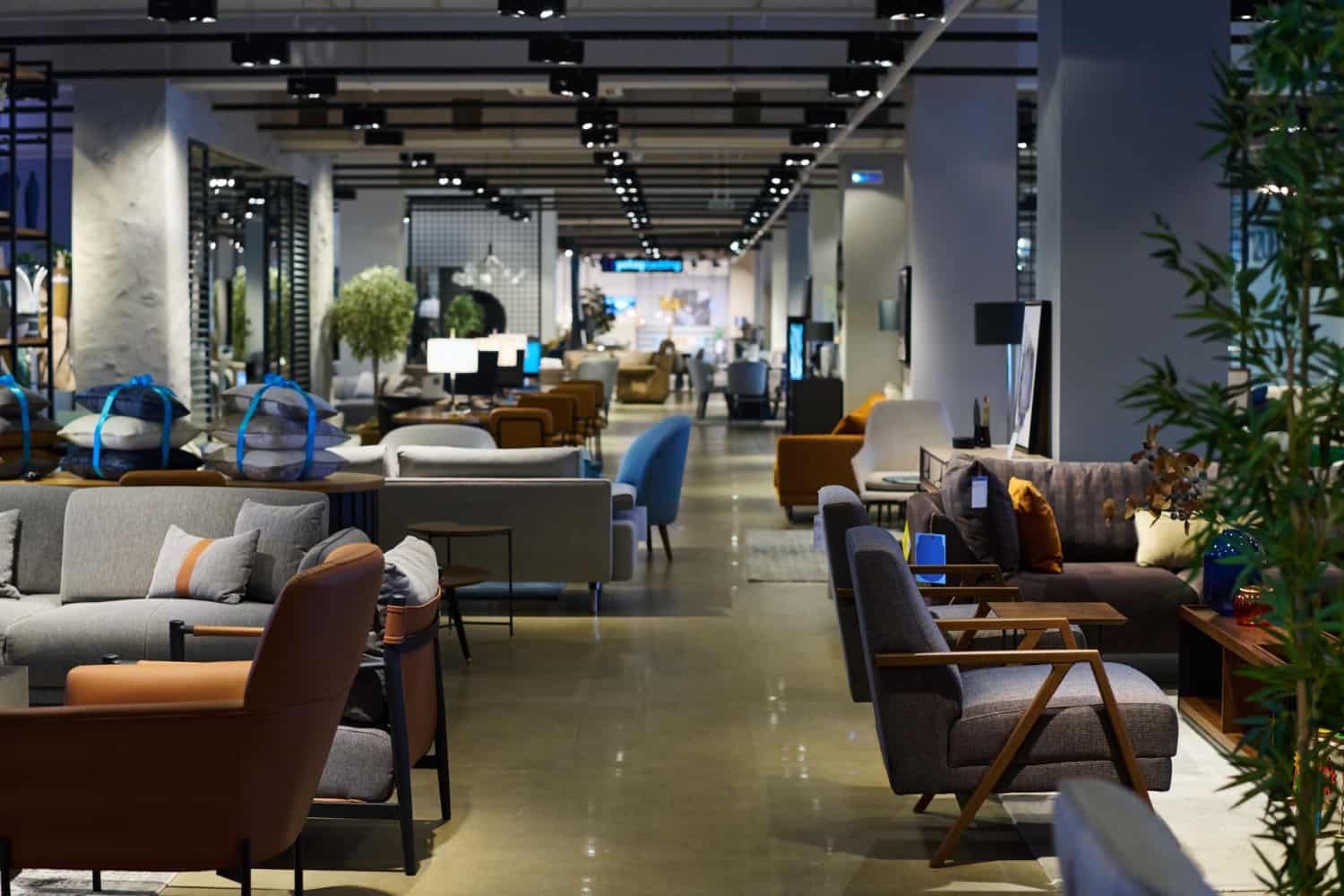
The most common sourcing mistake in Ghana hotel furniture procurement is selecting a supplier based on the best showroom presentation and the lowest quote. Showrooms are marketing assets, not production indicators. A low quote that wins the order often reflects assumptions about specification that inflate during production, or material substitutions that are not visible until furniture arrives on site. Evaluate suppliers on production documentation, Ghana export references, and sample quality — not on showroom aesthetics or initial price competitiveness.
Factory direct sourcing is the procurement model where the developer or procurement team establishes a direct relationship with the manufacturing facility — bypassing intermediaries, trading companies, and agents. For Ghana hotel projects, turkish hotel furniture factory direct sourcing is the model that produces the most predictable outcomes on quality, timeline, and cost. But “factory direct” requires more than finding a factory’s website — it requires verifying that the entity presenting as a manufacturer actually controls its own production.
Verifying factory direct status requires three things: a factory visit (physical or video), production documentation, and references from completed comparable projects. A factory visit — even a structured video walkthrough — reveals whether a production floor exists, what its scale and equipment capability is, and whether it is producing hotel furniture at the volume claimed. Production documentation — shop drawings from previous projects, material certificates, QC inspection records — reveals whether the factory’s quality system is built into its workflow or assembled on request. References from completed Ghana or West Africa hotel projects reveal whether the factory’s export claims are real and verifiable.
Factory direct sourcing for a Ghana hotel project also requires the developer to take on coordination responsibilities that an intermediary would otherwise manage. This includes managing the BOQ development process, approving technical drawings, scheduling and conducting sample approval, monitoring production milestones, coordinating pre-shipment inspection, and managing export documentation. These are not complex tasks, but they require time and attention. Developers who are not set up to manage this directly are better served by a procurement agent who manages the factory relationship on their behalf — a different model from a trading company, but one that preserves direct factory visibility.
Standard nightstand dimensions in hotel guest rooms run 500 to 600mm wide, 400 to 500mm deep, and 500 to 550mm high — matching standard mattress height to allow comfortable access from the bed. These dimensions must be confirmed against the specific mattress and bed frame specification for the project, because a nightstand that is 80mm below mattress height is functionally inconvenient regardless of its quality.
The specification requirements for a hotel nightstand are: MR-MDF carcass at minimum 18mm, HPL or fully sealed veneer surface, 2mm ABS edge banding on all exposed edges, drawer slides specified at minimum 50,000 cycles, and soft-close drawer mechanism. The soft-close specification is not an aesthetic upgrade — it prevents the repetitive impact noise of drawers closing that generates guest complaints in shared-wall room configurations. Power and USB integration — typically one or two outlets and USB-A or USB-C ports on the top surface or drawer face — has become a standard expectation in mid-to-upscale hotel guest rooms and must be specified in the BOQ before production begins, as it affects the internal drawer layout and requires coordination with the electrical contractor.
For the full range of nightstand configurations and production specifications, see the hotel nightstand manufacturer page.
Understanding hotel furniture minimum order quantity is one of the first practical questions Ghana hotel developers need to resolve before approaching Turkish manufacturers. The answer varies significantly between suppliers and affects project planning in ways that are not always obvious from initial conversations.
Most Turkish hotel contract furniture manufacturers do not publish fixed minimum order quantities for hotel projects. Instead, they work on minimum order value — typically expressed as a minimum production value per order rather than a minimum unit count. This minimum reflects the factory’s setup cost — technical drawings, sample production, material procurement, production scheduling — which must be covered by the order value to make the project commercially viable for the factory.
For small boutique hotel projects in Ghana — 15 to 30 rooms — the minimum order value threshold is the relevant constraint. A factory whose minimum viable order is $40,000 in production value can accommodate a 20-room project if the room specification is sufficiently premium. A factory whose minimum is $15,000 can accommodate even smaller replacement orders. Asking specifically about minimum order value — not minimum unit count — produces a more useful answer for small project planning.
For projects below the threshold of most contract manufacturers, two options exist: aggregating multiple room types or areas into a single order to reach the minimum, or working with smaller production operations that accept lower minimums at a higher per-unit cost. The cost premium for small orders from contract manufacturers is real but often overstated — the correct comparison is not small-order premium versus standard pricing, but total project cost including specification quality, delivery reliability, and replacement risk.
Wardrobe type selection is the first decision: hinged door, sliding door, or open wardrobe. Hinged door wardrobes require clearance in front of the door swing — typically 500 to 600mm — which affects room layout planning. Sliding door wardrobes eliminate the swing clearance requirement but introduce a sliding mechanism that must be specified by cycle count. Open wardrobes remove doors entirely and suit properties where the design concept supports an open storage aesthetic, but they require housekeeping to maintain visible order in every room.
Internal layout specification is where most wardrobe BOQs are incomplete. A wardrobe specified as “900mm wide, 550mm deep, 2100mm high, HPL finish” does not tell the manufacturer how many hanging rails, how many shelves, whether a safe housing is required, where the luggage shelf sits, or what the internal finish specification is. Every internal element must be in the BOQ. A wardrobe that arrives on site without a luggage shelf — because it was not specified — requires a re-order and a second installation visit in an operating hotel room.
Substrate specification for Ghana is MR-MDF throughout — including internal panels that are not visible in normal use. Internal MDF panels exposed to the humidity that enters the wardrobe when it is opened in a high-humidity environment will absorb moisture at edges and around hinge fixings even when external surfaces are correctly sealed. Hinge specification should be a named brand with a published cycle rating — minimum 100,000 cycles for hotel use. Anonymous hardware at an unspecified cycle count is not a hotel specification. For production options and configuration details, see the hotel wardrobe manufacturer page.

Requesting hotel furniture manufacturer certifications turkey is not bureaucracy — it is the only way to verify that a manufacturer’s performance claims are backed by documented testing rather than marketing language. A Turkish hotel furniture manufacturer producing at contract specification level should be able to provide a defined set of documents without hesitation. A manufacturer who cannot provide these documents is not operating at the level a hotel project requires, regardless of how professional their presentation is.
The certification documentation for hotel furniture procurement covers four categories:
Structural and durability testing: BIFMA (Business and Institutional Furniture Manufacturers Association) standards — specifically X5.1 for office seating and X5.4 for lounge seating — define load cycle, fatigue resistance, and stability test requirements for commercial furniture. A chair that passes BIFMA X5.4 has been tested to 100,000 seat and back cycles. Request BIFMA test reports or equivalent EN standard test certificates for all seating items. According to BIFMA’s published standards framework, these tests simulate real-world commercial use rather than theoretical stress scenarios — making them directly applicable to hotel occupancy conditions.
Fire retardancy compliance: BS 5852 (British Standard for fire performance of upholstered furniture) and NFPA 701 (fabric flame resistance) are the most widely referenced standards in international hotel contracts. Request BS 5852 test certificates for foam used in upholstered pieces — the foam must be combustion-modified high-resilience (CMHR) grade, not standard polyurethane. Request FR fabric test reports from the fabric mill confirming flame retardancy classification. These are not optional for hotels targeting international brand affiliation or institutional financing.
Material emission compliance: E1 formaldehyde emission class should be specified for all MDF and particleboard used in enclosed bedroom furniture. Request E1 emission certificates from the panel material supplier. This is a guest health requirement — not just a fire standard — and is increasingly referenced in international hotel brand specifications for Africa markets.
Quality management system: ISO 9001 certification confirms that the manufacturer operates a documented quality management system with defined processes for production consistency, non-conformance management, and continuous improvement. It does not guarantee product quality — but it indicates that the factory’s quality control is built into its workflow rather than improvised. Request the current ISO 9001 certificate and verify its validity date.
For a structured guide to supplier verification including reference check questions, sample evaluation criteria, and documentation requirements, see hotel furniture supplier reviews turkey.
Sample evaluation: Request physical samples of the specific items in your project specification — not showroom samples of the closest available alternative. Evaluate samples against the specification criteria: cut the MDF edge to check for green core (MR-MDF) versus cream core (standard MDF); measure edge banding thickness; test hardware function; compress upholstery foam; examine stitching tension. A manufacturer who resists producing project-specific samples before a production order is a manufacturer who prefers that you do not evaluate their output before committing. For the full hotel furniture quality evaluation framework, the hotel furniture quality checklist covers every inspection point from material verification through pre-shipment assessment. The three main bed base types in hotel production are platform bases, upholstered bases, and storage bases. Platform bases in MR-MDF or solid wood with a slatted top are the standard specification for three-star and budget hotels — they are structurally straightforward and easy to maintain. Upholstered bases add a fabric-wrapped panel around the base perimeter, which elevates visual quality at the cost of an additional fabric specification that must meet the same Martindale and cleanability requirements as other upholstered pieces in the room. Storage bases incorporate a drawer or lift system beneath the mattress — a useful specification for extended-stay properties but one that adds mechanical complexity requiring hardware specification by cycle count. Load rating specification is the most frequently omitted element in bed base BOQs. A hotel bed base must support a minimum of 250kg distributed load — the combined weight of mattress, bedding, and two adult guests. The structural specification — slat thickness, slat spacing, frame joint method, centre leg support on queen and king sizes — must be defined to achieve this rating. A base specified only by external dimensions and finish without structural load specification is a base that may or may not perform under hotel occupancy. For bed base production options including platform, upholstered, storage, and zip-and-link configurations, see the hotel bed base manufacturer page.The most effective supplier evaluation process is one that runs in parallel with BOQ development — not sequentially after it. Approaching two or three manufacturers simultaneously with a complete BOQ produces comparable quotes on identical specifications, reveals which manufacturers ask the right clarifying questions, and compresses the supplier selection timeline without compromising evaluation quality. A manufacturer who receives a complete BOQ and responds with a detailed, itemised quote that references the specification is demonstrating production literacy. A manufacturer who responds with a round-number estimate without referencing the specification details is estimating, not quoting.
The quality of a supplier quote is determined by the quality of the brief they receive. A manufacturer who receives a complete, detailed BOQ — every item listed by room type with dimensions, material specifications, finish codes, and hardware requirements — can quote accurately and commit to a production timeline. A manufacturer who receives a room count and a general description produces an estimate that will change as the full scope becomes clear during production. The difference between a quote and an estimate is the difference between a project that runs on budget and one that accumulates cost surprises.
A complete supplier brief for a Ghana hotel project covers the following elements. Room type breakdown — how many rooms of each type, with floor plans or layout drawings showing furniture placement. Item-level specification — every piece in each room type with dimensions, substrate, surface finish code, edge banding specification, internal layout details for casegoods, foam density and fabric grade for upholstered pieces, and hardware requirements by cycle count. Material references — finish codes in RAL, NCS, or named material references that allow the manufacturer to source accurately and produce samples that match the design intent. Installation sequence — whether the project completes all rooms simultaneously or in phases, and if phased, which rooms complete first. Export requirements — destination port (Tema), preferred shipping terms (FOB or CIF), and whether pre-shipment inspection by a third party is required.
A brief that includes all of these elements allows the manufacturer to produce a line-item quote, a production timeline with milestones, and a sample production schedule before any commercial commitment is made. This is the correct sequence: complete brief, then quote, then supplier selection, then contract. Reversing this sequence — selecting a supplier based on a preliminary quote and then developing the full specification — produces a project where the supplier holds the pricing leverage at the point when the full scope becomes clear. For how the briefing process connects to the production timeline, the hotel furniture lead time guide covers how each stage from brief to delivery flows.
The supplier relationship does not end when the production order is placed — it intensifies. The period between contract signing and container loading is where most project problems originate, and where most of them can still be resolved at manageable cost. A developer who is actively engaged during production catches problems early. A developer who assumes production is progressing correctly and only engages at delivery discovers problems that are expensive to correct.
Active production management requires three things: a production schedule with named milestones, a communication protocol that produces regular progress updates, and defined checkpoints where production cannot advance without developer approval.
The production schedule should list specific dates for: technical drawing completion and approval, material procurement confirmation, production start, key production milestones (frame completion, surface finishing, upholstery), production completion, QC inspection, container loading, and vessel departure. A manufacturer who cannot provide a schedule at this level of detail is not managing their production at the level a hotel project requires. Milestones allow the developer to identify slippage early — when a drawing approval takes an extra week, it is visible in the schedule and can be addressed before it cascades into a production delay.
Pre-shipment inspection — conducted by the developer’s representative, a third-party inspection firm, or a structured video inspection — is the final production checkpoint before the container loads. It is the last opportunity to identify and correct specification non-compliance before furniture leaves Turkey. For what to check at pre-shipment inspection, the hotel furniture quality checklist covers the complete inspection framework from material verification through packaging review.
Most Ghana hotel projects above 60 rooms involve more than one furniture supplier — either because no single manufacturer produces every required category to the same quality standard, or because project scale or timeline requirements necessitate splitting the production across multiple factories. Managing multiple suppliers on a single project introduces coordination complexity that single-supplier projects do not have, but it is sometimes the correct strategy when no single manufacturer can deliver the full scope at the required quality level.
The primary risk in multi-supplier projects is finish inconsistency — furniture from different factories that does not match in colour, texture, or sheen level when installed in adjacent spaces. A lobby sofa from one factory and a lobby chair from another, both specified in “walnut veneer,” will not match unless both factories source from the same veneer mill, use the same finishing system, and apply the same sealing process. Achieving finish consistency across multiple suppliers requires a physical sample approval process where samples from all suppliers are reviewed together — not sequentially — under the same lighting conditions before any production begins.
The secondary risk is logistics coordination. Containers from different suppliers arriving at Tema Port at different times, clearing customs on different schedules, and delivering to site on different days creates an installation sequence that depends on every supplier meeting their timeline. A single supplier delay disrupts the installation schedule for all other suppliers’ furniture. The mitigation is a unified project timeline that treats all supplier production schedules as interdependent — not as separate tracks — and builds buffer into each supplier’s schedule independently. For how to coordinate multi-supplier shipments through Tema Port, the hotel furniture container loading guide covers multi-container coordination and split-load planning in detail.
A manufacturer owns and operates a production facility — they control materials, production processes, quality control, and timelines. A supplier or intermediary coordinates orders but typically sources from third-party factories, reducing production visibility and accountability. For large-scale Ghana hotel projects where specification consistency and quality control matter, working directly with a manufacturer almost always produces better outcomes than working through an intermediary.
Request a factory visit — either in person or through a structured video walkthrough showing the production floor, machinery, and active orders. Ask for references from completed hotel projects at comparable scale. Request production documentation including shop drawings, QC inspection records, and pre-shipment reports from previous orders. A legitimate factory answers these requests immediately. A supplier operating from a showroom without production capability will deflect or delay.
Most Turkish hotel furniture factories work on minimum order value rather than minimum unit count. The threshold varies by factory but typically starts at $15,000 to $40,000 in production value. Small boutique projects of 15 to 30 rooms are achievable with most contract manufacturers if the room specification reaches the minimum value threshold. Ask specifically about minimum order value — not minimum unit count — for the most useful answer.
Request BIFMA or equivalent cycle test reports for seating, BS 5852 fire performance certificates for upholstered pieces and foam, Martindale rub cycle test certificates from the fabric mill, E1 formaldehyde emission certificates for all panel materials, and current ISO 9001 certification. A supplier who cannot provide these documents on request is not operating at contract specification level for hotel projects.
The total timeline from BOQ finalisation to furniture installed on site in Ghana runs 14 to 18 weeks in a well-managed project. This covers sample approval, mass production, sea freight from Turkey to Tema Port, customs clearance, and inland delivery. The procurement process must start no later than six months before the planned opening date.
WhatsApp us