Designing an effective hotel lobby furniture layout is one of the most critical steps in shaping the overall guest experience. The lobby is the first physical interaction guests have with a hotel, and it sets expectations for comfort, quality, and brand identity. In modern hospitality projects, lobby design decisions must be aligned with a broader hotel furniture design planning ghana strategy to ensure consistency across layout, zoning, and furniture integration throughout the entire property.
In Ghana’s competitive hospitality markets such as Accra, Tema, and Kumasi, hotels are increasingly focusing on lobby spaces not just as reception areas, but as multifunctional environments. Today’s lobbies often combine waiting areas, social zones, informal workspaces, and even food & beverage elements. This evolution makes furniture layout planning more complex, because every square meter must serve both aesthetic and operational purposes.
A poorly planned lobby can create confusion, congestion, and inefficiency. A well-designed lobby, on the other hand, improves flow, enhances guest comfort, and supports hotel operations from the moment a guest walks in.
Hotel lobby furniture layout Ghana should be planned using clear zoning, efficient circulation flow, and usage-based furniture placement to improve guest experience, avoid congestion, and support smooth hotel operations.
Hotel lobby furniture layout should be planned using clear zoning, efficient circulation flow, and strategic furniture placement to ensure smooth movement, guest comfort, and operational efficiency.
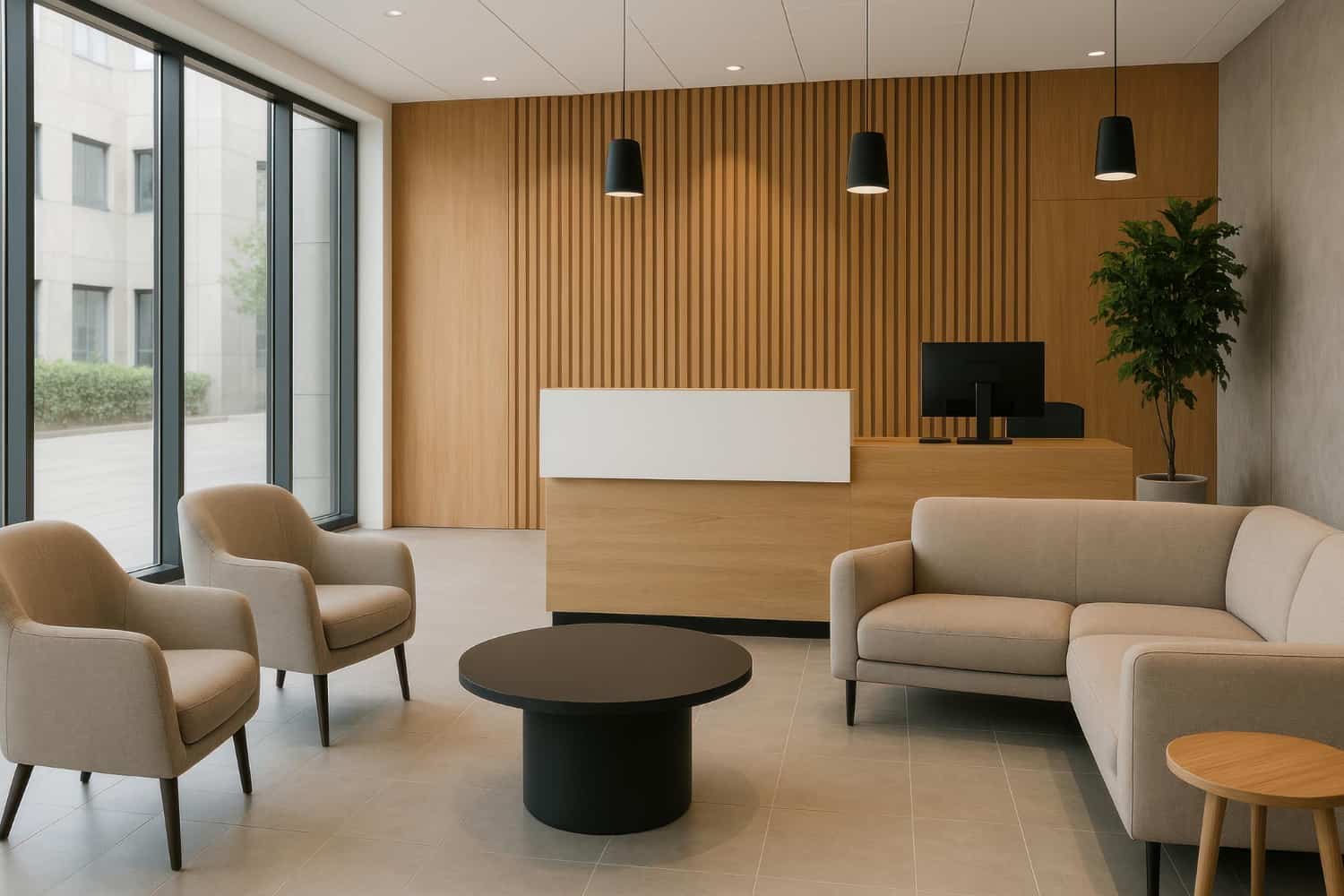
Unlike guest rooms, which are private and repetitive, the lobby is a dynamic, high-traffic space where multiple activities happen simultaneously. Guests arrive, wait, check in, meet others, work, and sometimes dine—all within the same environment.
This makes layout planning fundamentally different from room planning. The goal is not only to place furniture attractively, but to create a system that supports movement, visibility, and usability.
When layout is not carefully considered, common problems appear quickly. Guests may feel disoriented when entering the space, reception desks may become overcrowded, seating areas may lack privacy, and circulation paths may become blocked. These issues reduce perceived quality even if the furniture itself is high-end.
In contrast, a strong hotel lobby furniture layout creates a natural flow. Guests intuitively understand where to go, where to sit, and how to move within the space. This is what transforms a lobby from a decorative area into a functional experience.
The first few seconds inside a hotel lobby are critical. Guests subconsciously evaluate the space based on openness, accessibility, and visual clarity.
A well-designed layout ensures that:
Rather than placing furniture arbitrarily, designers must think in terms of movement patterns. Entry points, walking paths, and visual lines should guide the placement of every element.
This approach is closely aligned with hotel furniture space planning, where circulation, functional zones, and furniture positioning are defined together to create efficient and comfortable hotel environments.
This is similar to how hotel room layout ghana planning focuses on circulation inside rooms. In the lobby, however, the scale is larger and the number of users is higher, making flow even more important.
When flow is properly designed, guests feel comfortable without needing instructions. This is one of the most important indicators of a successful lobby layout.
Flow Insight:
In many hotel projects, poor lobby circulation is one of the main causes of guest discomfort, even more than furniture quality or design style. When movement paths are unclear, guests feel confused and spaces quickly become congested during peak hours.
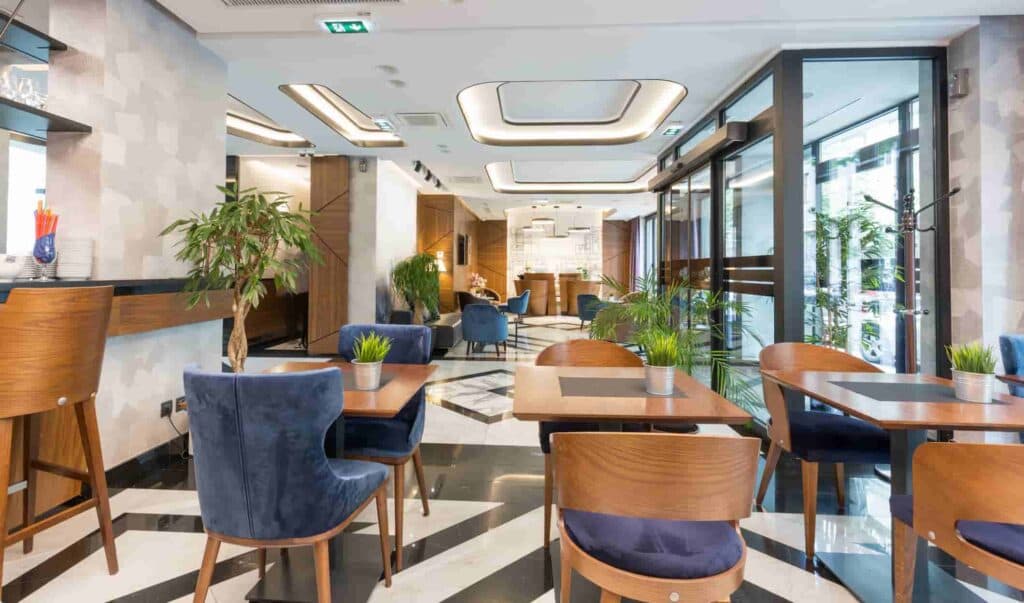
Modern hotel lobbies are no longer single-purpose spaces. They are divided into multiple functional zones that must coexist within one layout.
A broader hotel furniture zoning strategy helps define how these zones interact across the entire hotel, ensuring that guest flow, service movement, and functional areas operate without conflict.
Instead of separating these areas physically, most successful projects use zoning strategies to define them visually and spatially.
A typical lobby may include:
Each zone has different requirements in terms of furniture, spacing, and positioning. The challenge is to create separation without isolation.
For example, seating areas should feel comfortable and slightly private, but still connected to the main space. Reception should be easily visible, but not dominate the entire layout. Circulation paths should allow movement without interrupting seated guests.
A strong zoning strategy ensures that each function operates efficiently without interfering with others.
Key zones in a hotel lobby layout include reception, waiting area, lounge space, circulation paths, and optional work or social zones, each designed to serve different guest needs without disrupting overall flow.
In high-traffic hotel lobbies, the absence of clear zoning often creates invisible conflicts between guest activities, such as waiting, working, and circulation, reducing both comfort and operational efficiency.
Furniture selection for the lobby cannot be based on aesthetics alone. It must reflect how the space will be used throughout the day.
Lobby furniture is exposed to:
This requires contract-grade durability and thoughtful selection.
Seating should balance comfort and resilience. Sofas and lounge chairs must maintain their shape despite heavy use. Tables must resist scratches and spills. Materials must perform well in Ghana’s climate, where humidity can affect certain finishes.
At the same time, furniture must align with the hotel’s concept. A business hotel may prioritize structured seating and functional layouts, while a resort may focus on relaxed and open arrangements.
The goal is to ensure that furniture supports both visual identity and operational performance.
Lobby furniture experiences higher wear than most hotel areas, and poor material selection often leads to early replacement costs that exceed initial savings from lower-priced options.
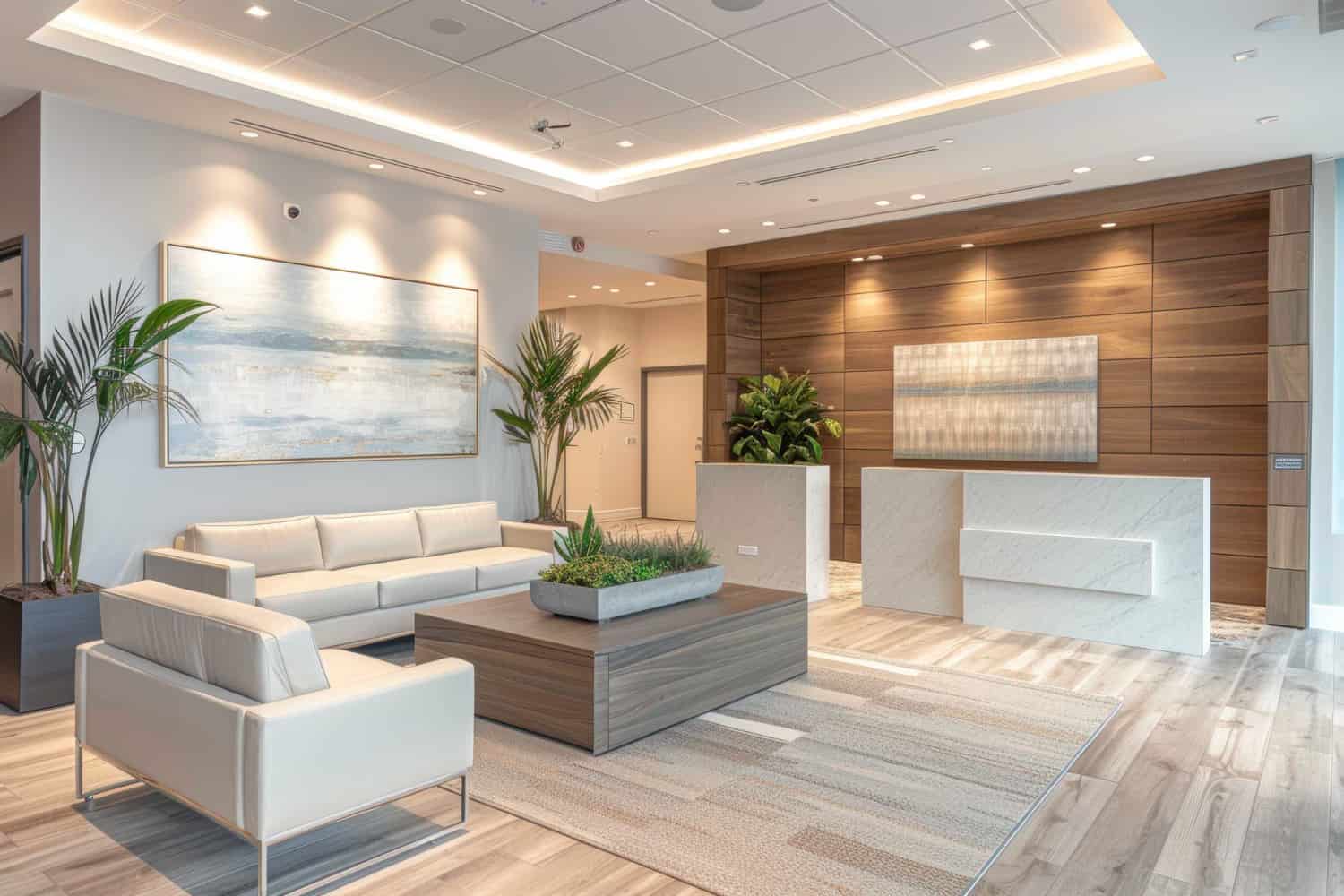
One of the most common mistakes in lobby design is focusing too heavily on visual impact while neglecting functionality.
A lobby may look impressive in renders, but fail in real use if spacing is insufficient or seating is impractical. On the other hand, a purely functional layout may feel uninspiring and fail to create a strong brand impression.
The best projects balance both elements.
Furniture should be arranged to create visual harmony, but also allow comfortable use. Distances between seating should feel natural. Tables should be positioned where guests actually need them. Lighting should support both ambiance and usability.
Achieving this balance requires understanding how guests interact with the space, not just how the space looks.
Circulation is the invisible structure of a lobby. When it works well, guests barely notice it. When it fails, the entire space feels uncomfortable.
In Ghana hotel projects, circulation planning must consider:
Furniture placement should never block primary movement paths. At the same time, it should subtly guide guests toward key areas such as reception or elevators.
Accessibility is also essential. Spaces must accommodate different types of users, including guests with luggage or mobility limitations.
A well-planned circulation system ensures that movement feels natural and uninterrupted.
The lobby is not an isolated design element—it must reflect the identity of the entire hotel.
This is why lobby planning must align with the broader hotel furniture design planning ghana approach.
Materials, colors, and furniture styles should create continuity between the lobby, guest rooms, and other areas. When each space feels connected, the hotel experience becomes more cohesive.
This also improves operational consistency. Maintenance, replacement, and future updates become easier when design systems are aligned.
A disconnected design, on the other hand, creates visual confusion and increases long-term costs.
Modern hospitality trends show that hotel lobbies are evolving into multifunctional social spaces rather than traditional waiting areas. According to industry insights on hotel lobby design trends and space planning, successful lobbies now combine flexibility, comfort, and strong visual identity to meet changing guest expectations.
Even well-funded projects can struggle with lobby design if planning is not handled correctly.
One frequent issue is overcrowding the space with furniture in an attempt to maximize seating capacity. This often results in poor circulation and reduced comfort.
Another mistake is underestimating functional zones. When reception, waiting, and circulation areas overlap too much, the space becomes chaotic.
Incorrect scale selection is also common. Furniture that is too large or too small disrupts balance and usability.
Finally, ignoring real usage patterns leads to mismatched layouts. A design that works on paper may fail if it does not reflect actual guest behavior.
Avoiding these mistakes requires a combination of planning, testing, and practical understanding.
Hotel operations evolve over time, and lobby spaces must be able to adapt.
Flexible layouts allow:
This is particularly important in Ghana, where hospitality trends continue to develop and guest expectations change.
Modular furniture, movable seating, and adaptable zoning strategies help maintain long-term usability.
A rigid layout may look strong initially, but can become limiting as operational needs shift.
A successful hotel lobby furniture layout is not defined by decoration, but by how well it supports movement, comfort, and experience.
The most effective projects approach lobby design as part of a larger system, integrating layout planning, furniture selection, and operational flow into one strategy.
When done correctly, the lobby becomes more than a first impression—it becomes a functional, adaptable, and valuable part of the hotel.
Flow and circulation are the most critical factors, as they determine how guests experience the space.
It depends on hotel size and concept, but seating should never compromise movement paths.
Contract-grade furniture designed for high traffic and durability.
By making movement intuitive, providing comfortable seating, and creating a welcoming environment.
Yes, flexibility allows the space to adapt to changing operational needs.
WhatsApp us