Hotel furniture for new hotel projects Ghana is one of the most critical investment decisions in hospitality development, as it directly influences project cost, guest experience, and long-term operational efficiency.
A successful hotel project requires a structured approach that aligns design, budget, and execution. This is why understanding the full scope of hotel furniture Ghana projects is essential before making any procurement decisions.
Choosing the right hotel furniture supplier Ghana is one of the most important factors in ensuring project success and long-term performance.
Quick Answer:
Hotel furniture for new hotel projects Ghana requires structured planning, reliable suppliers, and coordinated logistics to ensure cost control, timely delivery, and long-term operational performance.
⚠ Risk Insight:
Most FF&E failures in new Ghana hotel projects are not caused by bad suppliers or tight budgets — they are caused by decisions made too late. Room layouts approved after the supplier brief is written, specifications changed after samples are produced, logistics planned after production is complete. Each of these sequences adds weeks to the schedule and cost to the project. A structured FF&E plan eliminates these risks before they become expensive ones.
Budgeting is one of the most sensitive parts of any hotel project.
Understanding hotel furniture cost in Ghana is essential for accurate financial planning and avoiding unexpected expenses during the project.
💰 Cost Insight:
Hotel furniture budgets in Ghana that are based on factory price alone consistently run short. Freight, import duties, Tema port charges, inland delivery, and installation typically add 35 to 50 percent on top of the manufacturing cost. On a 60-room project, that gap can exceed $40,000 in unplanned spend. Build the full landed cost per key into the budget before approaching any supplier — not after the production contract is signed.
Timeline planning in hotel furniture projects is directly linked to project profitability, as delays in furniture delivery can postpone opening dates and reduce revenue generation. Unlike standard construction timelines, FF&E schedules must be carefully aligned with production, logistics, and installation phases.
| Stage | Duration | Key Risk | What Must Be Ready |
|---|---|---|---|
| Design & Approval | 2–4 weeks | Late layout changes | Final room plans confirmed |
| Sample Production | 2–4 weeks | Slow approval process | Contract signed, deposit paid |
| Mass Production | 4–8 weeks | Design changes mid-production | Samples approved in writing |
| Shipping & Freight | 4–6 weeks | Document errors, port delays | Export docs complete, freight booked |
| Customs Clearance | 5–10 days | Tema port congestion | Import docs filed pre-arrival |
| Installation | 1–2 weeks | Site not ready to receive | Rooms complete, storage arranged |
| Total | 18–26 weeks | — | Start 6 months before opening |
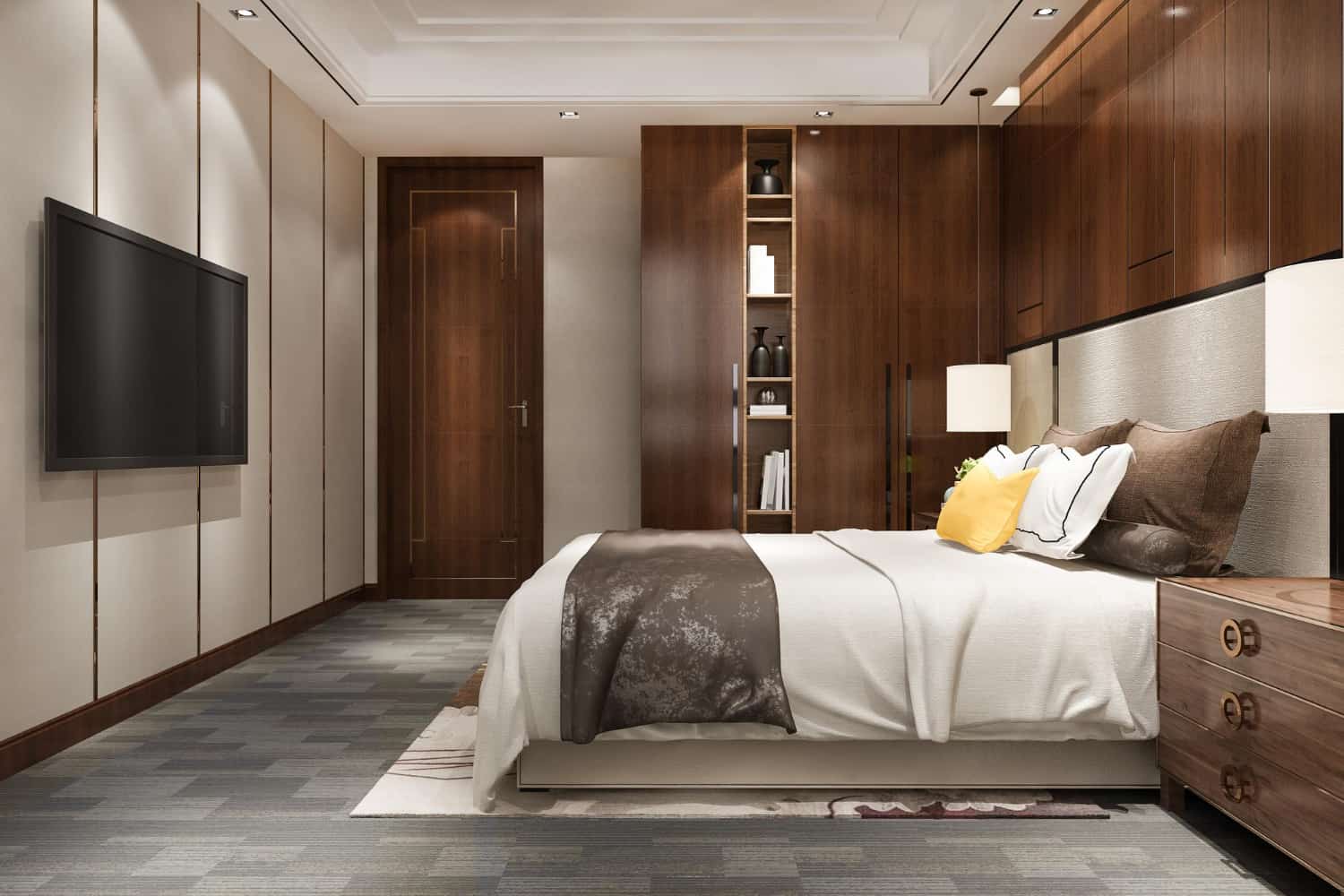
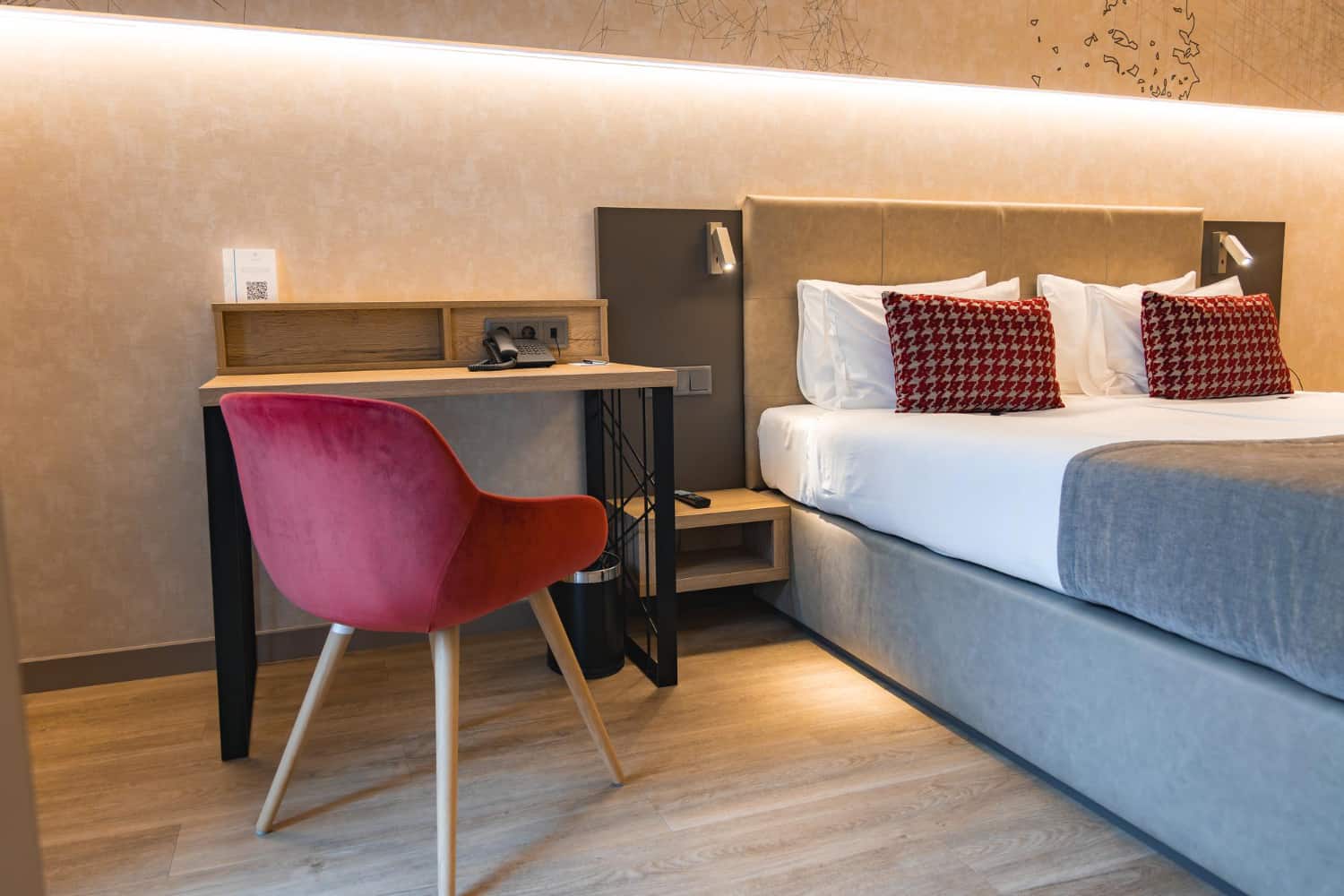
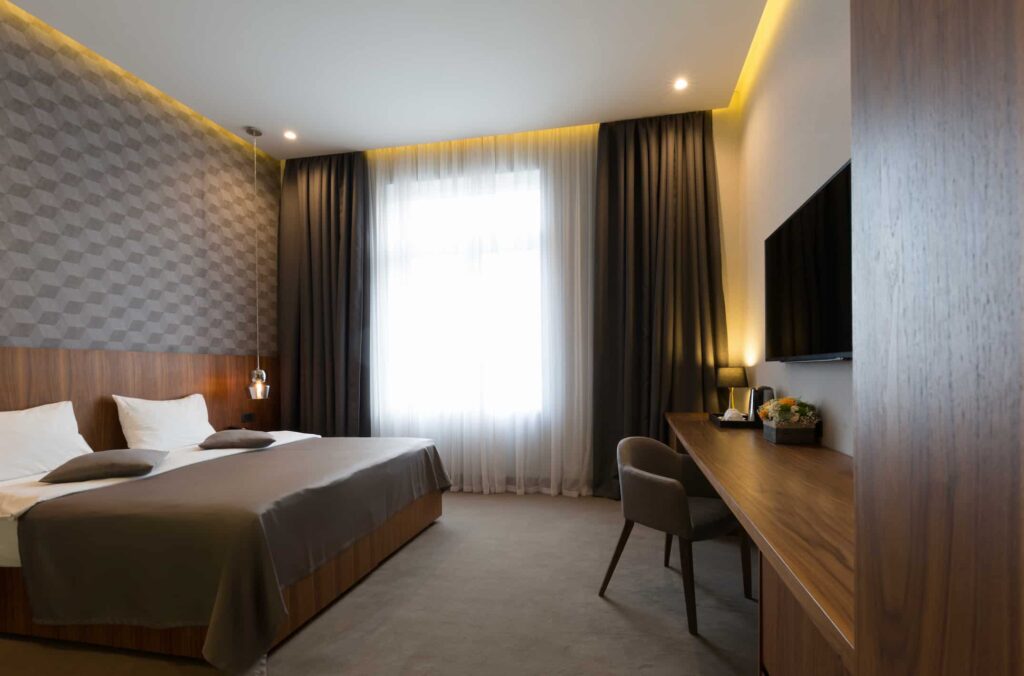
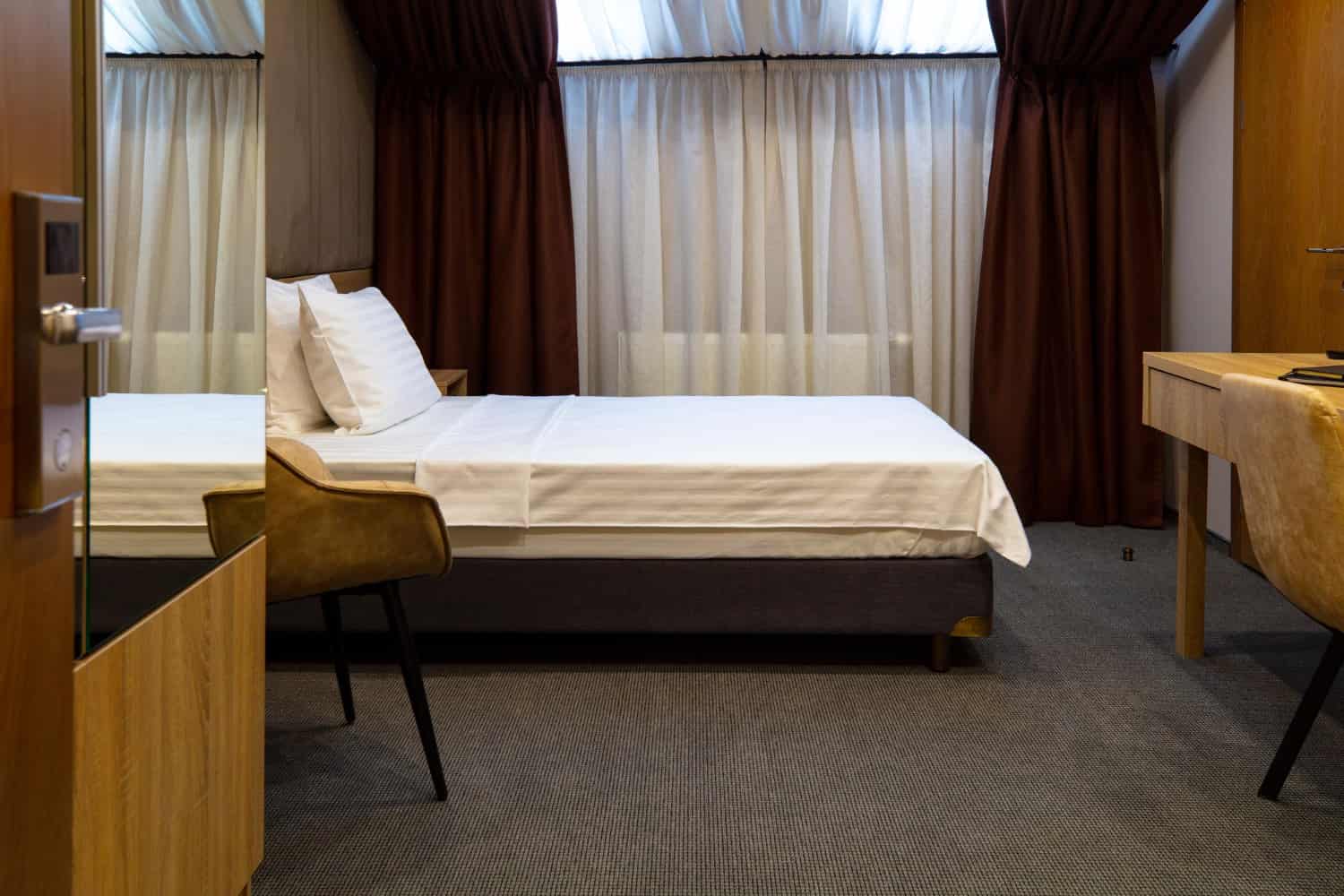
Guest room furniture is the core revenue driver of any hotel project, as it directly affects guest comfort, satisfaction, and overall experience. Every furniture decision in guest rooms must balance durability, functionality, and design consistency.
Poor planning in guest rooms leads to higher maintenance costs and lower guest satisfaction.
Before shipment, it is critical to follow a structured quality control process to ensure all furniture meets project specifications and performance standards.✅ Execution Insight:
Finalise room layouts and confirm all dimensions before briefing any manufacturer. Guest room furniture produced against unconfirmed layouts routinely arrives with fit problems — a wardrobe 20mm too wide for its alcove, a desk that blocks the bathroom door, a bed base that cannot be assembled in a narrow entry corridor. These are not manufacturing errors; they are planning errors that production cannot fix. Lock the layout first, then write the brief.

The lobby is the first space a guest enters and the last they leave. In a new hotel project, it carries more commercial weight than almost any other area — it shapes the guest’s initial perception of quality, influences online review scores, and signals whether the brand promise made in the marketing material actually matches the reality of the property. Getting the lobby furniture right is not about spending more; it is about making decisions that align with the hotel’s concept and target guest profile from the beginning.
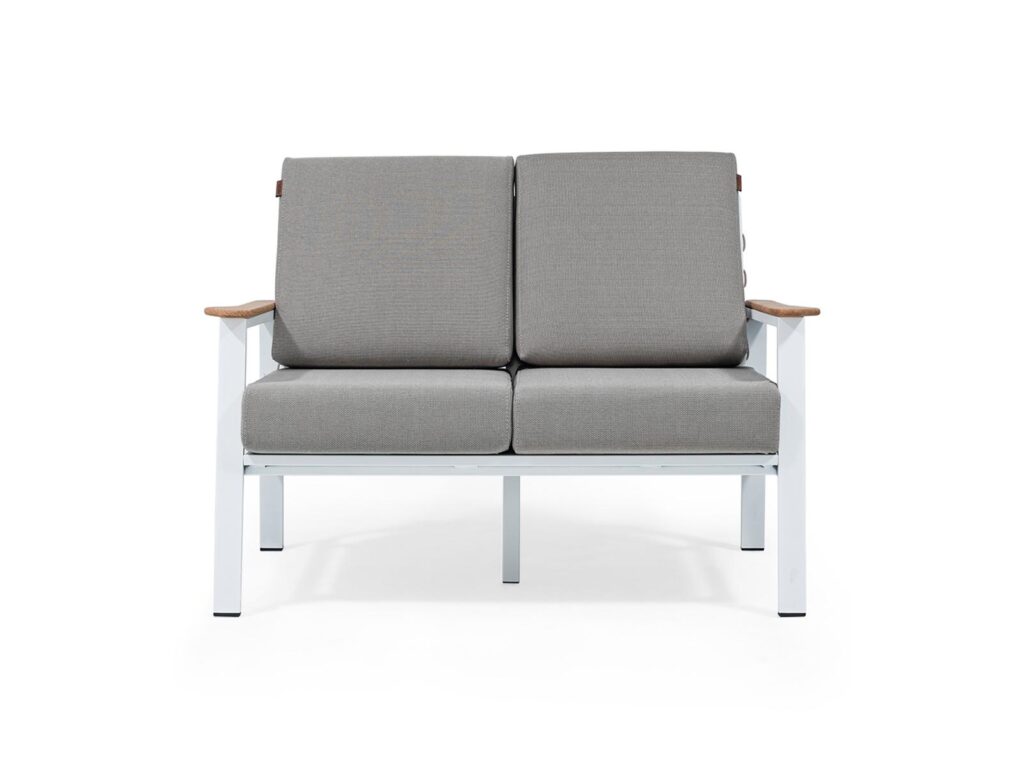
Lobby furniture in Ghana hotel projects must handle a demanding combination of high foot traffic, humid coastal conditions, and guests who interact with public seating differently from how they use their own rooms. Sofas and lounge chairs in high-traffic areas need commercial-grade frame construction — solid wood or steel, not particleboard — with foam density above 40 kg/m³ and fabric rated for at minimum 30,000 Martindale rub cycles. A lobby sofa that looks attractive in a product photograph but uses residential-grade foam will be visibly sagging within 18 months of opening. That is not a maintenance problem; it is a specification problem that cannot be fixed without full replacement.
The reception desk deserves separate planning from the rest of the lobby furniture. It is a functional workstation as much as a visual centrepiece, and the specification needs to account for both — surface materials that resist scratches and cleaning chemicals, internal cable management for IT infrastructure, and ergonomic height for staff who stand at it for eight-hour shifts. Many developers treat the reception desk as a joinery item to be handled by the fit-out contractor rather than as part of the furniture package. Both approaches can work, but the key is that someone owns the specification clearly before production begins.
Coffee tables, console tables, and decorative elements complete the lobby furniture scope. These have a lower durability requirement than seating and the desk, which means there is more room for design expression here without compromising on commercial performance. For new hotel projects, the most effective approach is to define the lobby concept and select all pieces as a coordinated set — not to source each item separately and hope they work together on site. Understanding the full range of options and how they compare across sourcing regions is covered in the hotel furniture comparison guide, which helps developers make material and supplier decisions before committing to production.
Hotel restaurant furniture operates under conditions that standalone restaurant furniture rarely faces. A hotel restaurant typically runs breakfast service, lunch, and dinner — sometimes simultaneously across different seating zones — with the same chairs and tables absorbing that full daily cycle, seven days a week, 365 days a year. In addition to usage intensity, hotel restaurants in Ghana often serve both residents and walk-in guests, which means the seating needs to function for different service styles and occupancy patterns within the same space.
The most important specification decision for hotel restaurant furniture is the chair frame. In high-traffic commercial dining environments, the joint between the leg and the seat frame is where failure begins — and it begins far earlier on chairs that were not engineered for contract use. A solid beech or rubberwood frame with mortise-and-tenon or steel-reinforced joints will outlast a dowel-jointed frame by several years under identical use conditions. Seat height also matters for operator efficiency: standard dining chair seat height of 45–47 cm works with standard table heights and allows faster table turns without guests feeling uncomfortable during longer meals.
Table surfaces in hotel restaurants face constant exposure to hot plates, cleaning chemicals, spilled liquids, and the physical impact of being set and cleared dozens of times a day. HPL surfaces on moisture-resistant substrates are the correct specification for most Ghana hotel restaurant tables — they resist heat, chemicals, and scratches, and they are easy to clean without specialist products. Veneer and lacquer finishes are appropriate for upscale hotel restaurants where aesthetic is the priority, but they require more careful maintenance and should only be specified when the property has the operational capacity to maintain them correctly.
Layout flexibility is a real operational requirement in hotel restaurants, not just a design concept. A restaurant that handles 40 covers for a private dinner and 120 covers for a buffet breakfast needs tables that can be reconfigured quickly without requiring staff to manage heavy, awkward furniture. Stackable chairs and lightweight tables with interlocking capability make that flexibility practical. Specifying furniture that looks appropriate but cannot be managed efficiently by the operations team creates daily friction that adds up to significant labour cost over time. For developers approaching this stage, choosing the right supplier for hotel restaurant furniture in Ghana is as important as the specification itself — a supplier with F&B project experience understands these operational requirements and reflects them in the production.
Turkey has become the dominant sourcing destination for hotel furniture in Ghana projects over the past decade, and the reasons go beyond competitive pricing. Turkish manufacturers combine custom production capability, hospitality-scale capacity, and established export infrastructure for West Africa in a way that few other sourcing regions match. A factory in Turkey can handle a complete hotel FF&E package — guest rooms, lobby, restaurant, and outdoor areas — from a single production system, with consistent quality control across hundreds of identical pieces and export documentation aligned with Ghana customs requirements.
The decision to source from Turkey is straightforward for most Ghana hotel projects. The harder decision is which manufacturer in Turkey. The country has thousands of furniture factories, and the gap between the best and the worst is significant. A manufacturer set up for residential export looks, at first contact, very similar to a manufacturer set up for contract hospitality production. Both will respond to a brief, both will send samples, and both will quote a price. The difference becomes visible at production scale — when 100 rooms need to look identical, when the pre-shipment inspection reveals whether the approved sample was treated as a standard or a one-off, and when the export documentation needs to be complete and correct before a container can ship to Tema.
Evaluating a manufacturer correctly before placing an order is the single most important risk management decision in the procurement process. Factory capacity, material sourcing, quality control systems, engineering capability, and previous hospitality project references are all verifiable before a contract is signed — but only if they are asked for. A detailed framework for assessing Turkish manufacturers against each of these criteria is covered in the how to choose a hotel furniture manufacturer in Turkey guide, which includes a practical scorecard that can be used directly in supplier evaluation calls.
One question comes up consistently in Ghana hotel projects: does sourcing from Turkey mean compromising on quality to achieve a better price point? The answer depends entirely on how the specification is written and how the manufacturer is selected. Turkish factories producing to a correctly defined contract specification deliver quality that is directly comparable to European production at a fraction of the cost. Turkish factories producing to an underspecified brief, or selected on price alone, deliver results that reflect that approach. The relationship between specification quality, supplier selection, and final output — and how to navigate the quality vs cost decision without sacrificing either — is one of the most practically useful areas for developers to understand before approaching any manufacturer.
Logistics is where hotel furniture projects in Ghana most commonly lose time and money — not because of manufacturing failures, but because the shipping process was treated as a final step rather than a parallel one. A container that leaves Istanbul correctly loaded with quality furniture can still arrive at Tema two weeks late, with unexpected port charges, if the documentation was incomplete or the customs process was not planned before the vessel sailed. On a project with a fixed opening date, those two weeks cannot be recovered.
The full logistics process for hotel furniture sourced from Turkey involves more stages than most developers account for at the budgeting phase. Sea freight is the most visible cost, but origin terminal handling charges, Tema destination charges, inland delivery to the project site, and cargo insurance all add to the total. Import duties and port levies on top of those figures mean that the difference between factory price and furniture sitting in a finished room in Accra is typically 35 to 50 percent. Understanding the complete structure of furniture import duty Ghana calculations — including HS code classifications, VAT, and the levies that apply specifically to furniture imports — is essential before the project budget is finalised, not after the production contract is signed.
Container selection and loading have a direct impact on both cost and damage risk. Full Container Load is the standard approach for hotel projects — it gives control over loading sequence, eliminates the handling risk that comes with shared containers, and produces a lower cost per cubic metre at the volumes a hotel order requires. Packaging quality determines whether furniture survives a five-week ocean transit intact. The furniture export packaging specification — foam wrapping, reinforced carton corners, moisture barriers, and correct stacking sequence inside the container — needs to be agreed with the manufacturer before production ends, not treated as a default the factory handles without oversight. Tema is Ghana’s primary deep-water port and the entry point for virtually all hotel furniture imports — understanding its operational characteristics, current traffic volumes, and clearance procedures is available directly from the Ghana Ports and Harbours Authority.
Shipping timelines must be built into the project schedule from the beginning, not added at the end when the construction programme is already committed. The complete breakdown of transit stages, port clearance windows, and the buffer needed for Tema unpredictability is covered in the shipping hotel furniture Ghana guide. For the payment structure that controls cash flow across production and shipping milestones, the hotel furniture payment terms Turkey guide explains how to structure deposits, production payments, and balance releases without slowing down the factory schedule or exposing the project to financial risk. And for the complete export process from factory to site — covering every stage from pre-shipment inspection through Tema clearance to installation handover — the export hotel furniture to Ghana guide is the most comprehensive reference for new hotel developers managing this process for the first time.
Most failures in new hotel projects are not caused by design or construction, but by poor decisions in furniture planning and supplier selection. These mistakes often seem minor at the beginning but create significant operational and financial problems after opening.
One of the most common issues is selecting residential-grade furniture instead of contract-grade solutions. While this may reduce initial cost, it leads to faster wear, frequent replacements, and higher maintenance expenses in a commercial environment.
Another critical mistake is underestimating the importance of FF&E planning. Without a structured approach, projects face missing items, inconsistent design execution, and coordination problems between different areas of the hotel.
Timeline mismanagement is also a major risk. Delays in approvals, production, or logistics can create cascading effects that impact installation and postpone opening dates.
Choosing inexperienced suppliers is often the most costly mistake, as it affects production quality, delivery reliability, and overall project execution. These risks usually become visible only after production begins, when changes are difficult and expensive.
In hotel projects, small mistakes rarely remain small. They compound over time, affecting operations, guest satisfaction, and long-term profitability.
Successful hotel furniture planning in Ghana requires a strategic approach that aligns design, budget, production, and logistics into a single coordinated system. Projects that treat these elements separately often face delays, cost overruns, and operational inefficiencies after opening.
Developers who plan early, define clear specifications, and work with experienced suppliers gain a significant advantage in both execution and long-term performance. Structured decision-making reduces uncertainty and ensures that every stage of the project is aligned with overall business objectives.
In contrast, projects driven by short-term cost savings or incomplete planning often experience inconsistent quality, coordination problems, and higher operational costs. These issues typically become visible only after installation, when corrections are expensive and time-consuming.
The difference between a successful hotel project and a problematic one is rarely budget size, but how well decisions are made during the planning and sourcing stages. A strategic approach ensures consistency, efficiency, and long-term value.
The distinction between a contract furniture manufacturer and a general furniture supplier is not a marketing difference — it is an operational one that has direct consequences for new hotel projects in Ghana. A contract manufacturer is set up to handle the specific demands of hospitality procurement: BOQ-based quoting, sample approval processes, mass production with consistency across hundreds of identical pieces, export documentation for international shipments, and quality control that applies at every stage of production rather than only at final inspection.
For a new hotel project, this matters most in three areas. The first is consistency. A 100-room hotel needs 100 identical wardrobes, 100 identical beds, and 100 identical desks — and they need to look and perform identically on the day of opening and for years afterward. A factory that produces custom residential pieces or small commercial runs is not set up to maintain that level of consistency across a full hotel production run. Variations in finish colour, hardware alignment, or surface texture that are acceptable in a one-off piece become serious quality issues when multiplied across every room in the property.
The second area is project management capability. Contract manufacturers work from technical drawings and approved samples, produce against agreed milestones, and communicate in the structured way that hotel development projects require. They understand that a delayed container does not just mean late furniture — it means a delayed opening date, which means lost revenue. That understanding shapes how they prioritise production scheduling, pre-shipment inspection, and export preparation. General suppliers who occasionally handle hotel orders rarely have those operational instincts.
The third area is particularly relevant for international investors managing Ghana projects remotely. A contract manufacturer with export experience to West Africa understands the documentation requirements for Tema Port customs clearance, the packaging standards that protect furniture across a five-week ocean transit, and the lead time realities that need to be built into the project schedule from the start. Working with a manufacturer who has already solved those problems on previous Ghana projects reduces the risk of encountering them for the first time on yours — when the schedule is already tight and the margin for error is small.
Planning a new hotel project in Ghana? The right furniture strategy can significantly impact your project timeline, budget, and long-term operational success.
We help hotel developers, contractors, and investors manage the full FF&E process—from planning and supplier selection to production and export coordination—ensuring consistent quality and reliable execution.
Contact us via WhatsApp to discuss your project and receive a tailored hotel furniture solution.
FF&E strategy for a new hotel project in Ghana is not a document — it is a set of decisions made in the right sequence, at the right time, by people who understand what each decision costs to get wrong. The developers who consistently deliver successful hotel projects in Ghana are not the ones with the largest budgets. They are the ones who make planning decisions early, hold to those decisions through production, and treat each stage of the FF&E process as connected to the stages before and after it.
The sequence matters more than most developers expect. Room layouts need to be finalised before supplier briefs are written, because furniture that is specified without confirmed dimensions produces samples that do not fit the actual rooms. Supplier selection needs to happen before the production schedule is set, because the right manufacturer for a 120-room hotel project has a different lead time profile than the right manufacturer for a 30-room boutique. Budget needs to be calculated on total landed cost per key — including freight, import duties, and installation — not on factory price, because the gap between those two numbers on a Ghana project is typically 35 to 50 percent.
Quality control needs to be treated as a gate, not a formality. A sample approval that is rushed to keep the schedule moving protects nothing. The approved sample is the reference standard for the entire production run — if it is approved with reservations, those reservations become 100 rooms of reservations. Pre-shipment inspection before the container loads is the last point in the process where problems can be caught without the cost of international return freight or post-installation replacement. Treating it as optional is one of the most expensive decisions a developer can make.
Finally, logistics needs to be planned in parallel with production, not after it. The freight forwarder, the customs broker at Tema, the import documentation, and the temporary storage solution at the project site all need to be confirmed before the container is booked — not while it is at sea. Ghana hotel projects that treat logistics as the supplier’s problem consistently experience the kind of port delays and demurrage charges that erode project margins in the final weeks before opening, when every other cost line is already committed. The projects that avoid those problems do so because someone made the logistics decisions three months earlier, when there was still time to make them well.
FF&E stands for furniture, fixtures, and equipment — everything that furnishes a hotel but is not permanently attached to the building structure. For new hotel projects in Ghana, FF&E is one of the most consequential budget lines because it determines guest experience, operational durability, and long-term maintenance cost simultaneously. Poor FF&E decisions made during planning are rarely reversible after opening without full replacement. In Ghana’s coastal climate and high-occupancy hotel environment, the specification quality of FF&E has a direct and measurable impact on how long the property performs before it needs reinvestment.
Total landed cost per key — including manufacturing, sea freight, import duties, Tema port charges, inland delivery, and installation — typically runs $800 to $1,400 for a standard three-star guest room package sourced from Turkey. A four-star package with veneer surfaces and upholstered headboards lands at $1,400 to $2,200 per key. These are delivered-to-site figures. Factory price alone understates actual cost by 35 to 50 percent. On a 60-room project, that gap can exceed $40,000 in unplanned spend — which is why budgeting on landed cost from the start is non-negotiable.
Local sourcing works well for small supplementary orders, replacement pieces, or boutique projects where lead time matters more than scale. For a full hotel project — 30 rooms or more — importing from Turkey is the more reliable path. Turkish contract manufacturers handle complete FF&E packages across guest rooms, lobbies, and F&B areas from a single production system, with the export documentation and packaging standards that Ghana customs and Tema Port require. Local suppliers in Ghana generally cannot match that production capacity, customisation range, or quality consistency at hotel scale.
The full timeline from production start to furniture installed on site runs 18 to 26 weeks for a well-managed project. Production takes 4 to 8 weeks after sample approval. Ocean transit from Turkey to Tema is 4 to 6 weeks. Customs clearance at Tema adds 5 to 10 days when documents are complete. Inland delivery and installation add 1 to 2 weeks. Always build in a two-week buffer for Tema port unpredictability. The practical rule: start the furniture process at least six months before the planned opening date — earlier if the project involves custom production or a complex FF&E scope.
The four mistakes that consistently cause the most damage are specifying residential-grade furniture to reduce initial cost, starting the procurement process too late for the construction schedule, selecting suppliers on unit price alone without evaluating export experience and quality control systems, and treating logistics as the final step rather than a parallel process. Each of these looks like a manageable risk at the planning stage. By the time the consequences are visible — sagging lobby sofas at 18 months, a container held at Tema while the installation crew waits, furniture that does not fit the rooms it was produced for — corrections are expensive and the opening date is already at risk.
Ghana’s coastal climate accelerates the deterioration of materials that were not specified for humid tropical conditions — standard MDF boards without moisture-resistant treatment swell and delaminate, untreated veneer lifts at the edges, standard foam compresses permanently in high-occupancy guest rooms within two years. Combined with the continuous daily use and frequent cleaning that hotel environments demand, residential-grade furniture fails visibly within 12 to 18 months. Contract-grade specification — moisture-resistant board cores, high-density foam above 40 kg/m³, fabrics rated above 30,000 Martindale rub cycles, reinforced frame joints — is not a premium upgrade in Ghana. It is the baseline for furniture that performs through its intended lifecycle.
WhatsApp us