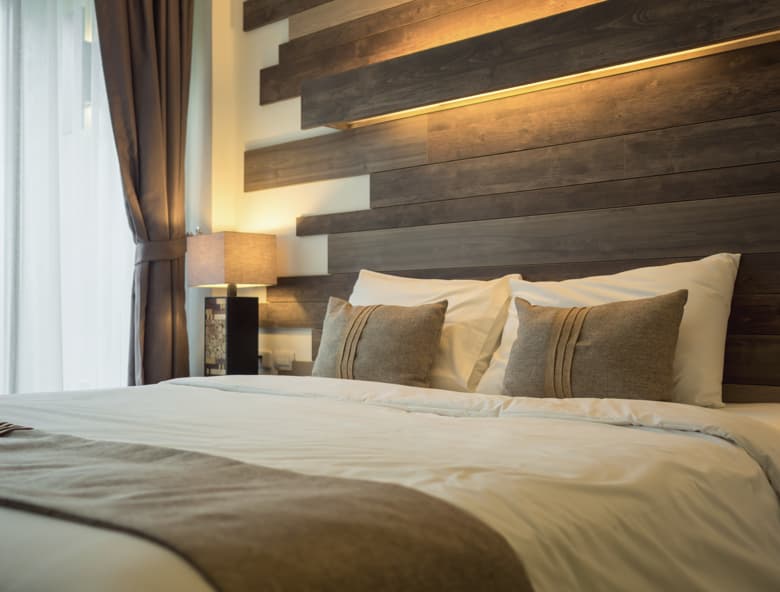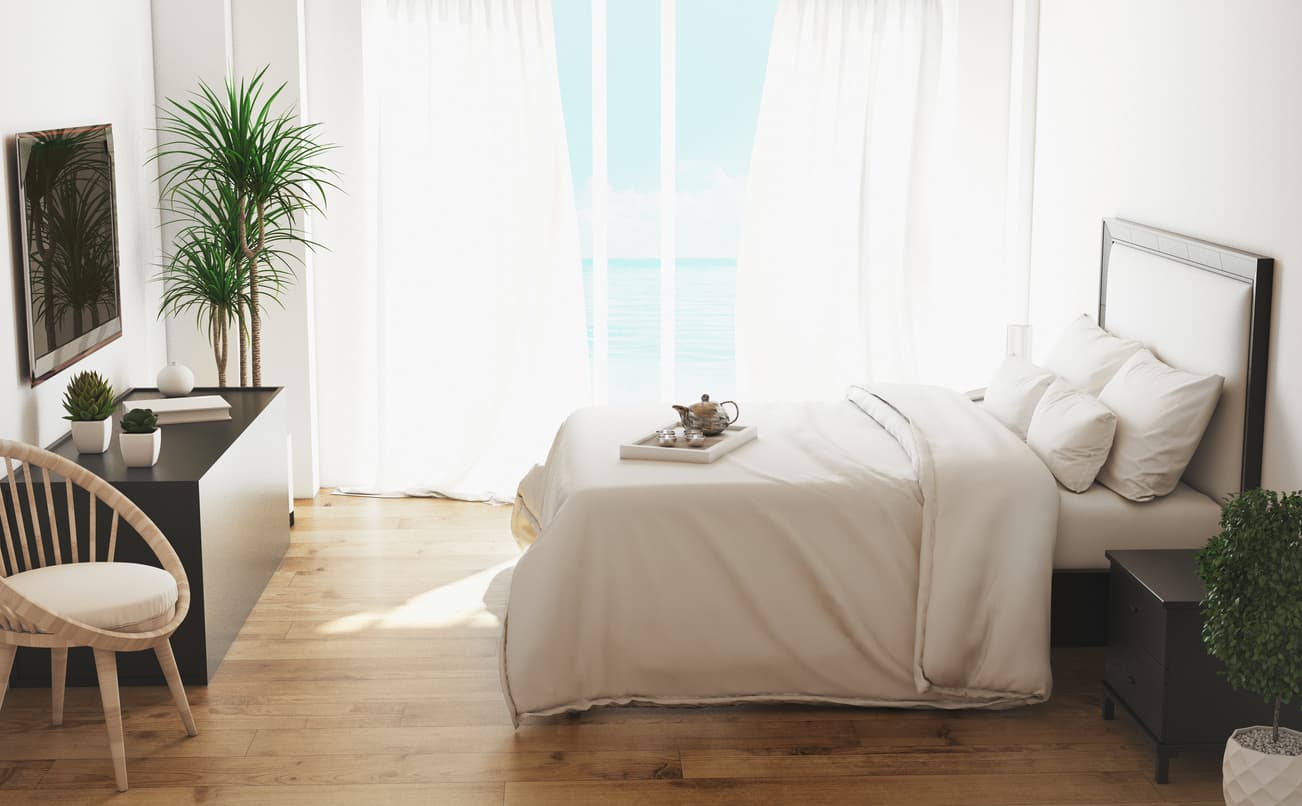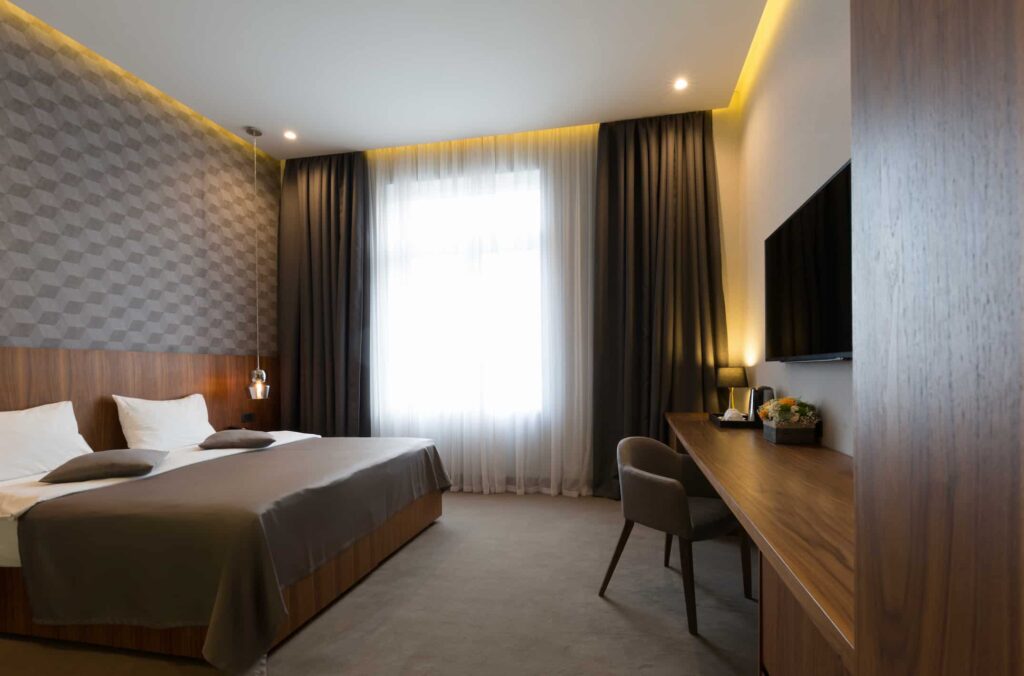
Hotel guest room furniture specification is where most Ghana hotel projects either gain a decisive quality advantage or commit errors that compound across every room for the life of the property. A guest room contains six to eight distinct furniture categories — headboard, bed base, nightstands, wardrobe, desk, desk chair, TV unit, and luggage rack — each with its own structural requirements, material logic, and performance thresholds for commercial hospitality use. Getting each one right requires understanding not just what to order, but how each piece must be specified to perform under Ghana’s humidity, commercial cleaning cycles, and continuous daily use. For the complete procurement context, the hotel furniture Ghana guide covers the full FF&E scope. For contract-grade performance requirements, see hotel contract furniture Ghana. For how these products fit into the broader design framework, see hotel furniture design and planning Ghana. For manufacturing context, see hotel furniture manufacturing Turkey Ghana. For export and logistics, see export hotel furniture to Ghana. For restaurant areas, see restaurant furniture Ghana. For finding and evaluating Turkish manufacturers, see hotel furniture suppliers Turkey.
Hotel guest room furniture specification covers six to eight product categories — headboard, bed base, nightstands, wardrobe, desk, TV unit, desk chair, and luggage rack. Each must be specified for contract-grade performance: defined substrate, edge banding, hardware cycle ratings, foam density, and fabric rub cycle ratings. In Ghana’s climate, moisture-resistant materials and correctly sealed finishes are not optional upgrades — they are baseline requirements that determine whether furniture performs for 8 to 10 years or requires replacement within 2 to 3.
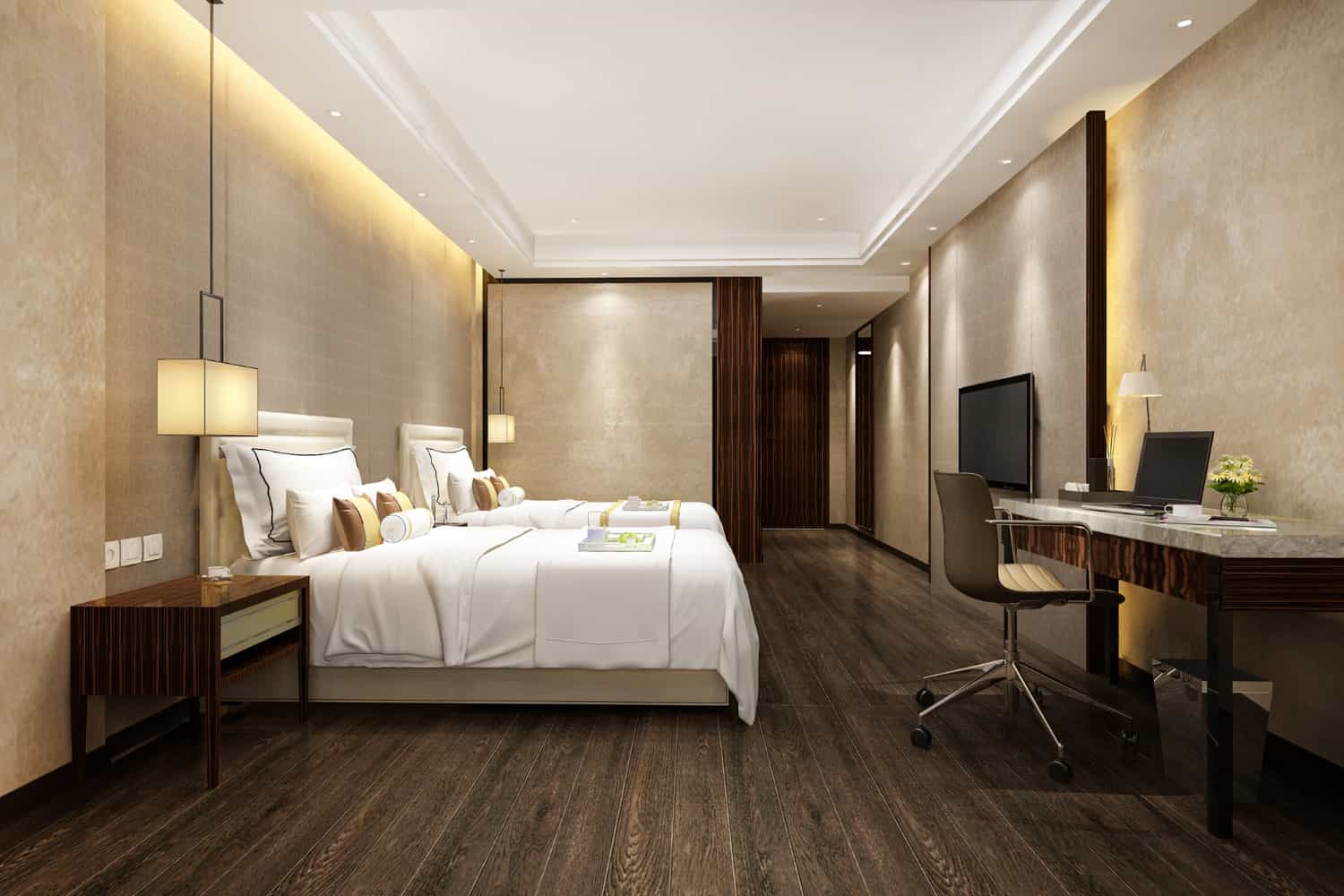
Most developers approach guest room furniture as a selection exercise — choosing from catalogues, comparing samples, deciding on finishes. Specification is a different discipline entirely. Selection asks “which piece looks right?” Specification asks “will this piece perform correctly under commercial hotel conditions for the next decade?” In a Ghana hotel project, where all furniture is imported and replacement means a 12 to 14 week production and reshipping cycle, the cost of a specification failure is not the cost of the furniture. It is the cost of replacement production, reshipping, installation disruption in an operating hotel, and the guest experience damage that occurs in between.
Guest room furniture in a hotel operates under conditions that residential furniture is not designed to handle. A wardrobe is opened and closed dozens of times daily by guests who did not choose it and will not treat it carefully. A desk chair is dragged across hard flooring, loaded with luggage, and cleaned with commercial products. Upholstered pieces absorb body contact from a different person every night, are cleaned between each stay, and must maintain their structural and visual integrity across thousands of occupancy cycles. Every specification decision — substrate, edge banding, joint method, foam density, fabric grade, hardware cycle rating — determines whether the piece handles these conditions or fails under them.
The specification challenge in Ghana projects is compounded by climate. Accra, Tema, and Takoradi maintain relative humidity above 70 percent for most of the year. At this humidity level, standard MDF swells at edges and around hardware fixings. Veneer applied without a closed-pore topcoat system delaminates faster than in temperate conditions. Foam that meets standard contract specifications retains moisture between cleaning cycles. These failure modes are predictable and preventable — but only if the specification addresses them before production begins.
The most common headboard specification failure in Ghana hotel projects is fabric selection based on sample appearance rather than performance data. A fabric that looks and feels premium in a showroom may carry a Martindale rating below 20,000 cycles — adequate for residential use, inadequate for hotel occupancy. Request Martindale test certificates from the fabric mill for every upholstery specification. A fabric without a documented rub cycle rating is not a contract-grade specification regardless of how it presents visually.
Nightstands are among the most frequently replaced items in hotel guest rooms — not because they are poorly made, but because they are consistently under-specified. A nightstand in a hotel is opened, closed, loaded, and used by a different person every night. Drawer slides that are adequate for residential use fail under this usage intensity within two to three years. Hardware that is not specified by cycle count is hardware chosen by the manufacturer’s cost preference, not by the hotel’s operational requirement.
Standard nightstand dimensions in hotel guest rooms run 500 to 600mm wide, 400 to 500mm deep, and 500 to 550mm high — matching standard mattress height to allow comfortable access from the bed. These dimensions must be confirmed against the specific mattress and bed frame specification for the project, because a nightstand that is 80mm below mattress height is functionally inconvenient regardless of its quality.
The specification requirements for a hotel nightstand are: MR-MDF carcass at minimum 18mm, HPL or fully sealed veneer surface, 2mm ABS edge banding on all exposed edges, drawer slides specified at minimum 50,000 cycles, and soft-close drawer mechanism. The soft-close specification is not an aesthetic upgrade — it prevents the repetitive impact noise of drawers closing that generates guest complaints in shared-wall room configurations. Power and USB integration — typically one or two outlets and USB-A or USB-C ports on the top surface or drawer face — has become a standard expectation in mid-to-upscale hotel guest rooms and must be specified in the BOQ before production begins, as it affects the internal drawer layout and requires coordination with the electrical contractor.
For the full range of nightstand configurations and production specifications, see the hotel nightstand manufacturer page.
The wardrobe is the highest-volume single piece in a hotel guest room by both physical size and production cost. In a 100-room hotel, the wardrobe order represents more cubic metres of furniture than any other item category, and a specification error in wardrobe production — wrong dimensions, inadequate substrate, hardware below specification — is a specification error that compounds across every room in the project.
Wardrobe type selection is the first decision: hinged door, sliding door, or open wardrobe. Hinged door wardrobes require clearance in front of the door swing — typically 500 to 600mm — which affects room layout planning. Sliding door wardrobes eliminate the swing clearance requirement but introduce a sliding mechanism that must be specified by cycle count. Open wardrobes remove doors entirely and suit properties where the design concept supports an open storage aesthetic, but they require housekeeping to maintain visible order in every room.
Internal layout specification is where most wardrobe BOQs are incomplete. A wardrobe specified as “900mm wide, 550mm deep, 2100mm high, HPL finish” does not tell the manufacturer how many hanging rails, how many shelves, whether a safe housing is required, where the luggage shelf sits, or what the internal finish specification is. Every internal element must be in the BOQ. A wardrobe that arrives on site without a luggage shelf — because it was not specified — requires a re-order and a second installation visit in an operating hotel room.
Substrate specification for Ghana is MR-MDF throughout — including internal panels that are not visible in normal use. Internal MDF panels exposed to the humidity that enters the wardrobe when it is opened in a high-humidity environment will absorb moisture at edges and around hinge fixings even when external surfaces are correctly sealed. Hinge specification should be a named brand with a published cycle rating — minimum 100,000 cycles for hotel use. Anonymous hardware at an unspecified cycle count is not a hotel specification. For production options and configuration details, see the hotel wardrobe manufacturer page.
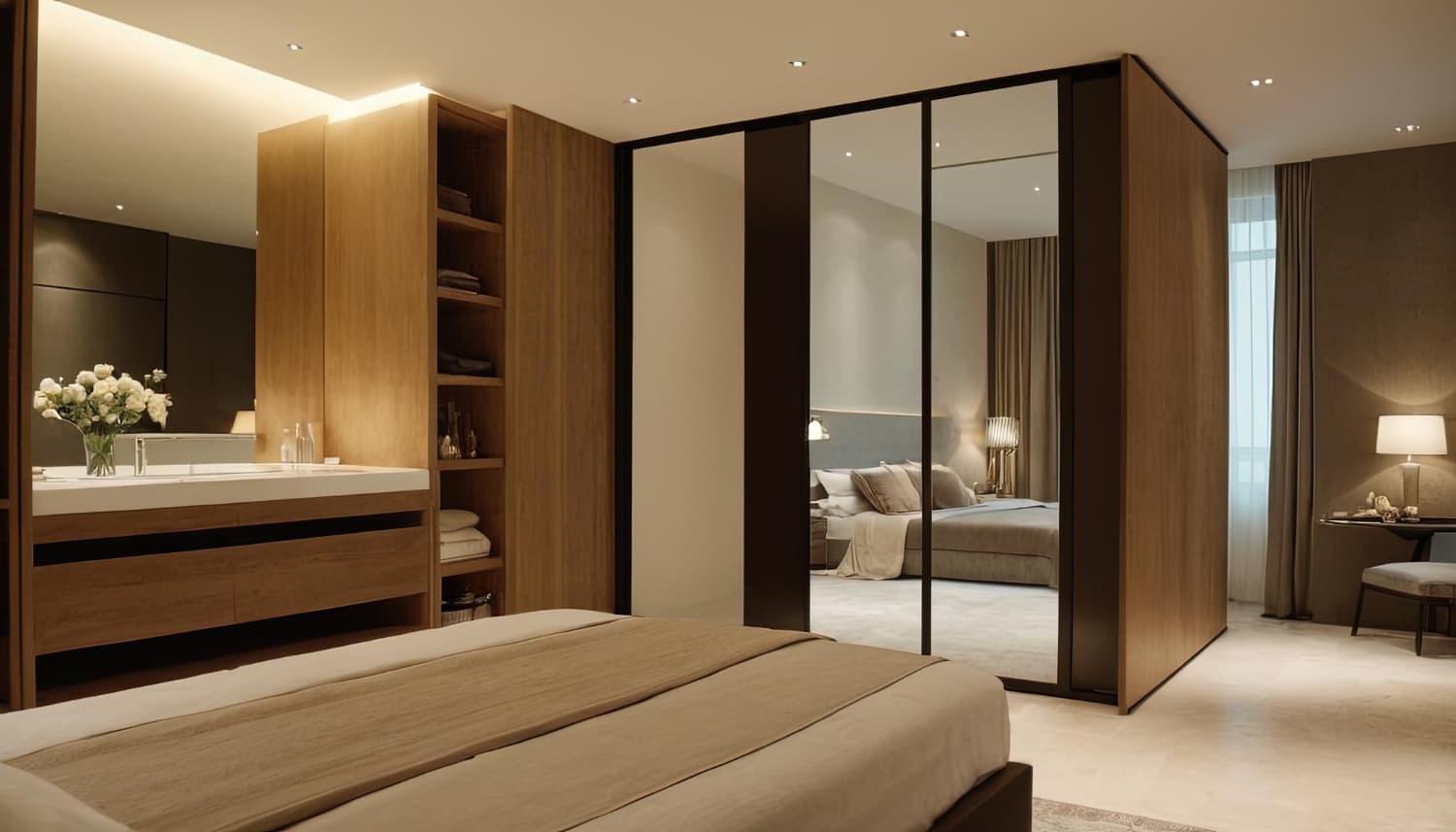
The hotel writing desk has evolved from a decorative surface to a functional work station — and in Ghana’s growing business travel market, a desk that cannot support a laptop, a phone charger, and adequate lighting will generate negative reviews from business guests who make up a significant proportion of mid-to-upscale hotel occupancy in Accra.
Desk specification begins with surface dimensions. A functional hotel work surface requires minimum 1200mm width and 550mm depth to accommodate a laptop, a notebook, and a beverage without crowding. Desks specified below this dimension are consistently cited in guest reviews as inadequate. Surface material must be HPL or sealed veneer with a scratch-resistant top coat — a desk surface that shows scratches from laptop bases or pen pressure within the first year of operation creates a visible quality failure that guests photograph and post.
Power integration is the specification element most frequently missed in hotel desk BOQs. A desk without integrated power access — requiring guests to use floor outlets behind furniture — is a guest experience failure regardless of the desk’s construction quality. The specification must define the number of outlets, USB port types, and the routing method for cable management. This requires coordination with the electrical contractor before the BOQ is finalised, because conduit positions in the wall behind the desk must match the desk’s power unit location.
The desk chair specification must match the desk height — standard hotel desk height is 740 to 760mm, and the chair must provide correct ergonomic support at this height for the range of guest body types who will use it. A desk chair specified independently of the desk, at a seat height that does not correspond to the desk surface, is a specification coordination failure that no amount of quality in either piece can correct. For production specifications and desk configurations, see the hotel writing desk manufacturer page.
The bed base is the structural foundation of the guest room — literally and experientially. A bed base that creaks under movement, shows visible sag at the centre, or fails structurally within the first years of operation creates a guest experience failure at the most fundamental level of hotel accommodation. Bed base specification in hotel projects requires attention to load rating, slat system, and the coordination between bed base height, mattress height, and nightstand height.
The three main bed base types in hotel production are platform bases, upholstered bases, and storage bases. Platform bases in MR-MDF or solid wood with a slatted top are the standard specification for three-star and budget hotels — they are structurally straightforward and easy to maintain. Upholstered bases add a fabric-wrapped panel around the base perimeter, which elevates visual quality at the cost of an additional fabric specification that must meet the same Martindale and cleanability requirements as other upholstered pieces in the room. Storage bases incorporate a drawer or lift system beneath the mattress — a useful specification for extended-stay properties but one that adds mechanical complexity requiring hardware specification by cycle count.
Load rating specification is the most frequently omitted element in bed base BOQs. A hotel bed base must support a minimum of 250kg distributed load — the combined weight of mattress, bedding, and two adult guests. The structural specification — slat thickness, slat spacing, frame joint method, centre leg support on queen and king sizes — must be defined to achieve this rating. A base specified only by external dimensions and finish without structural load specification is a base that may or may not perform under hotel occupancy. For bed base production options including platform, upholstered, storage, and zip-and-link configurations, see the hotel bed base manufacturer page.
The TV unit is the piece most affected by the intersection of furniture specification and building services coordination. A TV unit that does not accommodate the specified television dimensions, does not provide the correct mounting height for in-bed viewing, or does not route cables cleanly to the wall connection point creates installation problems that are expensive to correct after production. These problems originate in a specification process that does not coordinate television supplier, furniture manufacturer, and electrical contractor before the BOQ is finalised.
TV unit specification must begin with the television specification — screen size, mounting VESA pattern, and connection point locations. The TV unit dimensions are derived from the television dimensions, not selected independently. A TV unit designed for a 55-inch screen that receives a 65-inch screen on installation is a specification coordination failure with no good on-site solution. Similarly, a wall-mounted TV panel that positions the screen at the manufacturer’s standard height without checking the in-bed sightline angle for the specific room layout is a specification decision that determines guest experience for the life of the property.
Cable management specification is the difference between a TV unit installation that looks designed and one that looks improvised. The specification must define how cables route from the television connection points through the unit to the wall conduit — whether through a dedicated cable management channel, a grommet system, or an enclosed back panel. An open-back TV unit in a hotel room that shows cable bundles to guests is not a specification failure at installation — it is a specification failure at the BOQ stage. For production configurations covering wall-mounted panels, TV cabinets, and integrated shelving, see the hotel TV unit manufacturer page. According to Hospitality Net’s analysis of guest room design trends, integrated technology coordination between furniture and building services has become one of the most cited sources of specification errors in hotel FF&E projects globally.
Lobby furniture carries a different specification logic from guest room furniture. Guest room pieces are seen by one or two guests at a time in a private space. Lobby pieces are seen by every guest, every visitor, and every staff member continuously — they form the first and last impression of the property and they absorb more varied use than any other area of the hotel.
Lobby seating specification requires higher fabric performance than guest room upholstery. The Martindale rub cycle minimum for lobby use is 30,000 cycles for light-traffic areas and 50,000+ for high-traffic seating zones. Foam density for lobby seating must be specified at minimum 40 kg/m³ for seat cushions — lower density foam in lobby seating compresses visibly within two to three years under continuous use, creating a worn appearance that cannot be corrected without reupholstering. Frame construction for lobby seating — whether solid wood or steel — must be specified with joint method and load rating, because lobby chairs absorb lateral stress from guests sitting and rising at angles that straight-on loading tests do not capture.
Reception desk specification combines furniture and building services requirements. The desk height — typically 1100mm for the guest-facing surface and 740mm for the staff working surface — must match operational workflow requirements. The substrate and surface specification must account for the intensive daily use of a working desk surface: scratches from writing, spills, and repeated surface cleaning all create visible deterioration on inadequately specified surfaces. For the full lobby furniture range including reception desks, lobby sofas, lounge chairs, coffee tables, and ottomans, see the lobby and reception furniture manufacturer page. Individual product pages: lobby sofa, lounge chair, reception desk, coffee table, ottomans and poufs. For a detailed specification guide covering lobby seating types and public area furniture requirements, see hotel lobby furniture.
Banquet and conference furniture operates under a different usage pattern from any other hotel furniture category — it is not in continuous daily use, but when it is in use, it must perform flawlessly under event conditions that are more demanding than normal hotel occupancy. A conference table that wobbles during a business meeting, banquet chairs that show visible wear at a gala event, or auditorium seating that does not stack cleanly for room reconfiguration creates an operational problem at the moment the hotel’s event facilities are most visible to high-value guests and event organisers.
Banquet chair specification must prioritise three things: stackability, structural stability under repeated use by varied body weights, and cleanability. A banquet chair that stacks to 10 or 12 units high requires a frame and seat shell geometry specifically designed for stacking — this is not a feature that can be retrofitted. The frame must be steel for the load-bearing requirements of stacking storage. Seat pad specification — foam density, fabric grade, attachment method — must account for the repeated removal and reattachment that occurs when chairs are set up, used, broken down, and stacked between events. For banquet and conference furniture production including chairs, tables, auditorium seating, and auxiliary products, see the conference and meeting furniture manufacturer page. Individual product pages: banquet chair, banquet table, auditorium seating. For a detailed guide to banquet and conference furniture specification for Ghana hotel projects, see hotel banquet furniture Ghana.
The most effective hotel guest room furniture specification process starts with a complete BOQ that defines every item across every room type before approaching any manufacturer. A specification that says “headboard, nightstand, wardrobe, desk” without defining dimensions, substrate, hardware, surface finish, and performance thresholds is not a specification — it is a shopping list. The manufacturer will fill in every undefined detail according to their production preference and cost structure, not according to the hotel’s operational requirements. Front-load the specification work. Every week spent defining specifications before the supplier is engaged is a week saved during production where changes are expensive, and years saved during operations where failures are disruptive.
Seating in a hotel guest room falls into two distinct categories with different specification logic: the desk chair, which must function as a work chair for business guests, and the bedroom lounge chair or accent armchair, which provides casual seating and contributes to the room’s visual concept. Both categories are consistently under-specified in Ghana hotel projects — desk chairs are often selected for appearance without ergonomic or structural specification, and bedroom accent chairs are treated as decorative items without commercial durability requirements.
Desk chair specification must begin with the functional requirement: a guest sitting at the hotel desk for two to four hours working on a laptop needs lumbar support, correct seat height relative to the desk surface, and a stable base that does not rock or swivel excessively on hard flooring. The frame specification must include load rating — minimum 150kg — and joint construction method. Castors must be specified for the floor type: hard floor castors for tile or polished concrete, carpet castors for carpeted rooms. The wrong castor type on the wrong floor surface creates both a guest experience failure and accelerated floor damage. Fabric specification for desk chair upholstery must meet minimum 30,000 Martindale cycles — the chair is a working surface that receives direct body contact and cleaning chemical exposure.
Bedroom lounge chairs and accent armchairs carry the same commercial upholstery requirements as any other hotel seating. A visually beautiful accent chair in residential-grade fabric will show visible fabric deterioration within 12 to 18 months under hotel occupancy cleaning cycles. The frame construction — whether solid wood, steel, or a combination — must be specified with joint method and load rating. A lounge chair frame that loosens under repeated use creates a safety concern and a guest experience failure that is visible and audible. For accent armchair production options and specifications, see the accent armchair manufacturer page.
Luggage racks, mirrors, and auxiliary pieces are the most frequently overlooked items in hotel guest room furniture BOQs — and the ones most likely to create last-minute procurement problems when they are missing from the specification. A hotel room without a luggage rack requires guests to place luggage on the bed or floor, generating guest complaints and accelerated housekeeping wear. A room without a full-length mirror fails a basic guest expectation that is consistent across all hotel categories.
Luggage rack specification requires three decisions: material and finish, strap material and tension, and floor contact protection. The rack frame must be powder-coated steel or solid wood in a finish that matches the room’s furniture palette — a mismatched luggage rack finish in an otherwise coordinated guest room is a visible specification gap. Straps must be specified in a material that can be cleaned with commercial products without staining or deteriorating — canvas and polyester webbing both perform adequately; leather and natural fabric do not hold up under hotel cleaning cycles. Rubber or felt floor contacts protect both the floor finish and the rack base from wear damage.
Mirrors — full-length and wardrobe interior — must be specified with frame finish matching the furniture palette and fixing method appropriate to the wall construction. A freestanding full-length mirror in a hotel guest room is a safety risk — it must be wall-fixed or recessed into the wardrobe door. Wardrobe interior mirrors are specified as part of the wardrobe BOQ and must be included in the internal layout specification. A wardrobe delivered without the specified interior mirror requires either a re-order or a site-sourced solution that will not match the production finish. For auxiliary hotel products including luggage trolleys and service equipment, see the auxiliary products manufacturer page.
Most Ghana hotel projects include two or more room types — standard rooms, superior rooms, junior suites, and possibly executive rooms or full suites. Each room type may have different dimensions, different design concepts, and different specification levels. Managing furniture specification across multiple room types while maintaining design consistency, operational simplicity, and cost control is one of the most practically demanding aspects of hotel guest room furniture planning.
The core principle is differentiation by finish and detail, not by structural specification. A standard room wardrobe and a junior suite wardrobe should share the same substrate specification, hardware specification, and construction method — the differentiation comes in surface finish, internal layout complexity, and dimension. This approach means the factory produces all wardrobes to the same structural standard, which simplifies quality control and ensures consistent durability across the property. Applying different structural specifications to different room types creates a situation where the lower-specified rooms show earlier deterioration — a visible quality inconsistency that guests notice and review platforms capture.
Finish coordination across room types requires a defined finish palette before BOQ preparation begins. If standard rooms use HPL in one colour and junior suites use veneer in a complementary tone, both finishes must be in the specification before the factory is briefed. Changing finish specifications after production starts is either impossible — if the material has already been procured — or expensive, adding weeks to the timeline and triggering partial repricing. The finish palette decision is a design decision that must be made before it becomes a production decision. For how room type differentiation fits into the broader hotel design and planning framework, see the hotel furniture design and planning Ghana guide. For how specification decisions affect total landed cost across multiple room types, see the hotel furniture cost in Ghana guide.
Nereye eklenecek: “Hotel Pool and Outdoor Furniture” H2’sinden hemen sonra, “Frequently Asked Questions” H2’sinden önce.Sonnet 4.6Claude is AI and can make mistakes. Please double-check responses.Hotel guest room furniture · HTMLCopyA standard hotel guest room furniture package covers bed base, headboard, two nightstands, wardrobe, writing desk, desk chair, TV unit, and luggage rack. Four-star and five-star packages may include additional seating — a lounge chair or sofa — and decorative occasional pieces. The exact items must be listed in the BOQ before approaching any manufacturer.
For hotel guest room upholstery — headboards, bedroom chairs — the minimum is 30,000 Martindale rub cycles. For lobby and public area seating, the minimum is 50,000 cycles for standard use zones and 100,000+ for high-traffic areas. These are performance thresholds, not brand preferences — request test certificates from the fabric mill to verify compliance.
Ghana’s coastal cities maintain relative humidity above 70 percent for most of the year. Standard MDF absorbs moisture at edges and around hardware fixings under these conditions, causing swelling, delamination, and hinge failure. MR-MDF uses a moisture-resistant resin system that significantly reduces this absorption. The cost premium is modest; the performance difference in Ghana’s climate is significant. Verify compliance by checking the cut edge colour — green core indicates MR-MDF, cream indicates standard.
Wardrobe dimensions are determined by the room layout — the alcove or wall space designated for the wardrobe in the architectural drawings — and by the internal layout requirements: hanging rail length, shelf count, safe housing, luggage shelf position. All these dimensions must be in the BOQ. A wardrobe specified only by external dimensions without internal layout detail will be produced to the manufacturer’s standard internal configuration, which may not match the hotel’s operational requirements.
Drawer slides in hotel nightstands and wardrobes should be specified at minimum 50,000 cycles. Hinges on wardrobe and nightstand doors should be specified at minimum 100,000 cycles. These cycle counts correspond to approximately 10 years of hotel occupancy use. Hardware specified below these thresholds will require replacement within the expected furniture lifespan, generating maintenance cost and room disruption.
Standard hotel desk height is 740 to 760mm. The desk chair must provide an adjustable or fixed seat height that positions a typical adult at correct ergonomic posture for this desk height — approximately 430 to 460mm seat height for a non-adjustable chair. Specifying desk and chair independently without verifying height compatibility creates a guest experience failure that cannot be corrected without replacing one or both pieces.
From BOQ finalisation to furniture installed on site in Ghana, the total timeline runs 14 to 18 weeks in a well-managed project — covering sample approval, mass production, sea freight, Tema Port customs clearance, and installation. The furniture procurement process must start no later than six months before the planned opening date. See the complete breakdown in the hotel furniture lead time guide.
WhatsApp us