MDF, plywood, and solid wood are processed through different manufacturing methods in hotel furniture production — each with different cutting tolerances, jointing systems, surface application requirements, and responses to moisture. The choice between them is not just a material decision; it is a production decision that affects dimensional consistency, edge finish quality, structural performance, and long-term behaviour under Ghana’s operating conditions.
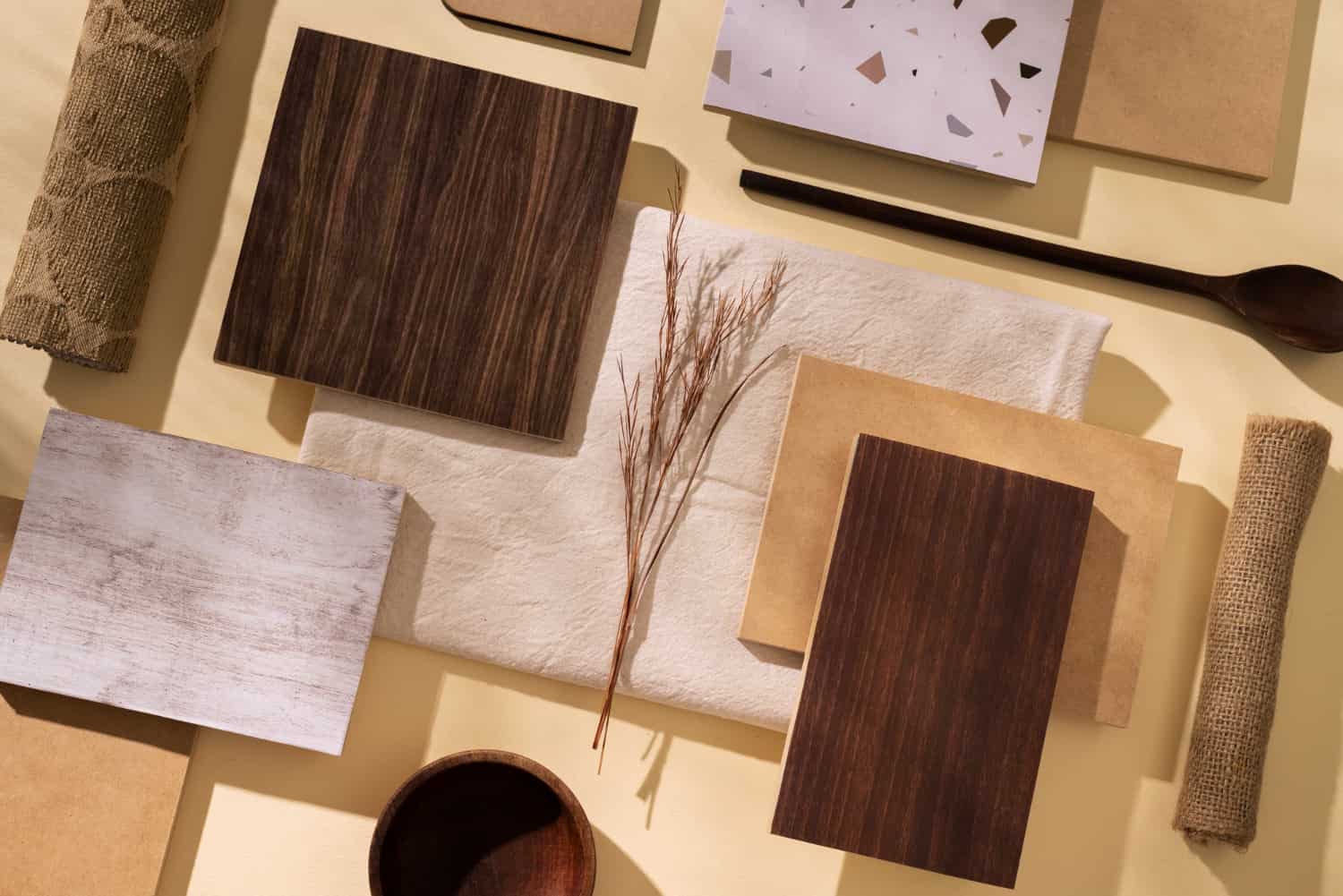
Most procurement documents describe wood materials in one line: “18mm MDF substrate” or “solid beech frame.” These descriptions are necessary but incomplete. They tell the factory what to use — they do not tell the developer what the factory will do with it, or whether the factory’s processing capability is appropriate for the material specified.
Hotel furniture manufacturing involves a series of decisions about how each material is cut, edged, joined, assembled, and finished. Those decisions are made inside the factory, often without the developer’s input, and they determine whether the specification produces the result it was designed to produce. A wardrobe specification that calls for MDF with HPL surface and ABS edge banding is only as good as the factory’s edge banding machine, its adhesive system, and its pressing technique. A chair frame specification that calls for solid beech with mortise-and-tenon joints is only as good as the factory’s woodworking capability and its quality control on joint fit.
This is why hotel furniture wood materials need to be understood at the manufacturing level — not just the material science level. The question is not only “what are the properties of this material?” but “how does this factory process this material, and does their process produce the quality the specification requires?”
Custom production is a structured part of the hotel furniture manufacturing process, not an isolated step. It begins with concept design, continues through technical development, and ends with controlled production and inspection.
The process usually starts with layout drawings and design concepts prepared by architects or interior designers. These concepts are then translated into technical shop drawings by the manufacturer. At this stage, dimensions, materials, finishes, hardware, and construction methods are defined in detail.
Once drawings are approved, sample production or mock-up rooms may be created. This step ensures that the design works in real conditions before full production begins. After approval, mass production starts with strict control over materials, dimensions, and finishes.
Quality control is integrated throughout the process. A strong hotel furniture quality control system ensures that each item matches approved specifications and performs consistently across all rooms.
The most common MDF specification failure in Ghana hotel projects is not using the wrong thickness — it is using standard MDF where MR-MDF was specified, combined with paper edge banding where 2mm ABS was specified. Both substitutions look identical in a finished piece. Both fail visibly within one humid season. The check is simple: cut edge colour confirms MR vs standard MDF; edge banding thickness is measurable with a calliper. These checks should be part of every sample approval and pre-shipment inspection.
Plywood is manufactured by bonding thin wood veneers (plies) in alternating grain directions under heat and pressure. The cross-grain construction gives plywood significantly higher structural strength than MDF of equivalent thickness — particularly in bending, impact resistance, and screw-holding capacity. These properties make plywood the correct material for structural applications in hotel furniture where MDF’s lower strength creates a failure risk.
Where plywood is used in hotel furniture production:
In casegood manufacturing, plywood is typically specified for door cores, drawer bases, and back panels in high-load applications. A wardrobe door with an MDF core at standard 18mm will handle normal use but may bow over time under the weight of the door itself — particularly in larger wardrobe configurations. A door with a plywood core resists bowing because the cross-grain construction resists the natural movement of wood fibre in one direction. For drawer bases in heavy-use applications — hotel room drawers that are fully loaded and operated multiple times daily — plywood at 9 to 12mm performs significantly better than MDF at equivalent thickness.
In upholstered piece construction, plywood is used for seat bases and back panels. MDF is too brittle for applications that absorb repeated impact loading — a seat base that flexes under body weight will crack at MDF thickness levels that plywood handles without failure. This is a manufacturing quality decision that directly affects the lifespan of hotel seating, and it is one that buyers cannot verify from finished product appearance alone — it requires factory documentation or destructive sampling.
Plywood grading and what it means in hotel furniture manufacturing:
Plywood is graded by the quality of its face and back veneers — A, B, C, D in descending quality — and by its bonding classification (interior, exterior, marine). For hotel furniture production, the relevant grades are:
Face grade B/BB or better for applications where the plywood face will be visible after surface finishing. Face veneers at this grade have limited knots and repairs, producing a smooth, consistent surface that takes HPL, lacquer, or veneer overlay correctly. Face grade C/CC or lower is acceptable for structural applications where the plywood surface will be fully covered or hidden.
Bonding classification matters for Ghana projects specifically. Interior-grade plywood uses urea-formaldehyde adhesive between plies — adequate for dry conditions but susceptible to delamination under sustained moisture exposure. Exterior-grade or WBP (weather and boil proof) plywood uses phenol-formaldehyde adhesive that maintains bond integrity under moisture cycling. For hotel furniture components in humid-exposed areas — bathroom adjacency, outdoor-adjacent spaces, areas near pools — WBP-grade plywood is the appropriate specification.
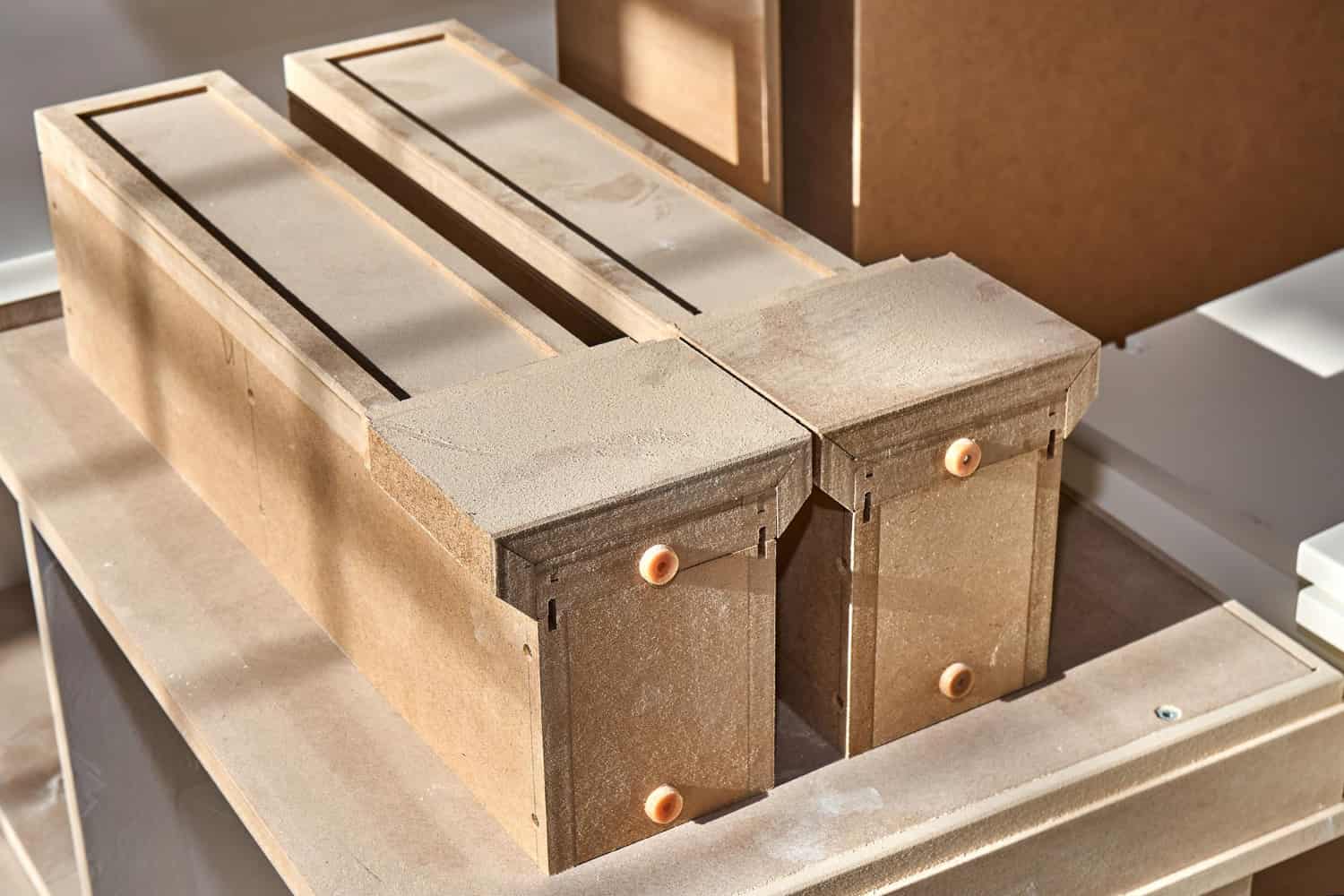
When Evaluating a Turkish Manufacturer for Hotel Seating, Ask Specifically which Jointing Method they Use for Chair Frames, and Request a Cross-Section Photograph or Physical Sample Showing the Joint. A Manufacturer Using Mortise-and-Tenon Construction will Answer Immediately and Show Examples. A Manufacturer Using Dowel or Bracket Construction may Describe their Joints Vaguely or Default to Marketing Language about “High Quality Construction.” The Jointing Method is Visible in a Cut Sample — it is not a Trade Secret and Should not Require Persuasion to Disclose.
The surface finish applied to hotel furniture — HPL, veneer, lacquer, paint — behaves differently depending on the substrate it is applied to. Understanding this interaction helps developers write specifications that produce the intended result, and helps identify when a factory’s production method is creating a compatibility problem between substrate and finish.
HPL on MDF: HPL (high-pressure laminate) is bonded to MDF substrate using contact adhesive under press. The bond quality depends on surface preparation — MDF must be sanded to a consistent flatness before pressing, because any surface variation produces a visible undulation in the HPL finish. A factory with a calibration sander producing a consistent surface before pressing produces HPL finishes with no visible print-through. A factory that skips calibration sanding produces HPL finishes that telegraph the MDF surface variation — visible as a slight waviness in light-raking conditions. This is a production process failure, not a material failure, and it is detectable during sample approval by examining HPL surfaces at a raking angle under good light.
Veneer on MDF or plywood: Veneer application requires a flat, stable substrate. MDF is dimensionally stable and produces excellent veneer results when properly processed. Plywood is slightly more dimensionally variable due to its layered construction but is acceptable for veneer application when properly conditioned. The critical variable in veneer application is the adhesive system and pressing method. Cold-press adhesive systems require longer cure times but produce consistent results. Hot-press systems are faster but require precise temperature and pressure control to avoid blistering — a common veneer defect where the adhesive cures unevenly, producing a raised bubble under the veneer surface. Blistering is detectable during sample inspection by running a hand across the veneer surface in a warm environment — a properly bonded veneer feels completely flat; a blistered veneer has a slight raised area that can be felt before it becomes visible.
Lacquer on solid wood: Lacquer application on solid wood requires grain filling before the primary coats are applied. Open-grained species — oak, ash — require more filler than close-grained species — beech, maple. Insufficient grain filling produces a lacquer finish with a textured appearance that collects dust and is difficult to clean in hotel environments. For Ghana hotel projects where cleaning frequency is high and cleaning products are strong, a well-filled, fully sealed lacquer finish is the correct specification. This requires at least two filler coats, sanding between coats, and a final sealing coat — a production sequence that costs more time than minimal lacquer application but produces a surface that performs correctly under commercial maintenance. For how these material and finish decisions fit into the full manufacturing workflow from brief to delivery, see the hotel furniture manufacturing process guide.
In custom hotel furniture manufacturing, material specification decisions carry even more consequence — every dimension, finish, and substrate is project-specific, meaning a material substitution affects not one standard piece but every custom unit in the order. For how material choices integrate into the full custom production process, see custom hotel furniture manufacturing.
Wood material selection does not only affect the quality of the finished piece — it directly affects how long production takes and what the order costs. These relationships are not always visible in a supplier quote, but they are real and they accumulate across a large hotel furniture order in ways that affect project budgets and timelines.
MDF is the fastest material to process. Its uniformity means CNC machines cut it at consistent speeds without variation. Surface finishing on MDF is predictable — HPL application is a high-speed press operation, and lacquer finishes on MDF require less grain filling than solid wood. For a standard hotel casegood order where speed and consistency are priorities, MDF casegoods move through the production line faster than any alternative. This is one reason MDF dominates hotel casegood production globally — not just because of its cost, but because of its production efficiency.
Plywood adds cost primarily at the material procurement stage. Plywood is more expensive per sheet than MDF of equivalent thickness, and the cost difference scales with grade — WBP plywood for humid-exposed applications costs significantly more than interior-grade plywood. Processing plywood is not slower than MDF in most factory operations, but the material cost differential is real. On a 100-room hotel project where plywood is specified for door cores and drawer bases, the material cost premium over MDF for those components typically runs 15 to 25 percent on the plywood-specified items — not on the total order, but on the specific components where plywood replaces MDF.
Solid wood adds cost at both material and labour stages. Kiln-dried solid hardwood is more expensive than engineered panel materials, and solid wood joinery — particularly mortise-and-tenon construction — requires more skilled labour and more production time than panel-based assembly. A chair frame in solid beech with mortise-and-tenon joints requires more machine time for joint cutting and more assembly time than a dowel-jointed frame. The lead time implication is modest on small orders but visible on large ones — a 500-chair restaurant package in solid wood with mortise-and-tenon construction runs longer in production than the same quantity in metal frame construction.
The practical implication for Ghana hotel project budgeting is that material specification decisions and budget planning need to happen simultaneously, not sequentially. A developer who specifies MR-MDF with WBP plywood door cores and solid beech chair frames is specifying correctly for Ghana’s conditions — but they need to budget for the material premium those specifications carry. A developer who specifies correctly on paper but then accepts a quote that undercuts competitors significantly is likely accepting a quote that has substituted standard MDF for MR-MDF and dowel joints for mortise-and-tenon. The specification and the budget need to be consistent with each other, or one of them is not real.
<p>Material substitution — supplying a lower-cost material than what was specified — is one of the most persistent quality risks in hotel furniture manufacturing. It is not always deliberate; sometimes it reflects a factory’s assumption that the developer will not verify, or a procurement decision made to protect margins when raw material costs increase. Understanding the most common substitutions and how to detect them protects the specification integrity of a hotel project from brief through delivery.</p> <p><strong>Standard MDF for MR-MDF:</strong> The most common substitution in hotel casegood production for tropical markets. Visual detection: cut edge colour — cream for standard, green for MR. Cost differential: MR-MDF carries a 10 to 15 percent material premium over standard MDF. A quote that matches competitors on price while claiming MR-MDF specification is a flag worth investigating. Detection method: request a cut sample with visible core during sample approval, and repeat the check during pre-shipment inspection on production pieces.</p> <p><strong>Paper edge banding for 2mm ABS:</strong> Common in lower-cost operations or when edge banding machine capability is limited. Visual detection: paper banding has a flat, matte appearance; ABS banding has a consistent sheen and a slightly rounded corner profile from the rounding unit. Physical detection: apply lateral pressure to the edge — ABS banding is firmly bonded; paper banding often lifts under moderate pressure. Detection method: check sample edges visually and physically during sample approval.</p>
MDF is a uniform panel produced from wood fibres — it machines consistently, holds surface finishes evenly, and is the standard substrate for hotel casegoods. Plywood is a layered panel with cross-grain construction — it has higher structural strength and better screw-holding than MDF and is the correct choice for door cores, drawer bases, and seat panels. Both are used in hotel furniture production, for different applications based on their manufacturing characteristics.
MDF edges are porous and absorb moisture rapidly. In Ghana’s humidity, unsealed or poorly sealed MDF edges swell and delaminate within months. 2mm ABS edge banding applied by hot-melt adhesive on an automated machine creates a moisture-resistant, structurally bonded edge that performs correctly in tropical conditions. Paper edge banding — common in lower-cost production — fails predictably in high-humidity environments. The edge banding specification is one of the highest-impact manufacturing decisions in hotel casegood production for Ghana.
The simplest verification is visual: MR-MDF has a green-tinted core that is visible when the panel is cut. Standard MDF has a cream-coloured core. Ask the factory for a cut edge sample — this check takes seconds and confirms specification compliance without any laboratory testing. This should be part of every sample approval process for Ghana hotel projects.
Mortise-and-tenon joints produce the highest structural performance in hotel seating applications — they distribute load across a large glue surface, resist racking forces, and survive 200,000+ load cycles when properly executed. Dowel joints are adequate for low-stress applications but loosen in high-traffic hotel seating over time. Metal bracket construction is the weakest option for hotel chair frames and is not appropriate for high-use environments like hotel restaurants or lobbies.
Wood expands and contracts with humidity changes. Furniture produced with wood at incorrect moisture content for the destination environment will move after installation — producing gaps at joints, surface cracking, and dimensional changes. The correct target moisture content for hotel furniture destined for Ghana is 8 to 10 percent — slightly higher than European specifications to account for Ghana’s higher ambient humidity. Factories experienced in West Africa export account for this; factories without this experience may dry wood to European specifications that cause movement in Ghana’s conditions.
Interior-grade plywood uses urea-formaldehyde adhesive between plies — it performs well in dry conditions but can delaminate under sustained moisture exposure. WBP (weather and boil proof) plywood uses phenol-formaldehyde adhesive that maintains bond integrity under moisture cycling. For hotel furniture components in humid-exposed areas in Ghana — bathroom-adjacent pieces, outdoor-adjacent spaces, pool areas — WBP-grade plywood is the appropriate specification. Interior-grade plywood is acceptable for fully enclosed casegood interiors with no humidity exposure.
HPL on MDF requires calibrated surface sanding before pressing to prevent print-through. Veneer on MDF or plywood requires proper adhesive selection and pressing control to prevent blistering. Lacquer on solid wood requires grain filling before primary coats to produce a smooth, cleanable surface. Each substrate-finish combination has specific production requirements — and shortcuts in any of them produce visible quality failures that become apparent during or after installation.
WhatsApp us