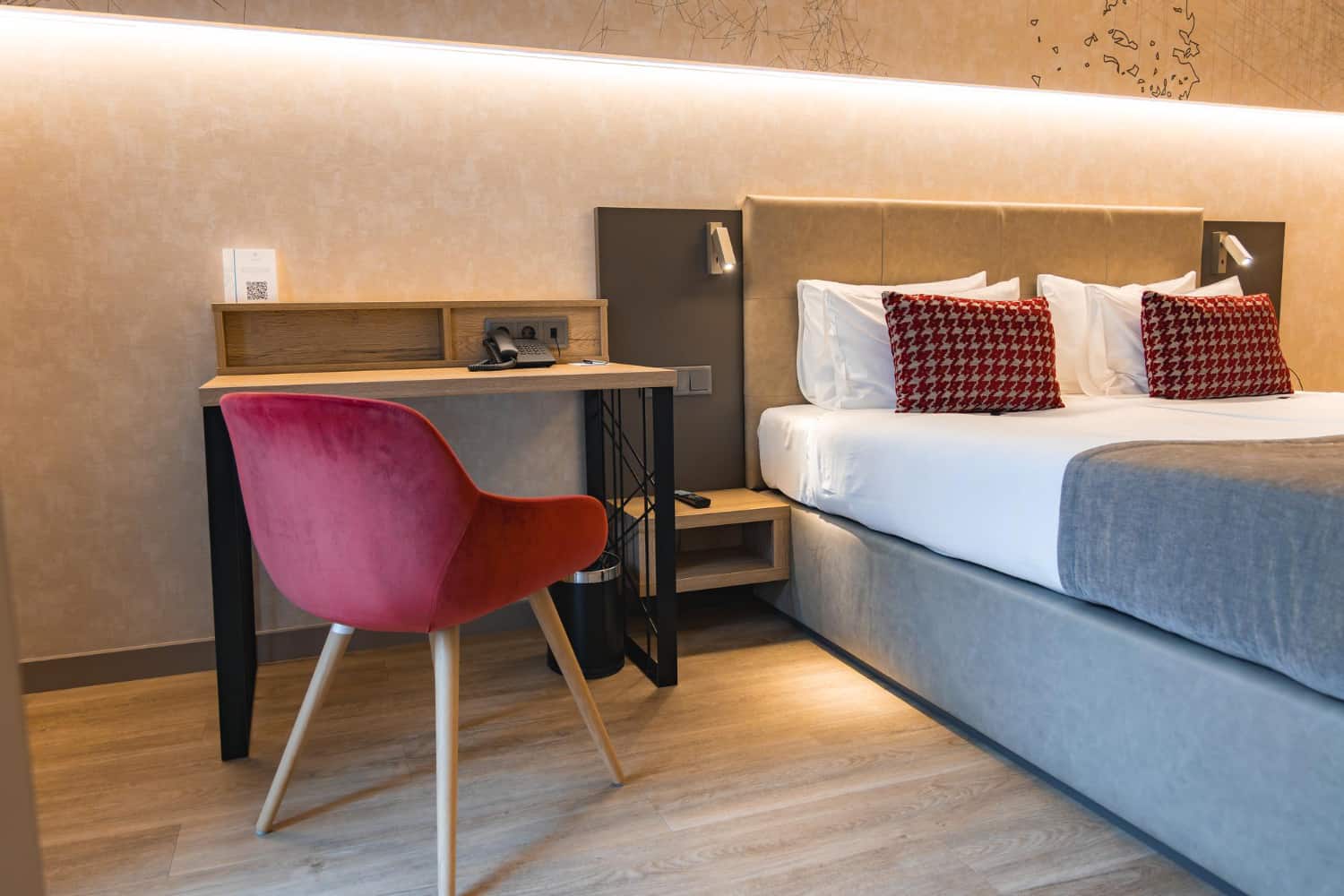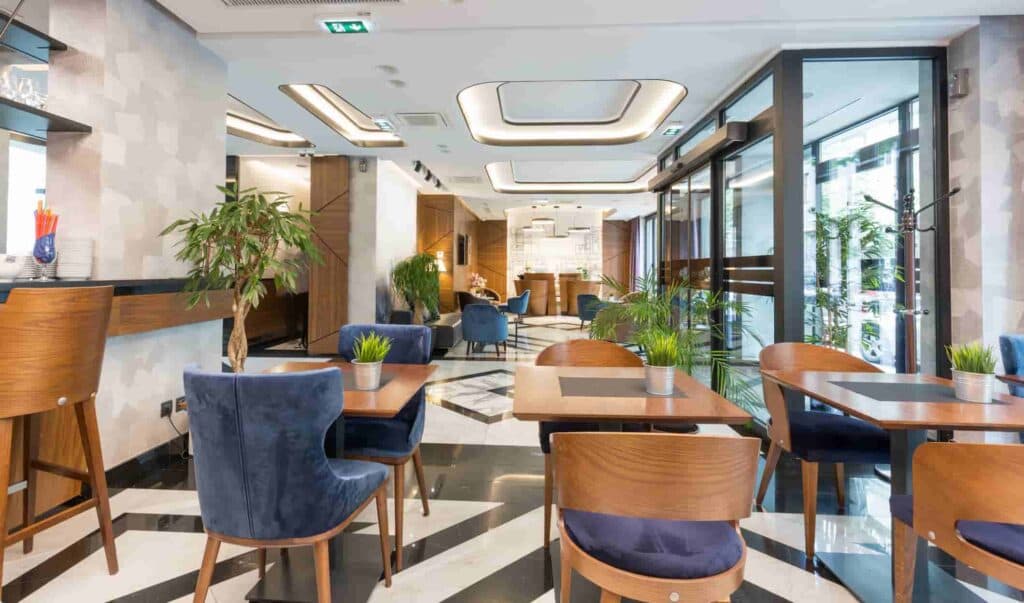
Choosing the right restaurant & café furniture for Ghana hotel projects directly impacts guest experience, revenue per seat, and long-term operational durability. Hotel developers in Accra, Tema, Kumasi, and Takoradi increasingly invest in food and beverage areas that function as independent profit centers. A well-designed restaurant space increases occupancy appeal, attracts external guests, and strengthens brand positioning. Poor furniture planning, on the other hand, reduces seating efficiency and creates maintenance costs.
Search data shows steady interest in keywords such as restaurant furniture Ghana, hotel restaurant furniture supplier, and custom café furniture for hotels. These searches reflect growing demand for commercial-grade, project-based solutions rather than retail dining sets. Developers and interior designers now prioritize durability, layout efficiency, and custom production.
Hotel restaurants operate differently from standalone dining spaces. They must support:
Furniture must withstand constant use. Residential chairs and tables cannot handle commercial pressure. Developers should select contract-grade materials, reinforced joinery, and durable finishes.
Hotels in Ghana increasingly compete with international brands. Guests expect comfort, aesthetic consistency, and quality seating in both main dining areas and cafés. Strong furniture planning improves guest satisfaction and positive reviews.
When planning restaurant furniture for a Ghana hotel project, you should define categories clearly. A typical hotel restaurant includes:
Each category requires technical consideration. Table bases must provide stability. Chair frames must support commercial load requirements. Upholstery must resist stains and moisture.
Search terms such as custom restaurant furniture Ghana and hotel dining furniture supplier indicate that developers prefer tailored solutions over stock items.
Many project teams initially explore local showrooms offering ready-made restaurant furniture. However, hotel projects often require:
Custom manufacturing ensures that every dining table and chair aligns with architectural drawings. It also allows optimization of seating density. A skilled manufacturer calculates layout flow, walkway spacing, and table combinations before production begins.
Developers who choose custom production gain better control over aesthetic consistency and long-term durability.
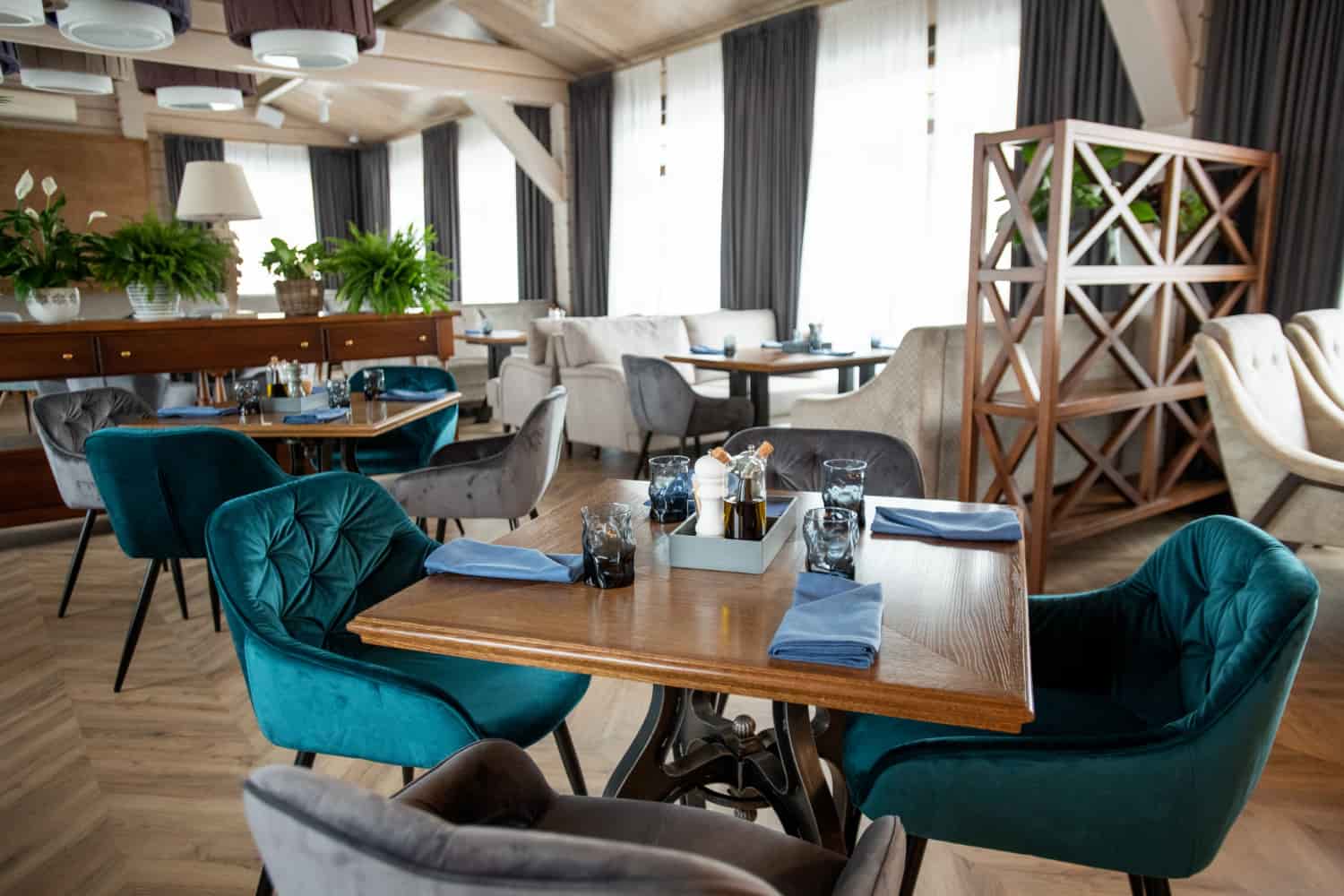
Hotel restaurant environments demand stronger materials than residential dining rooms.
Recommended specifications include:
Developers should also request fabric performance data. Stain-resistant and easy-clean upholstery reduces operational costs. In humid coastal cities such as Accra and Takoradi, moisture-resistant coatings help prevent swelling and surface damage.
Search queries like restaurant furniture durability and commercial café chairs reflect growing awareness of material performance standards.
Furniture planning directly affects revenue. A poorly planned dining layout reduces seating capacity and blocks service flow.
Developers should analyze:
Optimizing layout increases the number of seats without compromising comfort. Professional manufacturers often collaborate with interior designers to adjust table sizes and seating combinations.
For boutique hotels, flexible furniture layouts allow reconfiguration for events and private dining. Modular seating increases operational versatility.
Hotel restaurant furniture requires structured scheduling. Developers must coordinate furniture production with construction timelines.
A typical custom production timeline includes:
Projects importing furniture from Turkey to Ghana typically require 6–10 weeks of manufacturing depending on scale. Early planning helps prevent delays in restaurant opening.
Keywords such as restaurant furniture lead time and hotel furniture production timeline reflect common developer concerns about scheduling.
For large hotel projects, efficient container loading reduces freight cost per unit.
Manufacturers should:
Clear labeling simplifies on-site installation. Developers should confirm delivery to Tema Port and ensure coordination with customs clearance teams.
Strategic container planning reduces total project cost and prevents damage during transit.
Hotel cafés differ from main dining restaurants. Cafés often focus on:
Main restaurants require:
Understanding this distinction helps developers choose appropriate production specifications. Overdesigning a café increases unnecessary cost, while under-specifying a main dining restaurant reduces lifespan.
Before selecting a restaurant furniture supplier, confirm:
Restaurant spaces define the social identity of a hotel. Strategic furniture planning increases revenue, strengthens brand positioning, and reduces long-term maintenance costs.
Developers planning new hospitality projects in Ghana should prepare layout drawings and seating capacity targets before requesting quotations. Clear documentation accelerates supplier evaluation and ensures accurate budgeting.
Commercial-grade furniture with reinforced frames, durable finishes, and stain-resistant upholstery performs best in high-traffic hotel environments.
Custom manufacturing provides better layout optimization, brand consistency, and long-term durability for hotel projects.
Most custom projects require 6–10 weeks depending on quantity, design complexity, and material availability.
Yes. Proper container planning allows efficient loading and cost optimization, especially for mid-sized hotel projects.
Café furniture often focuses on lighter aesthetics and flexible layouts, while main restaurant furniture prioritizes durability and standardized seating.
WhatsApp us