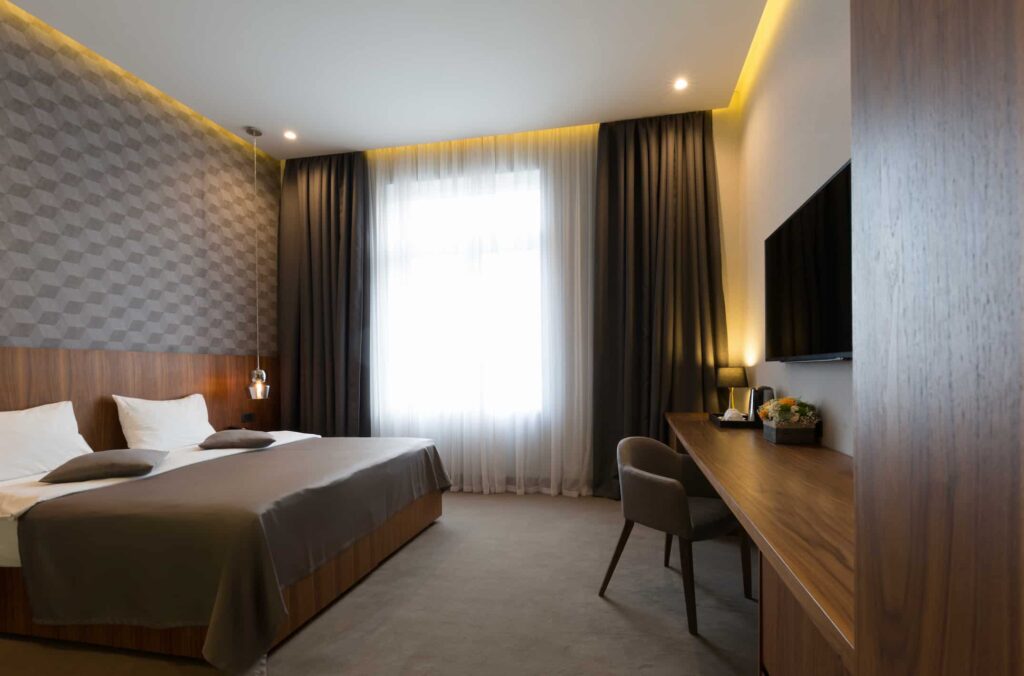
If you’re asking How to choose a hotel furniture manufacturer in Turkey?, start by treating it like a hospitality project, not a simple purchase. Hotels punish weak furniture. Guests lean on headboards, slam drawers, drag chairs, spill coffee, and—well—sometimes treat a room like a gym. So your choice should depend on repeatable production quality, engineering skills, and reliable delivery, not only a “nice sample” and a friendly quote.

Turkey is a strong sourcing market because the country has a mature furniture ecosystem, export-oriented factories, and broad experience with contract work for hotels. Industry and trade sources regularly highlight Turkey’s furniture export scale and reach, which matters because exporters usually have better packaging discipline, documentation habits, and delivery routines.
Below is a practical, step-by-step framework you can use whether you’re furnishing a boutique hotel, a resort, or a city property with hundreds of keys.
Turkey’s furniture supply base ranges from boutique ateliers to large industrial factories with CNC lines, veneer presses, upholstery departments, and finishing booths. That variety is the good news. The tricky part is that “variety” also means you can easily compare the wrong suppliers.
A few realities to keep in mind:
So, yes, Turkey can be a great choice. Still, you must qualify the supplier like a hotel operator qualifies a building: structure first, decoration second.
Before you shortlist manufacturers, define the scope in plain, measurable terms. Otherwise, you’ll get quotes that look cheap but hide risk.
Create a simple scope pack:
So, yes, Turkey can be a great choice. Still, you must qualify the supplier like a hotel operator qualifies a building: structure first, decoration second.
In Turkey you’ll typically meet four supplier types:
If you’re furnishing many rooms, a factory with a project team usually wins. For a small luxury property, a hybrid approach can work: a factory for casegoods plus a specialist for standout lobby pieces.
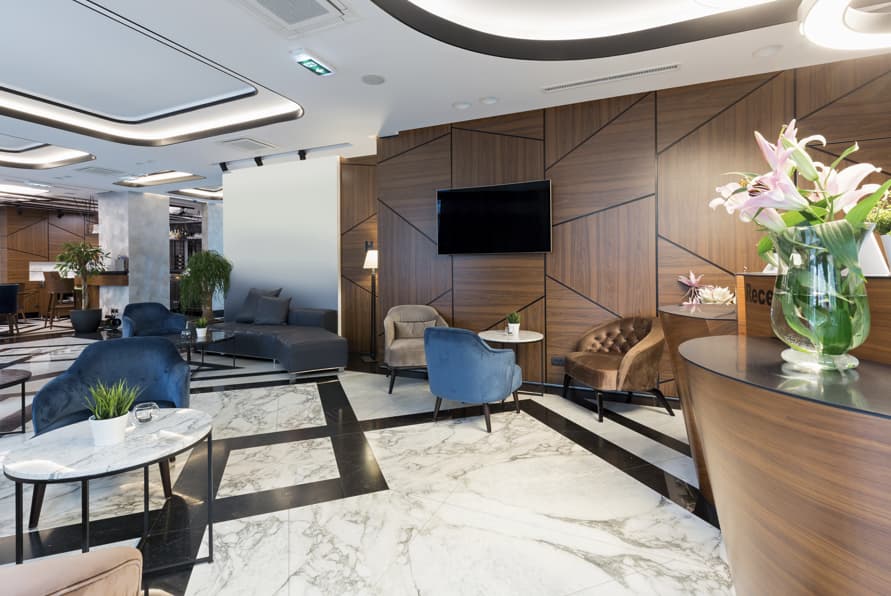
Many vendors say, “We can produce anything.” That sentence should make you smile—and then verify.
Ask for evidence:
If you can visit, look at work-in-progress. A factory that can deliver will have orderly staging, labeled components, and a visible QC flow. A factory that cannot deliver will look busy but chaotic.
Hotels often require safety and durability standards, especially for public areas and certain markets.
Two practical checks matter almost every time:
You don’t need a certificate parade. Instead, align compliance with your project:
If your hotel brand has strict standards, share them early. A serious manufacturer will respond with a compliance map, not just “yes, we can.”
Hotels destroy weak materials in months. To protect yourself, ask for a materials schedule per item.
Key material decisions:
A good Turkish manufacturer will propose alternatives that reduce cost without sacrificing performance. A weak one will cut corners silently.
Even a great design fails if the hinges sag, the runners jam, or the finish chips when housekeeping bumps a trolley.
Ask specific questions:
Then do a simple test: request a sample panel with the exact finish and rub it with a coin, a key, and a damp cloth. It’s not scientific, but it reveals obvious weaknesses quickly.
If you want fewer arguments later, prototype early.
Use a two-step sample plan:
Pay attention to small but important details:
A manufacturer that welcomes mock-ups is telling you, “We know production reality.” That’s a good sign.
In hotel furniture, drawings are not paperwork. They are your insurance.
Strong suppliers provide:
They should also manage revisions clearly. If a supplier loses track of revisions, it can cost time, money, and unnecessary delays.
Turkey’s location helps for Europe, the Middle East, and North Africa, and works well globally via sea freight. Still, logistics can break a project if you leave it vague.
Agree on:
If your schedule is tight, ask the manufacturer to show a production calendar with milestones: drawings approved → procurement → first article → batch production → QC → packing → shipment.
You don’t need to micromanage. You need checkpoints.
A practical QC plan includes:
If the project is large, consider a third-party inspection. Even then, keep it simple: focus on the top failure risks such as finish defects, hardware alignment, wobble, wrong dimensions, or missing parts.
The biggest pricing mistake is comparing totals when the scopes differ.
Request quotes in the same structure:
When a quote is suspiciously low, it usually hides something:
A fair price with clear specifications is cheaper than a low price with surprises. Oddly enough, that’s the most “hotel” truth of all.
For hospitality projects, match payment to progress:
Common milestones:
Risk reducers that help:
If you use a letter of credit or bank guarantees, align them with your procurement policy. Keep the paperwork strict but not suffocating.
Two shortcuts save time:
Visit major trade fairs
The International Istanbul Furniture Fair (IIFF) is one of the best places to compare styles, finishing quality, and export readiness in a few days. IIFF 2026 is scheduled for January 27–31, 2026, and takes place across major Istanbul venues.
Use export-focused sources and industry data
Export-oriented suppliers tend to document better and pack better, because the market demands it. Broader export statistics and sector reports can also help you understand how mature the ecosystem is.
Use a weighted scorecard to remove emotion from the choice.
Example categories (score 1–5, then weight):
This is not glamorous, yet it prevents a common mistake: choosing the supplier with the best showroom piece but the weakest production process.
Walk away if you see repeated patterns like:
In hotel projects, a small red flag can quickly become a major operational headache.
Start as soon as your concept and room counts stabilize. For large projects, earlier sourcing helps you lock materials, prototype, and avoid last-minute finish changes that delay production.
Factory-direct offers transparency and often better pricing. A good integrator can still win if they clearly show who manufactures each item and they control QC and logistics tightly.
Request sample panels with the exact finish system. Do basic rub, scratch, and stain checks, then compare results across suppliers. Also ask the supplier what hardness or abrasion checks they use internally.
Approve golden samples, require shop drawings, set inspection checkpoints, and use photo/video evidence during production. For large orders, a third-party inspection before packing can reduce surprises.
Yes, many do, especially those serving hospitality and export markets. The key is verifying engineering capability, prototype discipline, and capacity—custom work fails when those three are weak.
WhatsApp us